



Famous figures
Portraits of famous mathematicians, historical and contemporary
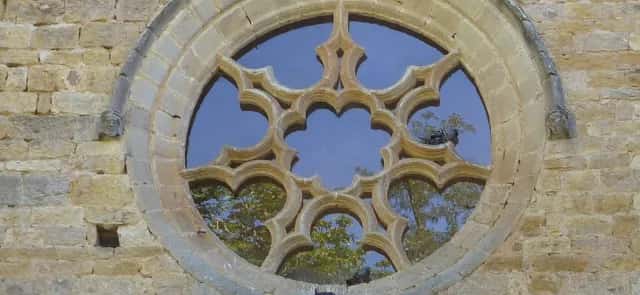
The builders' geometric constructions
Several centuries before the Renaissance, whether building a church or a fortress, builders needed only a compass and an unmarked straightedge to draw arcs, pointed arches, basket-handle arches and rose windows. Let us explore the basic geometry behind their methods.
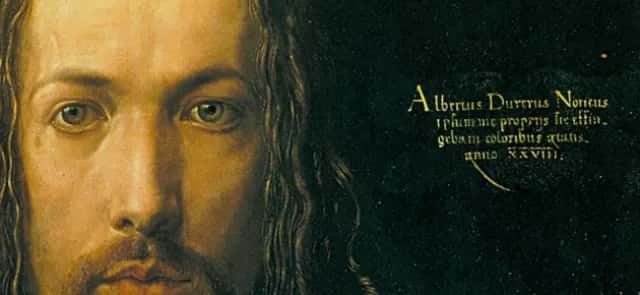
Albrecht Dürer and technical drawing | Tangente
Albrecht Dürer (1471–1528) devised a fascinating straightedge-and-compass construction of the ellipse. It foreshadowed descriptive geometry, which Gaspard Monge (1746–1818) would formalize almost three centuries later.
Math tourism: mathematics, geography and travel | Tangente
For some fifteen years, the "math tourist" website (mathouriste.eu) has been sharing photographs from Alain Juhel's mathematical travels and visits to places connected with mathematics and mathematicians.
Portraits of women mathematicians | Tangente
To honor Maryam Mirzakhani, International Day of Women in Mathematics is observed on May 12, her birthday.
Roman numerals and modern passions | Tangente
Controversy in Lutetia, in March MMXXI. The Carnavalet Museum, devoted to the history of Paris, has allegedly "abolished Roman numerals" from its new visitor experience on the pretext that they represent "an obstacle to understanding", claims the Italian daily Corriere della Serra.
Alan Turing on the £50 note | Tangente
On June 23, 2021, Alan Turing (1912–1954) would have turned 109. To mark this symbolic date, the Bank of England will issue a new £50 note (about 58 euros) bearing the scientist's portrait.

Lovász and Widgerson, winners of the 2021 Abel Prize | Tangente
This year, the Norwegian Academy of Science and Letters has put theoretical computer science and graph theory in the spotlight.
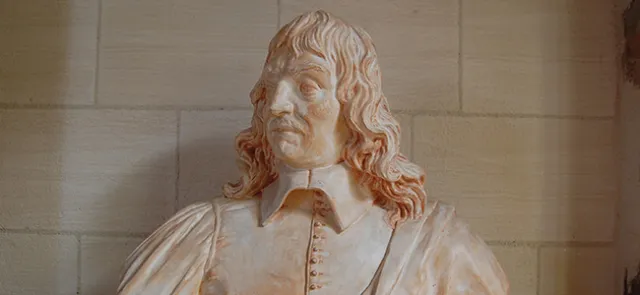
The emergence of Cartesian geometry
Greek geometers were the model for mathematicians when Descartes revolutionized geometry by introducing coordinates, making it possible to approach geometry through algebraic methods. Cartesian geometry was born.
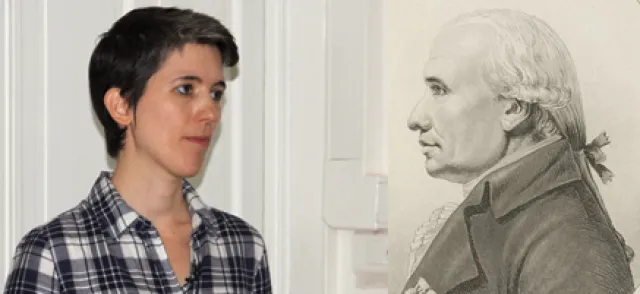
Two and a half centuries of optimal transport
Moving a pile of sand, transferring colors from one image to another, minimizing a group’s travel time—all these problems can be tackled using optimal transport. Gaspard Monge pioneered a theory that computing has made remarkably effective.
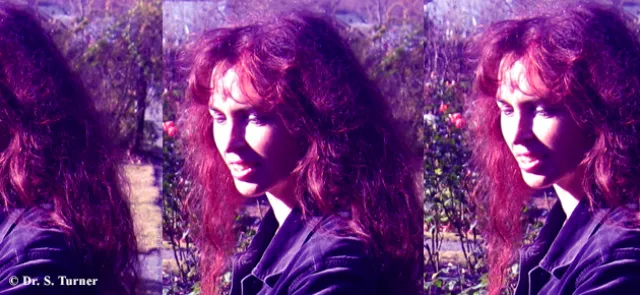
Teja Krašek in Escher's footsteps | Tangente
Born in Celje, Slovenia, Matjuska Teja Krašek (pronounced "Teyla Krashek") lives and works in Ljubljana. Her work draws on her fascination with symmetry, fractals and, more broadly, the beauty she sees in mathematics. She agreed to share her passion with us.
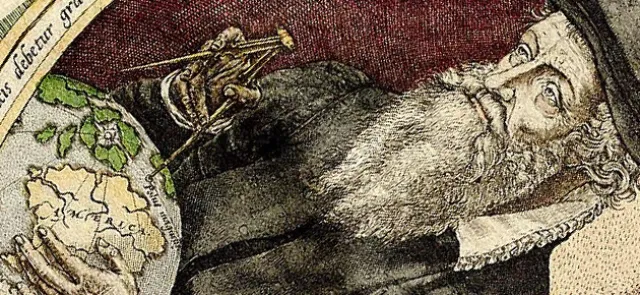
The Mercator projection
The best-known maps are based on the famous Mercator projection, named after its Flemish creator, who worked in the early Renaissance. Yet this projection relies on mathematical concepts developed well after the scholar’s death! So how could he have constructed his world map?
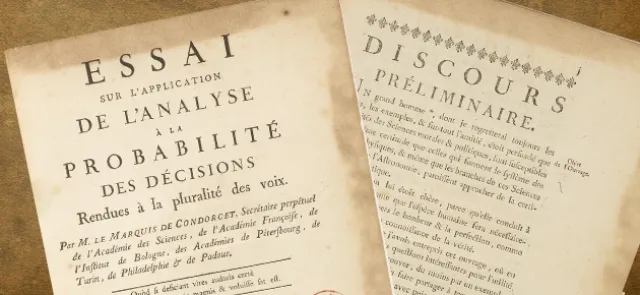
Political rationality and calculation | Tangente
Public policies are often supported by rational, even mathematical arguments. Philosophers such as Leibniz, Condorcet and Bentham sought, through a variety of approaches, to put both economic and social behavior on a mathematical footing. Yet they all came up against the fact that combining individual rationalities does not necessarily serve the common good.
Penrose and the sharing of knowledge | Tangente
Sir Roger Penrose is an outstanding popularizer, both in print and as a speaker.
Penrose and the Kleenex affair | Tangente
In the 1970s, Roger Penrose filed patent applications for several of his aperiodic tilings (!) and founded a company, Pentaflex, to manage the patent rights.

Nobel prizes in physics and mathematics | Tangente
The most famous winner of the Nobel Prize in Physics is probably Albert Einstein, honored in 1921 for his work on the photoelectric effect—not for his celebrated theory of relativity.
Penrose's impossible figures | Tangente
Penrose's name is associated with several "impossible objects."
Penrose interview: 2020 Nobel laureate | Tangente
Three books to finish. Hundreds of journalists on the lookout since the Nobel Prize in Physics was announced on October 6, 2020. Yet Sir Roger Penrose, aged 89, agreed to give your favourite magazine more than three hours of his time in a video interview. With generosity, passion and enthusiasm, he tells us the story behind some of his geometric discoveries.
Singularities in general relativity
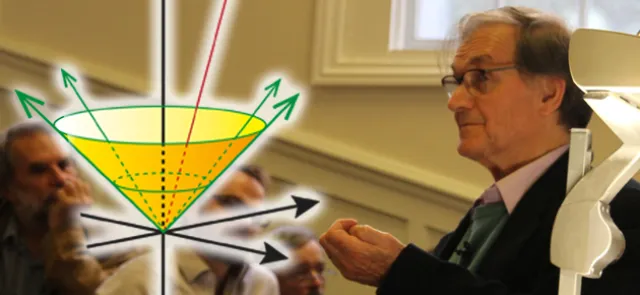
The year 1965 saw the first modern theorem on singularities in general relativity, due to Roger Penrose. This geometric result would have major implications for the origin of the universe and the collapse of massive stars.
A Nobel prize for black holes | Tangente
The 2020 Nobel Prize in Physics honors black hole astronomy. Thanks to Roger Penrose, Andrea Ghez and Reinhard Genzel, general relativity has at last been recognized by the celebrated Swedish institution—something that, surprisingly, had rarely happened before!
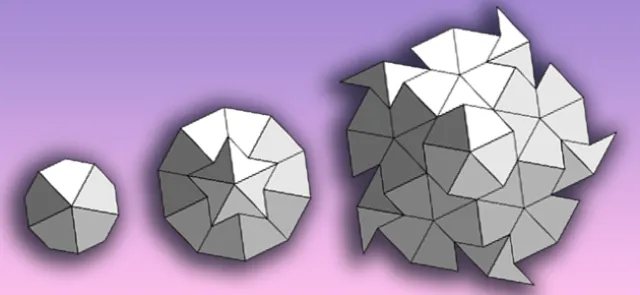
Dazzling Penrose tilings
Sir Roger Penrose is renowned for his remarkable and foundational work in geometry and cosmology, and for the applications of that work to black holes. It is puzzling, however, that he is famous to the general public for the tiling that bears his name, with its many remarkable properties.