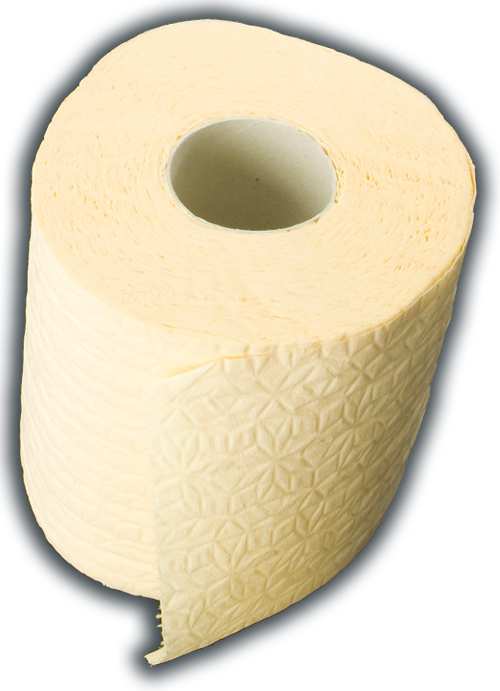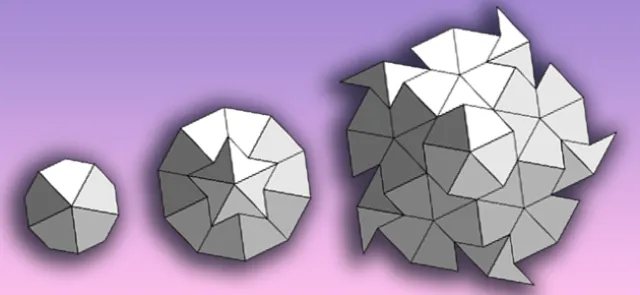
In 1997, he discovered that rolls of Kleenex toilet paper bought by his wife bore patterns inspired by one of his tilings, without his permission. He took the matter to court, suing the American company Kimberly-Clark Corporation, owner of the Kleenex trademark.
The outcome of the case is unclear. According to some sources, Penrose won and forced the company to withdraw the rolls from sale and change the design; according to others, he reached a financial settlement with the manufacturer. Can a geometric pattern, in fact, be protected by copyright?
In 1995, an American computer scientist, Roger Schlafly, filed a patent application for two prime numbers (US Patent 5,373,560), one consisting of 150 digits and the other of 300 digits, for use in encryption methods. Penrose himself considered such a patent filing improper.