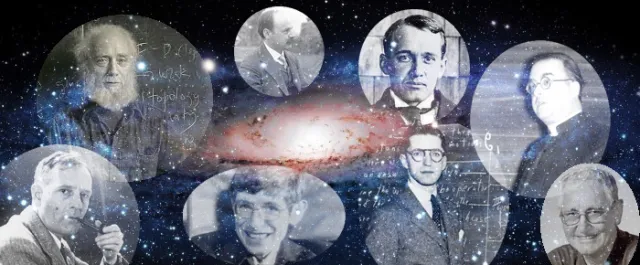
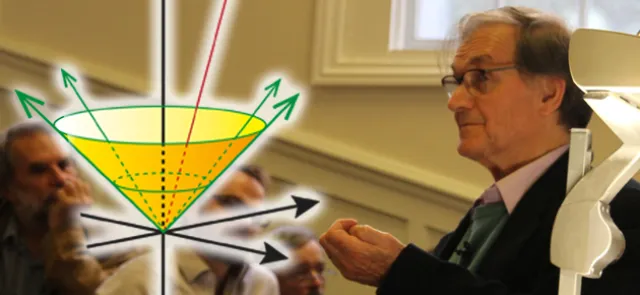
The theories of special and general relativity, now enjoying extraordinary prominence through cosmology, gravitational astronomy and the development of GPS, underwent something of a long eclipse beginning in the 1920s. A revival, both theoretical and experimental, began in the 1960s with Robert Vivian Pound (1919–2010) and Glen Anderson Rebka, Jr (1931–2015), together with a series of seminal studies of black holes by Roger Penrose and Stephen William Hawking (1942–2018).
Between 1963 and 1965, New Zealand mathematician Roy Patrick Kerr (born 1934) discovered exact solutions to the equations of general relativity for a rotating spherical mass, providing a theoretical foundation for stars that collapse into black holes. From the 1980s onward, general relativity became indispensable to astrophysicists and cosmologists. In 2015, the first direct detection of gravitational waves ushered in a new form of astronomy.
Yet among the Nobel Prizes in Physics awarded since 1916, not one before this year explicitly cited relativity in its grounds for the award, evidence of the difficulty the theory had in gaining acceptance among physicists (although the 1993 prize was awarded for "the discovery of a new type of pulsar, a discovery that has opened up new possibilities for the study of gravitation"). With the prize awarded to Sir Roger Penrose, Andrea Ghez and Reinhard Genzel, the time therefore seems to have come for the Nobel Committee to recognize one of the two fundamental theories of 20th-century physics.
A long eclipse
----------------------
When Albert Einstein died in 1955, he had continued working to the end on a unified field theory that had failed to bring the strong, weak and electromagnetic interactions together with general relativity. He had also criticized quantum theory for its incompleteness (or unfinished nature), helping to marginalize him toward the end of his life. While general relativity remained in eclipse from the 1920s to the 1960s, quantum theory advanced, culminating in the standard model of particle physics. This probably focused Nobel Prizes for theoretical physics on particle physics—in other words, on particles discovered in space or in accelerators. General relativity thus remained a "sleeping beauty" that attracted little attention.