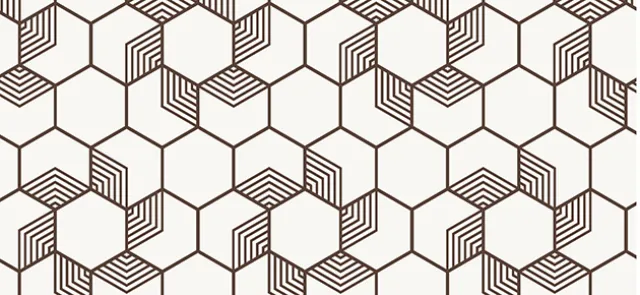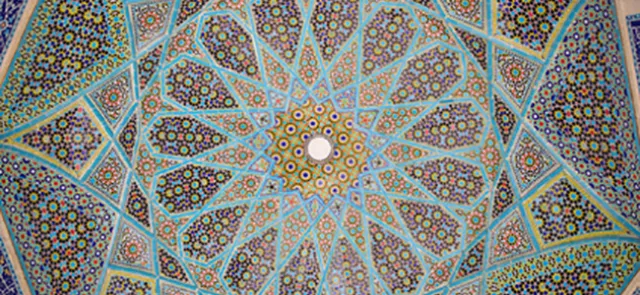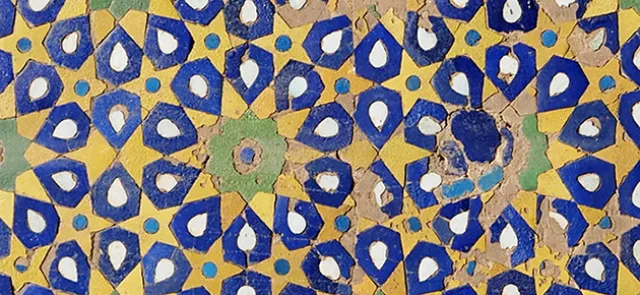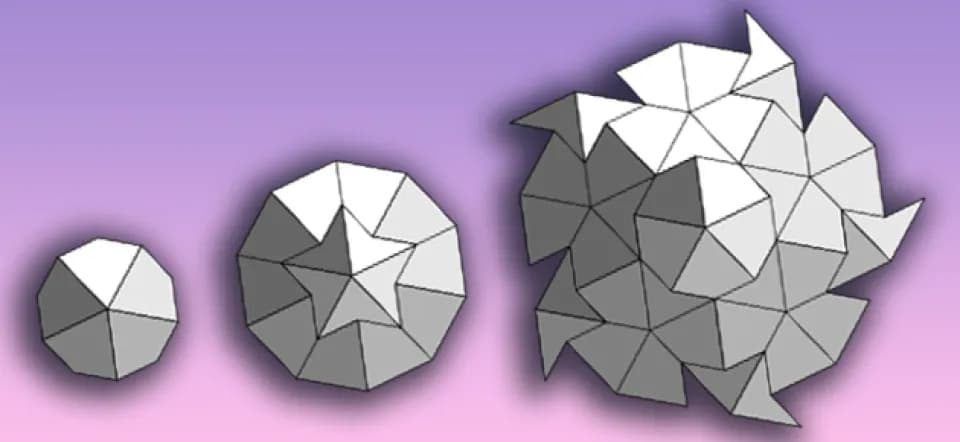
Since antiquity, people have sought to cover large flat surfaces with basic components: paving stones for roads, tiles for homes, tesserae for mosaics, patterns for textiles and tiles for roofs. These components were often square or rectangular. This made them easy to produce in large quantities, while their regular, periodic arrangement guaranteed that the plane could be covered indefinitely. The natural next step brought variations in color and shape, together with aesthetic criteria for patterns based on symmetry. Islamic tilings provide many magnificent examples. Fortunately, mathematics can clarify matters by classifying all possible tilings.
Different types of tilings
---------------------------
A tiling of the plane may be thought of as a covering by non-overlapping tiles fitted together edge to edge. We also require the tiles to have a "minimum size"—that is, a strictly positive area—to rule out fractal tilings with limiting area zero. The tiling in our bathroom, and even the more elaborate tilings created by the brilliant Escher, fit this definition.
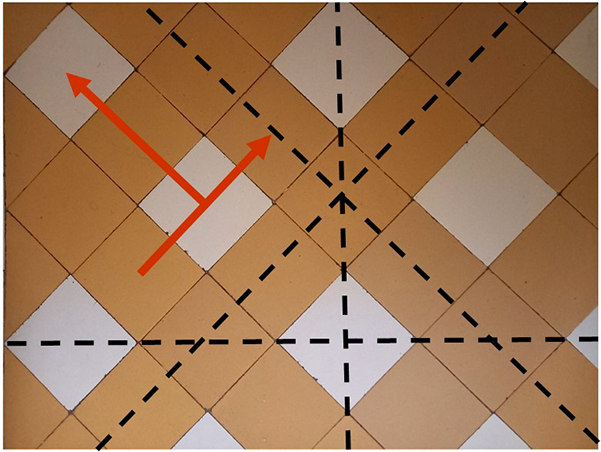
Bathroom tiling: a typical example.