



Famous figures
Portraits of famous mathematicians, historical and contemporary

Pushkin’s poetry and Markov chains | Tangente
Every written language has its own grammatical and lexical structure. Its sounds are represented by recurring patterns of letters whose combinations are far from chaotic.
A mathematical approach to the paranormal
When it comes to the paranormal, it may seem easy to separate fact from fiction and use various tests and experiments to prove that a supposed medium or clairvoyant is nothing of the kind. Not so fast! Such protocols are difficult to set up, and few impressionable souls know about the Yule–Simpson paradox...

Three exceptional mathematicians who have passed away | Tangente
The days following Christmas 2018 were particularly cruel for the mathematical community. In addition to Jean Bourgain, we learned of the deaths of Elias Menachem Stein (193–12018), Sir Peter Swinnerton-Dyer (1927–2018) and Sir Michael Francis Atiyah (1929–2019).

Jean Bourgain, Fields medalist, dies at 64 | Tangente
Belgian mathematician Jean Bourgain died on Saturday, December 22, 2018, following a long illness.

Did Leonardo da Vinci invent the drone? | Tangente
Taken together, several studies and inventions foreshadow the advent of drones in aerial photography.

Leonardo da Vinci, master of polyhedra | Tangente
Leonardo da Vinci studied mathematics with Luca Pacioli, the greatest mathematician of the age. But the pupil soon surpassed the master! The artist-geometer's depictions of polyhedron nets upend some firmly held beliefs about the Renaissance.

Pythagoras: Leonardo's proof | Tangente
Leonardo da Vinci was not strictly speaking a mathematician, but the subject interested him, as it did many educated men of the Renaissance. We owe him an elegant proof of the Pythagorean theorem.
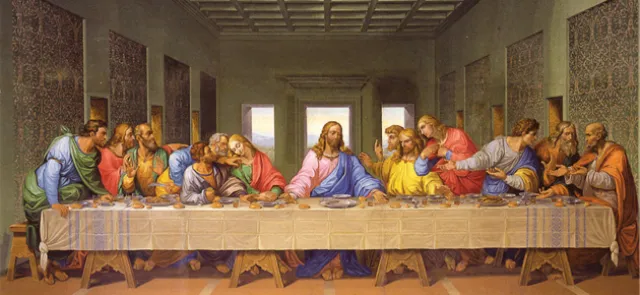
Leonardo da Vinci: various perspectives | Tangente
Among Leonardo da Vinci's many talents, his ability to reveal the many facets of perspective—all explored in his work—was by no means the least. Having mastered vanishing-point perspective, he went on to explore atmospheric perspective and then the technique of sfumato.

Luca Pacioli, Leonardo's mathematician friend | Tangente
Luca Pacioli would play a major role in the life of Leonardo da Vinci, who used his mathematical knowledge both to depict polyhedra and to improve techniques of perspective drawing.
The artist as geometer
Artist, genius and gifted inventor, Leonardo da Vinci was a visionary. In a world only just emerging from the Middle Ages, and long before René Descartes, he understood the importance of the scientific method and the role of mathematics in understanding the world.

Bernard Novelli, master of logic puzzles | Tangente
No Tangente feature on mathematical games would be complete without acknowledging the role Bernard Novelli played on our magazine's team (see Tangente 141, 2011)

Differences in notation: are mathematicians and physicists irreconcilable?
The differences between physicists' and mathematicians' notation might seem like mere turf wars, and thus reconcilable with a little common sense. There are several reasons for these differences
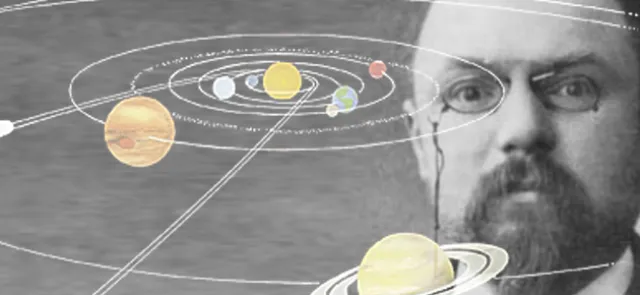
From the three-body problem to mathematical chaos
The elusive three-body problem saw spectacular progress thanks to Henri Poincaré. The French mathematician went further, devising new, more geometric methods for studying dynamical systems. His research has shaped our understanding of the stability of the solar system.
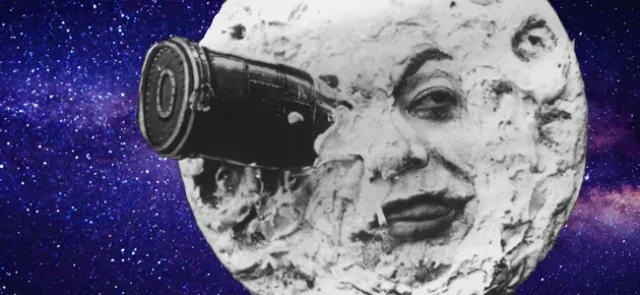
Lagrange and the analytical method
At the time of his death, Isaac Newton was proud to have found a method for solving problems in natural philosophy, but he was aware of its limitations. The Moon's trajectory is described only very approximately by the two-body problem. It fell to Joseph-Louis Lagrange to make a spectacular breakthrough.
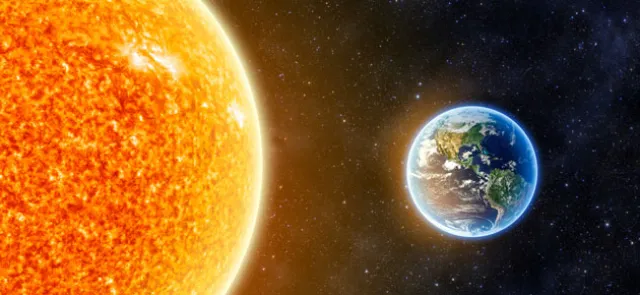
Newton's synthetic method
How does the Earth, of mass m, move around the Sun, of mass M, under gravity alone? To answer this question with something more than philosophical assertions, Newton proposed a synthetic method inspired by the description of motion.

Approximations in physics | Tangente
They trouble mathematicians, for whom sin(x) can never equal x when x is a nonzero but "small" real number. Yet they are useful! "They"? Approximations!

James Clerk Maxwell
In 1865, with four equations that have since become legendary, Maxwell unifies magnetism, electricity and optics—fields that had until then remained separate. The way is now open for wireless telegraphy, radio broadcasting and, later, the development of electronics.
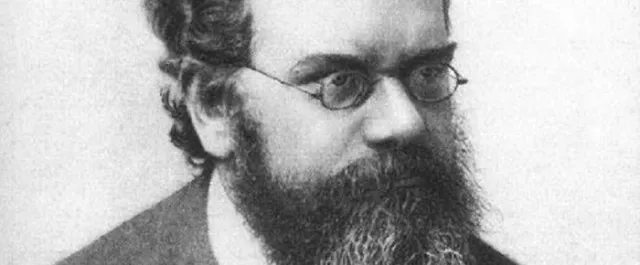
Ludwig Boltzmann
Ludwig Boltzmann was one of the most important scientists of the 19th century. Boltzmann's interpretation of entropy inspired Max Planck and Albert Einstein in their work on the statistical theory of radiation and on the quantum and photon hypotheses.

Joseph Fourier
At a time when the nature of heat was still being debated in the 18th century, Joseph Fourier established an equation describing how heat propagates through a solid of arbitrary shape. His methods make the French scientist a founder of mathematical physics.

Claude Mydorge:
A keen enthusiast for geometry, Claude Mydorge collaborated with René Descartes. His interest in conic sections led him to study the laws of optics and astronomy. He also developed a particular fondness for mathematical games and recreations.