



History and Culture
History of mathematics and cultural connections
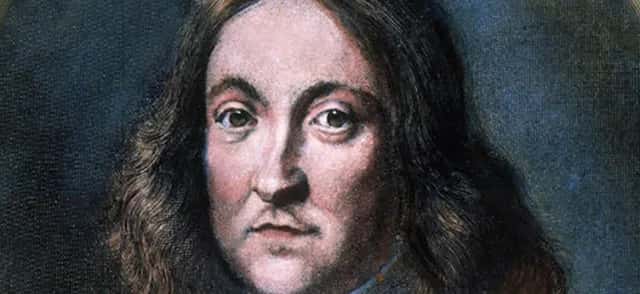
Fermat and his little theorem: history | Tangente
In the 17th century, Pierre de Fermat, though not a professional mathematician, was one of the pioneers of number theory. Less famous than his "last" theorem, whose proof has yielded more applications than the statement alone, his "little" theorem is immensely useful to us.
Marcel Berger: a life devoted to geometry | Tangente
Everyone who met Marcel Berger (1927–2016) will remember this tall, athletic, resolute man with a strikingly intelligent gaze vividly.

A taste for maths... through reading!
Inspiring an interest in mathematics through popular science books lies at the heart of many recent initiatives. By a happy coincidence, in early 2017 the City of Paris libraries are launching an event with precisely this aim. Its title? "A taste for maths."

2016 Awards: the winners
The 2016 Tangente Awards were presented on November 28 at the Palais du Luxembourg. Here is our report on awards that are gaining ever greater prominence in France's scientific and cultural landscape.
Those darn paradoxes! (4): A Mathematical Brief | Tangente
Every claim must be proved properly.
Those pesky paradoxes! (3) — Maths brief | Tangente
Logic may sometimes try to deceive us—beware!

Those darn paradoxes! (2) — Mathematical note | Tangente
God exists because mathematics is consistent, and the devil exists because we cannot prove it...

Holy paradoxes! (1): A mathematical brief | Tangente
Paradox is to logic what experiment is to the physicist: it allows us to adjust theory in response to the question posed by an alarming result. It is a springboard for the mind.
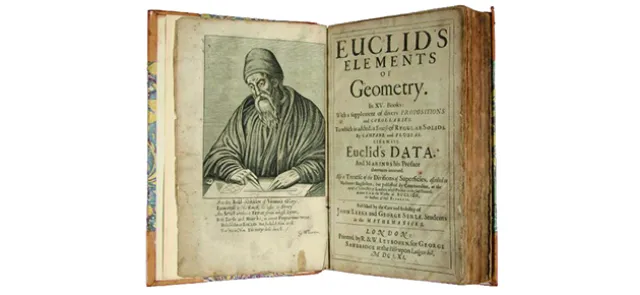
What exactly are axioms? — Geometry | Tangente
In mathematics, every proof starts from premises assumed to be true. What particular form must these premises take to become axioms, the foundation of all our current theories?

The ternary Cantor set
Cantor constructed a fractal set before fractals had a name, showing that a subset of the real line can have the cardinality of the continuum, have measure zero, and have empty interior.
Dedekind and sets — Mathematical brief | Tangente
One of the earliest champions of set theory was the German Dedekind, who famously corresponded with Cantor.

Relations and maps: structuring sets
A notion of relation between sets is essential if we are to begin doing mathematics. At the heart of the foundations of mathematics, the concept of a relation includes maps as a special case and gives sets structure.

From a collection of objects to a set
A set can be defined extensionally or intensionally. Constructing the natural numbers then becomes an easy but instructive exercise. Yet beware the apparent simplicity of a set viewed as a mere collection of objects: paradoxes lurk...
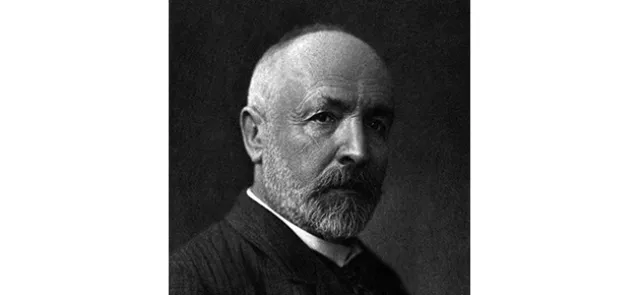
An unsettling approach to mathematics | Tangente
Set theory, iconoclastic in Cantor's day, has become universal. Nothing like it had been seen since Euclid: it provides a foundation for mathematics! That foundation seemed solid—until paradoxes emerged. So what is this highly controversial mathematical construction?
Paradoxes of infinity — Math brief | Tangente
Infinity must be handled with care, lest we lose ourselves (in its paradoxes)...
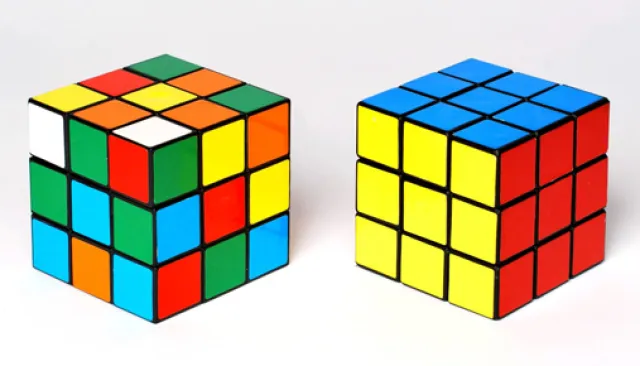
Join the groups!
The concept of a group first emerged from efforts to solve equations in the 19th century and soon became indispensable, highlighting parallels between situations that at first seem quite different. Let's see why mathematicians are so group-minded.
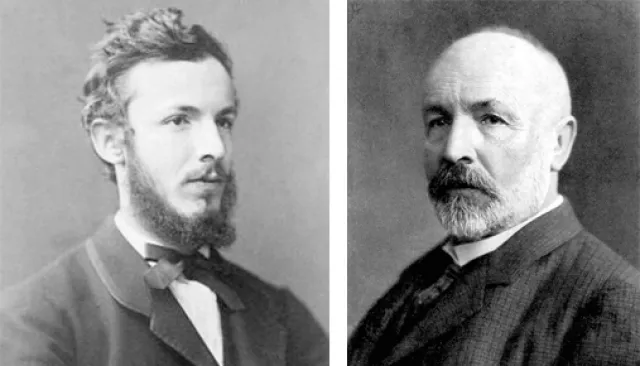
Georg Cantor: from finite to infinite
To extend useful results about finite sets to infinite sets, Cantor defined equality of cardinalities in terms of bijections, and hence inequality in terms of injections and surjections. Remarkably, this yields an order relation.
The Pythagorean circle
The radius of the circle inscribed in a right triangle whose three sides have integer lengths is itself an integer! This little arithmetical curiosity is very easy to prove.

Pythagoras without words: visual proofs | Tangente
How many students can prove the Pythagorean theorem? Yet there is certainly no shortage of proofs.
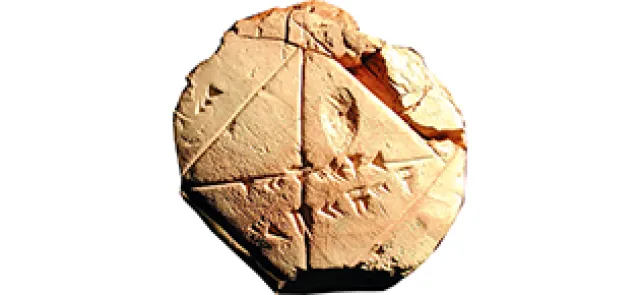
Proofs of the Pythagorean theorem through the ages
The Pythagorean theorem began as a result about squares constructed on the sides of a right triangle. Those geometric squares later became arithmetic squares, before the theorem ventured into abstract spaces. Would Pythagoras recognize his theorem if he came back to life today?