



Math for everyone
Mathematical content accessible to everyone

It's everywhere!
π turns up almost everywhere, sometimes even in the most fanciful fields. In mathematics, of course, we encounter it in geometry, analysis and number theory… As a result of this omnipresence, it appears throughout the other sciences too!

The spirit of quadratic fields
Why keep adding more and more elements to the set of known numbers? Adjoining just one number to the rationals and combining it with them is already enough to produce many sets with a wealth of wonders to reveal.

Transcendental, you say? The history of a term | Tangente
In Latin, the verb transcendere combines trans, "beyond," with scandere, "to climb"; it therefore literally means "to climb beyond," "to cross" or "to surpass."

In search of the universal number: Champernowne and Borel | Tangente
Sometimes, a concept that is relatively simple to define leads us into a world we dare not imagine, where our common sense struggles to find its bearings. Such is the case with universal numbers, which remain today as elusive as they are fascinating.

Pi, a number beyond reason
Since π is defined as the ratio of a circle's circumference to its diameter, it would be convenient if it were rational—that is, the quotient of two integers. Unfortunately, it is not! Worse still, some might say, it is even transcendental…

An exhibition to set up near you | Tangente
"Why do we lean into turns?" is the title of an exhibition accompanying the release of Amandine Aftalion's book.

Sports performance trends: a maths brief | Tangente
Citius, altius, fortius. The Olympic motto ("Faster, higher, stronger") sums up athletes' ambition to push the limits of human capabilities; for more than a century of competition, they have regularly broken records.
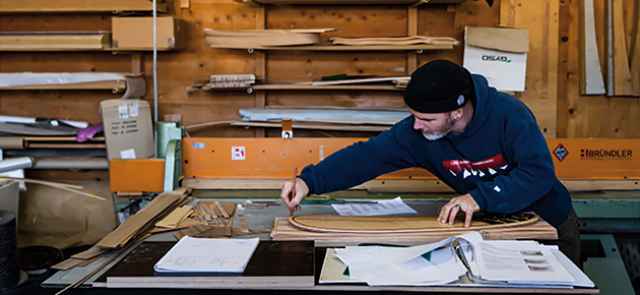
Spotlight on skateboarding
Skateboarding became popular in Europe around 1990. Whether tackling a straight line, a flat surface, a curve or an aerial trick, skateboarders must read their surroundings and have spatial and architectural awareness. This is where physics and mathematics come into play…

Nash and penalty shootouts: maths article | Tangente
When a penalty is taken in football, the player wants to put the ball in the net; the goalkeeper has to stop him. Can mathematics help maximize the chances of scoring—or of saving that fateful shot? The affirmative answer illustrates the work of John Nash.

Hungarian tables: mathematics article | Tangente
Combined events in athletics, such as the decathlon, require a way of comparing results across different disciplines. Scoring tables were therefore developed from statistical data and are regularly updated to reflect changes in human physical development.
Statistics, what else? A mathematics article | Tangente
Among the branches of mathematics applied to sport, statistics holds a prominent place. It is used to analyze large datasets—big data—to combat doping, and in media coverage of sport, typically for questions concerning the Olympic Games.

One Saturday a month at "Math Park": Math brief… | Tangente
The "Mathematic Park" series was launched by Xavier Caruso in 2003. Initially aimed at high school students but run on a fairly small scale, it moved to the Institut Henri-Poincaré (Paris, 5th arrondissement) in 2011.

Did you say “Myriogon”? — Mathematics brief | Tangente
Myriogon is a YouTube channel run by a team of mathematics communicators: Stephen Barcelo, Chloé Bouchaour, Robin Jamet, Mickael Launay and Roger Mansuy

My thesis in Tangente
Geometric shapes can be associated with different pieces of music to shed light on their structure. This can be done by defining a distance between musical events using the discrete Fourier transform applied to the bars of a score.
Animath turns 25: mathematics news brief | Tangente
On March 16 this year, the Animath association celebrated its 25th anniversary at the Institut Henri-Poincaré.

Billiards and water-pouring problems
One facet of mathematical creativity is finding an original representation of a problem that makes it easy to solve. Thus, an elementary Diophantine equation can be solved by studying trajectories on a billiard table, turning billiards into an effective tool.
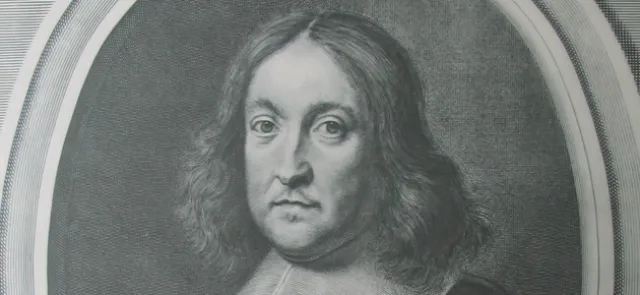
A historical example involving Fermat: article by m… | Tangente
Through his marginal notes in Bachet's edition of Diophantus's books on arithmetic and through his correspondence, the mathematician Pierre de Fermat spurred the study of integers with new results and methods. He both transmitted ideas and drove the subject forward.
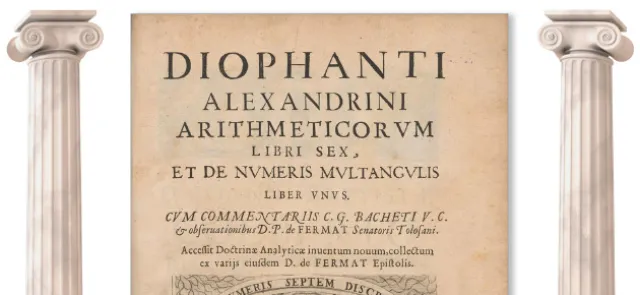
Diophantus of Alexandria, the unknown: article by… | Tangente
As noted on www.diophante.fr, which has just celebrated its 20th anniversary, the Greek mathematician Diophantus left us some remarkable works on arithmetic. A journey into history will reveal his extraordinary talent.
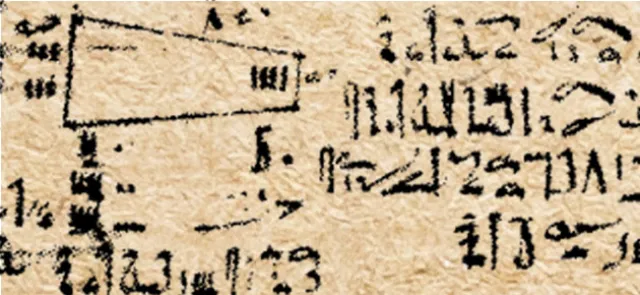
Integers: stars of equations: article by… | Tangente
In ancient Egypt, puzzles and problems were already being framed in terms of equations over the integers. Although the methods used to solve them have changed, the underlying question remains the same. These equations would go on to transform mathematics.

Sport and longevity
Age is, of course, a predominant factor in athletic (and intellectual!) performance. This nonlinear decline can be modeled using an exponential model, which seems to hold at every physiological scale: cellular, skeletal, pulmonary…