



Math for everyone
Mathematical content accessible to everyone
A brief history of Grandi's series
Grandi's series is the infinite sum 1 – 1 + 1 – 1 + 1 – 1 + … Mathematicians have studied it for more than three hundred years. Its history can be divided into three stages.
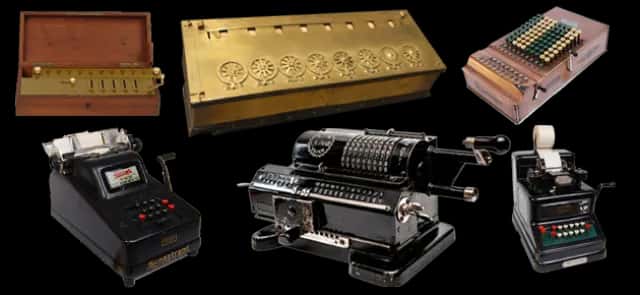
Mechanical secrets of the 1642 Pascaline | Tangente
Electronic calculators, now built into our phones, have made us forget the mechanical marvels that came before them. At just 19, Blaise Pascal developed the first calculating machine and, after a hard struggle to perfect his invention, captivated his contemporaries.
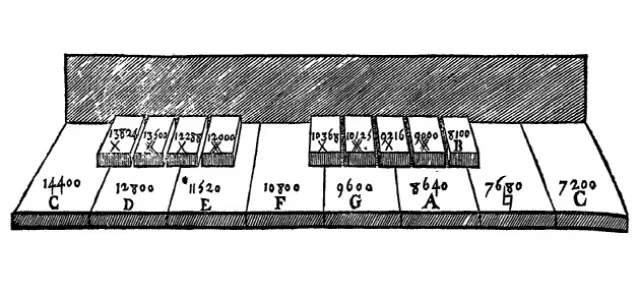
Writing a treatise on sound at the age of 11 | Tangente
The links between music and mathematics are well established. There was a time when it was not unusual for the most learned minds to pursue both with equal delight. Pascal, too, is said to have explored questions relating to sound, further evidence of his astonishing precocity.
Properties of the arithmetic triangle
Although Blaise Pascal did not invent the triangle that bears his name, the name pays tribute to his study of it in a treatise that has remained famous in the history of mathematics. Let's delve into this extraordinary text!

A neatly wrapped gift—Divisibility | Tangente
Is the integer 19,061,623 divisible by 37? It is hard to answer "quickly." Yet there is a way to devise simple, effective divisibility tests in no time, without having to perform the division by hand. Blaise Pascal has an arithmetic gift for you!
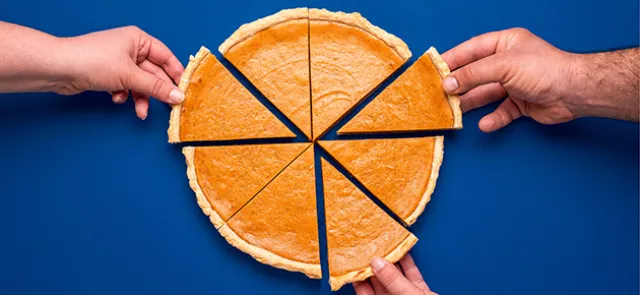
The art of fair division
Blaise Pascal had a gift for illuminating all manner of situations through sound, precise analysis, pinpointing the difficulties and explaining himself with unsurpassable clarity. One of the most famous questions in probability—the problem of points—was a case in point.
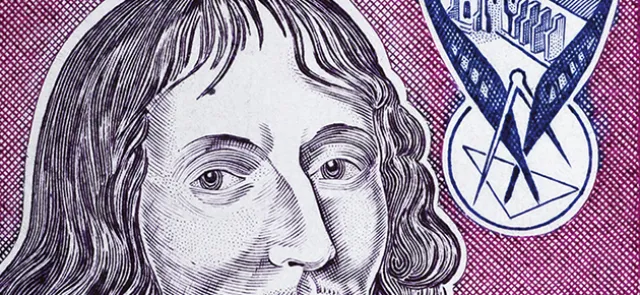
A master of mathematical induction
Mathematical induction is a major tool in mathematical proofs. On at least three occasions, Pascal explicitly uses reasoning that is "almost" mathematical induction, making him one of the method's inventors.
A prize for mathematics theses | Tangente
The prize awarded by Clermont Auvergne University's Blaise-Pascal Laboratory honors a thesis in pure or applied mathematics.
Blaise Pascal prize — Researcher award | Tangente
The Blaise Pascal Prize recognizes work carried out in France on the application of mathematics to engineering and industry.
Sidon sets
Number theory is a branch of mathematics that still contains questions that are easy to state yet remain unsolved. Sidon sets, in which the differences between pairs of terms are all distinct, are a case in point.
Numbers at the heart of mathematics—and our lives | Tangente
The Mathematics Forum held at UNESCO last November took stock of the role of mathematics in our societies, students' attainment—which, according to various international comparative studies, is plummeting—and the place of women in mathematics.
Happy New Year! The properties of 2023
As is now customary, the Tangente team explores the properties of the year number in our Gregorian calendar. What can we say about 2023? We will examine it in particular through the Josephus sieve.
2022 Tangente Awards ceremony | Tangente
One of the events scheduled at the Musée des arts et métiers on 4 December was the 2022 Tangente Awards ceremony, held in the lecture hall from 4 to 6 p.m. Here is our report.
Nalini Anantharaman at the Collège de France | Tangente
She was among the favorites for a Fields Medal in 2014; now she has been awarded a chair at the Collège de France!
What's new in the International System of Units | Tangente
The 27th General Conference on Weights and Measures was held in November in Versailles (Yvelines). Participants were delegates from the states that had signed the Metre Convention.
The football World Cup's "8" | Tangente
Despite its Möbius-strip appearance, the logo of the 2022 FIFA World Cup is simply an "8".
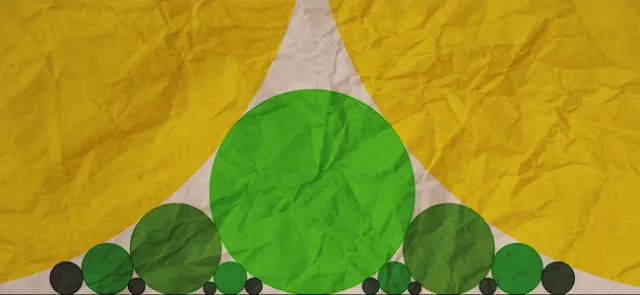
Geometric puzzles at infinity
Some of the most famous sangaku figures echo other mathematical constructions, forging beautiful connections between results established in different places and at different times. Here is a particularly striking example.
The golden ratio in sangaku
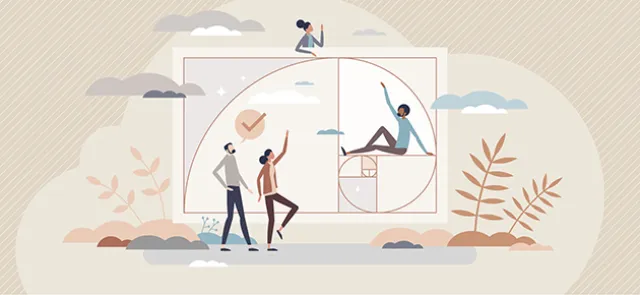
Though Western in origin, the golden ratio is said to be everywhere. So we went looking for it in sangaku… and struggled to find it, except in a few rare figures. But perhaps we simply overlooked it!
The barber was a woman
The barber paradox is said to be just the thing for dazzling people at parties. Although it serves an educational purpose by illustrating one of the most fundamental results in set theory, taken out of context it may well backfire on you!
The last two sangaku solved | Tangente
Of all the sangaku on record, two have proved particularly difficult to solve. The Japanese mathematician Yamaguchi Kanzan (c. 1781–1850) collected them in his travel journal between 1817 and 1828.