Math for everyone
Mathematical content accessible to everyone
The arbelos
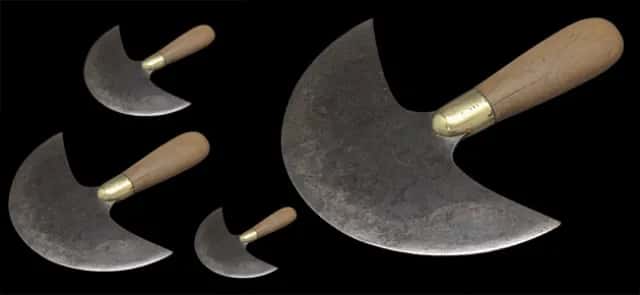
The properties of the arbelos, this fascinating geometric object studied since antiquity, are countless. How did the Greeks go about establishing such results? Let's look at a few clues, drawing on the texts handed down to us by Archimedes and Pappus.
A theorem puzzle in pictures: Monday's challenge | Tangente
Since 2015, the Image des maths website (https://images.math.cnrs.fr) has featured a "picture-theorem puzzle" every Monday, taken from Geometry in Figures, a book published in 2011 by the young Russian mathematician Arseniy Akopyan (CreateSpace Independent Publishing Platform) and available in French as Figures sans paroles (Independently Published, 2019).
Pitot's theorem for quadrilaterals | Tangente
First stated by the French engineer and physicist Henri Pitot (1695–1771), the theorem that bears his name concerns quadrilaterals with an inscribed circle (known as tangential quadrilaterals).
Yitang Zhang's long, solitary quest | Tangente
Born in China in 1955, Yitang Zhang developed an interest in mathematics at an early age: at the age of 10, he discovered prime numbers and the puzzle of Fermat's Last Theorem. But during the Cultural Revolution, he was sent to work in the countryside with his mother and was unable to continue his studies.
What neurologists think | Tangente
It seems widely accepted that our faculties diminish with age. What about our capacity to do mathematics? What can neuroscience specialists teach us about this?
The factorization of large integers:
The most widespread cryptography system relies on the use of very large integers, whose factorization remains beyond the reach of our computers. As early as the 17th century, Mersenne and Fermat were investigating the prime factorization of very large numbers; their work inspired modern factorization algorithms.

The second life of women mathematicians | Tangente
There is no shortage of examples of mathematical careers extended to a relatively advanced age, or begun late in life. The few women who, throughout history, managed to produce fine results despite every obstacle, often find themselves in one of these situations.
Mathematicians to the last breath! | Tangente
Mathematical creativity seems to wane with age. Few results of real importance have been proved after the age of 50. Yet some mathematicians defy this prejudice, pursuing fruitful scientific work right up to their last breath. So what is their secret?
Tangente's 35th anniversary | Tangente
Come celebrate a unique anniversary, the 35th anniversary of the only magazine of mathematical culture in the world sold at newsstands! There will be something for every taste, every age and every level. Here is a preview of what this eventful day has in store. The full program can be found at the end of this article.
Tangente Day 2023 at the Musée des Arts et Métiers | Tangente
Come celebrate the Trophées Tangente day, the world's only magazine of mathematical culture sold at newsstands! There will be something for every taste, every age and every level. Here is a preview of what this full day has in store.

A comic book introduction to Maryam | Tangente
Iranian mathematician Maryam Mirzakhani (1977–2017) became the first woman to win the Fields Medal in 2014.
A podcast devoted to Ada Lovelace | Tangente
Bababam's "True Story" podcasts tell remarkable true stories that are a pleasure to listen to and share.
Jobs, the economy and why mathematics matters | Tangente
In mid-September, the Institut national des sciences mathématiques et de leurs interactions (INSMI) at the CNRS published a study on the impact of mathematics on the economy and employment.
From coin tossing to stochastic differential equations
Tossing a coin many times naturally leads to an interest in certain types of paths on a line, in a plane, in space… The random nature of these experiments means that their study goes beyond the classical framework of ordinary differential equations.
Hervé Lehning (1948–2022) | Tangente
Tireless in his work, Hervé Lehning devoted his life to sharing the mathematics he loved so deeply and making it accessible without sacrificing quality, driven above all by a desire to pass on his passion. But he was much more besides.
Roger Apéry and the irrationality of zeta(3)
Greek on his father’s side, Roger Apéry (1916–1994) spent his childhood in Lille (Nord) before moving to Paris in 1926. Living conditions there became difficult following the 1929 crisis and his father’s loss of his engineering job. To escape this environment, he placed his faith in France’s state school system and academic success.
Inverting the power
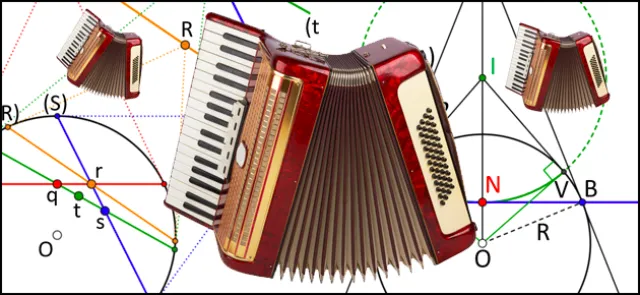
The notion of power defined with respect to a circle naturally leads to the notions of inversion and polars. These pedagogical tools, which have vanished from school curricula, are central to the birth of the concept of duality and of representations of non-Euclidean geometry.
A concept with a long history
The power of a point with respect to a circle appears implicitly as early as Book III of Euclid's Elements. This notion, elementary as it may be, would be redefined in the 19th century and become the basis for numerous applications in geometry.
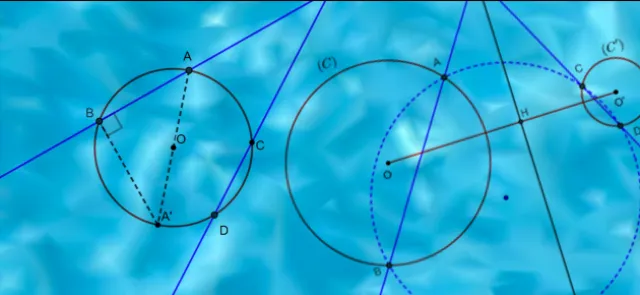
A useful power
Talking about the "power of a point with respect to a circle" may seem old-fashioned nowadays. Yet this elegant geometric notion had its heyday and its uses. Its applications to various mathematical questions are highly fruitful.