



Math for everyone
Mathematical content accessible to everyone

Blackjack: fluctuating probabilities | Tangente
Mathematicians have been studying blackjack since the postwar years. They discovered ways to improve players’ performance by applying probabilities both statically (basic strategy) and dynamically (card counting). But casinos changed the rules to protect themselves.

Bridge: Suit Combinations and Probability | Tangente
Bridge (and its ancestor, whist) is, along with chess, one of the two most celebrated games in the West, as the quotation below from Edgar Allan Poe attests — no doubt too flattering. Probability is often invoked in deciding which strategy to adopt.
Board games and chance: the maths of dice | Tangente
What role does chance play in a board game? It can vary widely, ranging from total dominance, where players have no say at all, to complete absence. Between the two extremes, the strategies of many games rely on optimizing probabilistic principles.
Nimbers applied to the game of Cram
The game of Cram consists in placing dominoes on a grid. Remarkably, its study can be reduced, via the definition of a category of mathematical objects called "nimbers", to the Marienbad matchstick game.
Half-move advantage in combinatorial games | Tangente
In a board game, it is fairly common, partway through a match, to feel that you are ahead of (or behind) your opponent. Through the example of Domineering, this article invites you to discover how John Conway formalized this notion.
New careers in mathematics and computer science | Tangente
The exhibition "Mathematics, Computer Science… With Women!" is available. Created by the association Femmes et Mathématiques in partnership with the CCSTI of the Centre-Val de Loire region, it comprises twenty-one roll-up panels presenting the career paths of twenty young women. Each panel features a portrait by photographer Marie-Pierre Dieterlé.
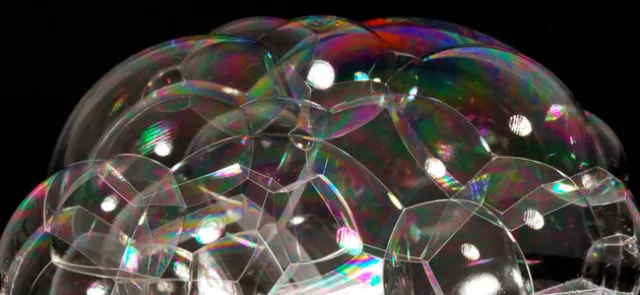
Soapy mathematics
What could be more fascinating than soap bubbles? They are beautiful, soothing, with their regular shapes and lovely iridescent colors. But they are also an object of mathematical study. And they hold plenty of surprises for us!
Origami in robotics and medicine | Tangente
No, this is no longer science fiction: origami-inspired minirobots can now deliver medication exactly where it is needed in the human body.
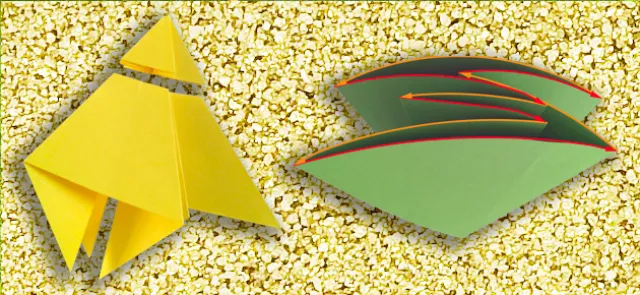
Origami crease patterns: the geometry of folding | Tangente
Studying the geometric figures obtained by fully unfolding an origami creation has led to general theorems that can be stated simply. These results quickly lead to questions connected to major open problems in mathematics.
David Huffman, curved-fold origami pioneer | Tangente
Some artists' origami sculptures are often impressive, whether for their striking representational qualities, their painstaking detail, or their particularly pleasing geometry.
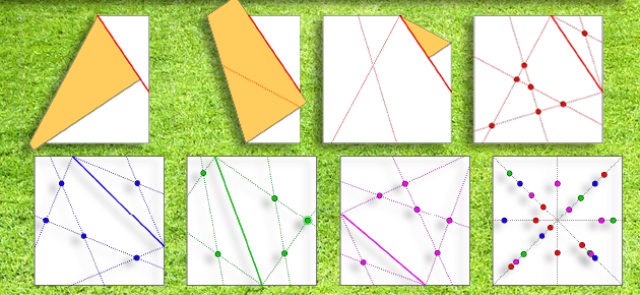
A wealth of constructions
Some constructions impossible to achieve with straightedge and compass become possible using origami… but not all of them! Paper folding also lets us revisit several questions of concurrency or collinearity, and reflect on the construction of polygons.
Folded paper and origami: many uses | Tangente
Paper is a material of choice for many artists. The art of folding takes several forms.
History and theory of origami and paper folding | Tangente
Historically, the art of paper folding is thought to have emerged in China as early as the 2nd century BCE. Wherever it developed, the practice seems to have been closely linked to the advent of paper.
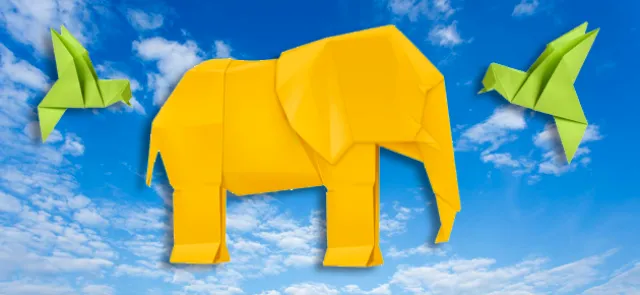
The Haga fold
Straightedge-and-compass geometry boasts a long history. But Euclid and his followers do not have a monopoly on points, lines and figures! The study of origami geometry is more recent, and it is surprisingly effective. Kazuo Haga has shown just how much richness a simple fold can hold.
An abstract concept: filters
The concept of a filter, developed by the French mathematician Henri Cartan (1904–2008) and anticipated by the Polish mathematician Alfred Tarski (1901–1983), can be regarded as a generalization of the notion of the limit of a sequence of real numbers.
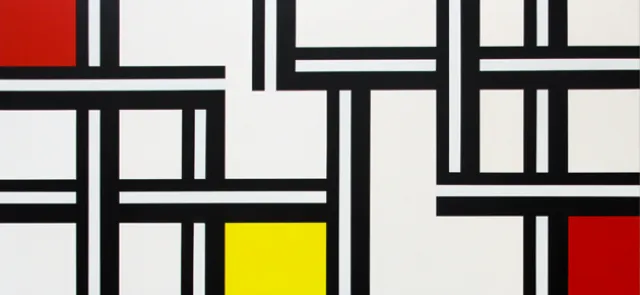
Category theory: an abstract nonsense? | Tangente
The essence of modern mathematics is abstraction, especially since the 1930s with the emergence of the concept of structure. But as early as the 1940s a new concept appeared: categories, accompanied by the ideas of functor and natural transformation.
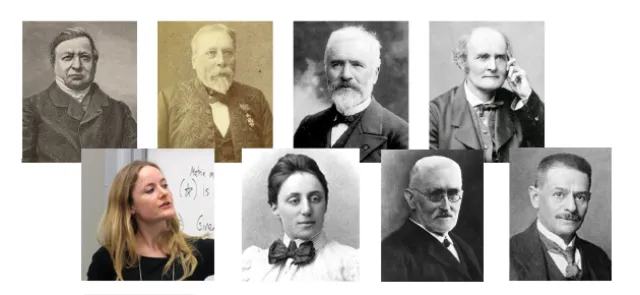
Pioneers of mathematical abstraction | Tangente
Meet some of the pioneers of abstraction in mathematics.
From "concrete" algebra to "abstract" algebra
In the twenty-first century, the idea of "concrete" algebra seems paradoxical: for everyone—high school students, university students, and teachers alike—this discipline is essentially abstract, devoted to the study of structures (groups, rings, fields, modules, possibly ordered sets…). This was not always the case.
Maurice Fréchet: to axiomatize or de-axiomatize | Tangente
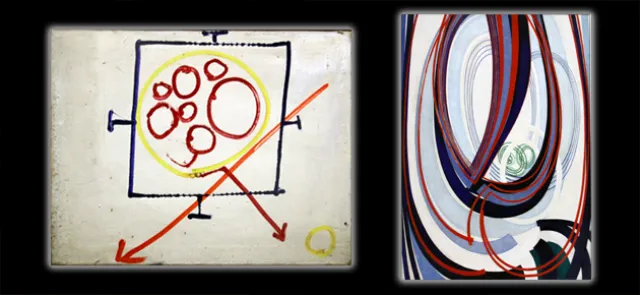
The French mathematician Maurice Fréchet distinguished two types of researchers. Some work essentially in an abstract manner, while others are concerned with experimentally verifying the predictions that their mathematical approach leads them to.
The construction of mental images in abstraction | Tangente
Can we speak of abstraction in concrete terms? The question deserves asking, since in everyday language "abstract" and "concrete" are often taken to be opposites. In reality, things are more subtle. What if abstraction were nothing but an illusion?