



Everyday Math
Applied mathematics to everyday life: elections, sport, music, road traffic, weather, computer science, finance
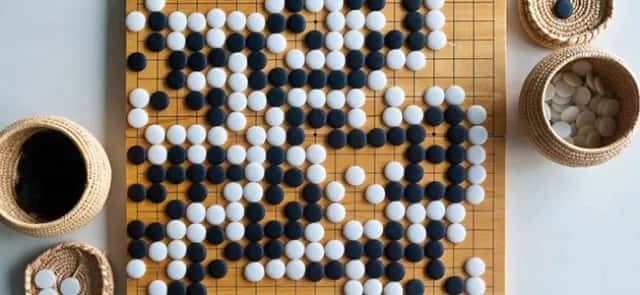
Tabletop games, games in society
Board games, solitaire games, tabletop games, games of chance, video games, traditional games… There is something for everyone, whatever their tastes! As cultural products, games reflect the societies that produce them. But they can also help us develop our mental abilities.
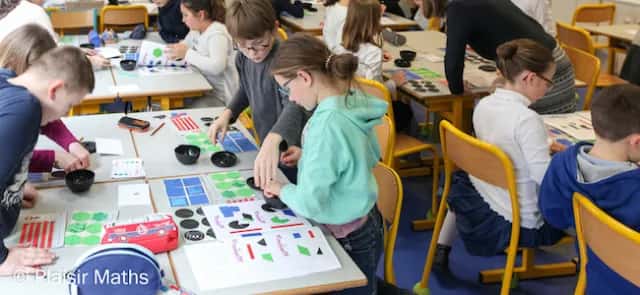
Playing games in mathematics class
Games can play an important role in school mathematics. What if every problem took the form of a game? Here is how, in just a few playful steps, to move beyond the confines of a high-school curriculum.
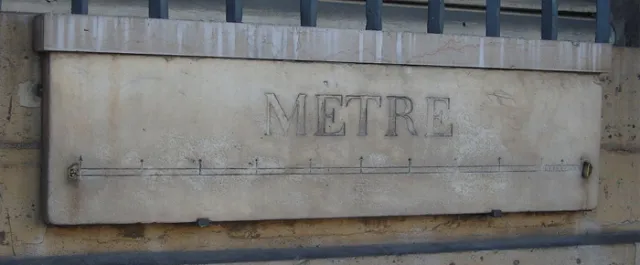
A new definition of the International System of Units
The conference held in Versailles in November 2018 changed four units of measurement, including the kilo. These new units will no longer depend on specific experiments. Their definitions will take effect in May 2019. What better opportunity to look back at the origins and evolution of our units of measurement?
Counting without counting | Tangente
Everyday language still bears traces of certain ancient counting practices.
The SCM–FFJM competition | Tangente
Each year, the SCM, in partnership with the FFJM, organizes a research competition based on a mathematical problem drawn from "real life." This time, participants have until April 30 to study traffic congestion in Houston.
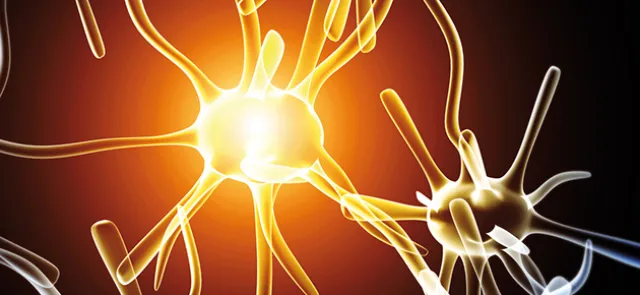
AI: Finance and markets love it!
The financial sector is not among the leaders in AI. Yet one of the fundamental mechanisms of neural networks—stochastic gradient descent—has a counterpart in financial markets. Banks are therefore beginning to adopt algorithmic methods for numerical computation.
The Villani report on AI | Tangente
Last March, mathematician and member of parliament Cédric Villani oversaw the drafting of a report on artificial intelligence (AI), a kind of "roadmap" charting the field's current state and future.
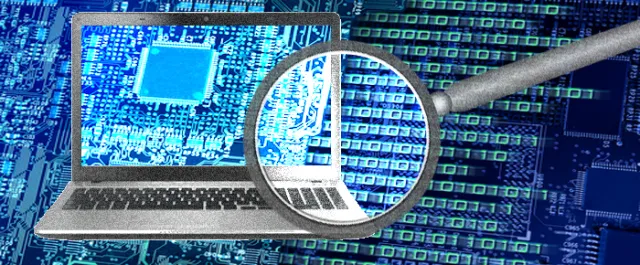
Computer-assisted proofs | Tangente
Can a machine prove a theorem? Probably not without a human to guide it, but computers are becoming increasingly useful assistants—for example, by turning a human proof into a formal one. Spectacular developments and applications are currently under way.
The Bernard Novelli Prize:
Game-playing is one of the fields in which artificial intelligence excels. Club Tangente invites high school—and even middle school—students to undertake a project on the subject.
Maths exposes a Lotto advertising scam | Tangente
The Belgian National Lottery has just changed its prize rules. New winning combinations have been introduced for Lotto (with two "t"s), offering new (small) prizes.

Ponzi schemes
Pyramid investment schemes, which pay early investors with funds contributed by later ones, have shown their limitations. They can be modeled. Curiously, however, some government practices are not so very different from these models…
Maths for the taxman | Tangente
Algorithms are used to cross-reference data from several sources and assess the plausibility of a tax return.
Soroban and Japanese human calculators | Tangente
Practising the Japanese abacus is considered an art in Japan, where, as in judo, practitioners progress through kyu belt ranks and then dan grades.
Numeracy: an asset for life | Tangente
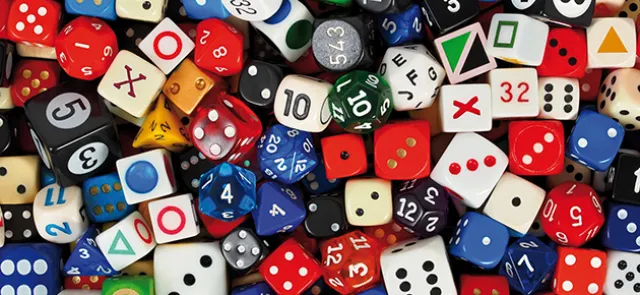
Being able to estimate large numbers, calculate a proportion, understand a percentage, convert currencies, or simply perform basic arithmetic without the help of a smartphone or calculator is essential in everyday life. Yet innumeracy is on the rise.
Mental arithmetic: a vital skill | Tangente
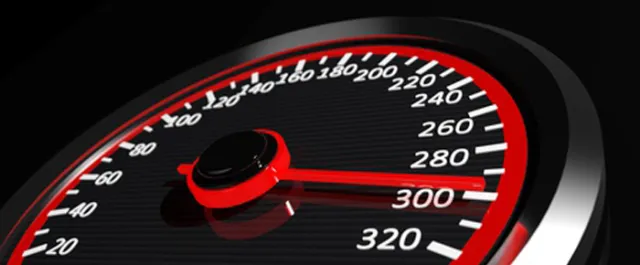
There is unanimous agreement: mental arithmetic is fundamental both to mathematics education and to citizens of tomorrow. What lies behind this remarkable consensus, and where does mental arithmetic stand in schools today? Let's take stock.
From intuition to rigor
Studying derivatives of functions sometimes leaves only a distant memory of applying somewhat esoteric formulas. Yet the underlying idea is as simple and concrete as it is effective. What if we went back to basics to gain a better grasp of the concept's power?
Forecasting the world's population | Tangente
There was much discussion in 2017 following a UN study: the world's population, currently at seven billion, will reach almost ten billion in 2050.
How SNCF fares are polluting France | Tangente
More and more travelers are wondering whether, in the end, driving might be cheaper.

Where do the figures come from? | Tangente
Public authorities and the media release all kinds of figures, presenting them as indisputable facts. Where do all these numerical data come from? Where can we find them—in online sources, studies or elsewhere? How can we form an informed opinion?
Art as a way to interpret numbers | Tangente
The digital artwork Exit illustrates global population movements