



Math for everyone
Mathematical content accessible to everyone
History of shapes: Geometry and art intertwined | Tangente
Mathematics inspires artists, as a wonderful exhibition at Les Tanneries, on the banks of the Loing in Amilly, Loiret, demonstrates.
2016 US election: an analysis of the electoral system | Tangente
The outcome of the US election did not match the forecasts based on opinion polls. What happened?
RSA encryption explained by example | Tangente
RSA underpins the encryption of financial transactions.
Fermat's little theorem in practice | Tangente
Fermat's little theorem is used to test whether a number is prime. Here is how.
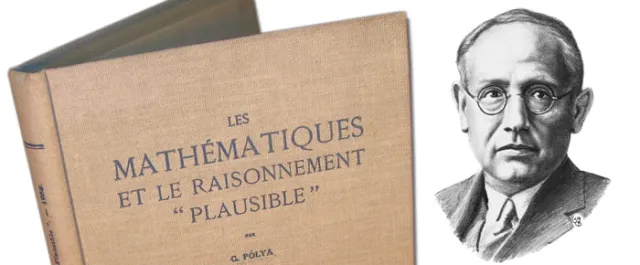
Psychological experiments in arithmetic
Like any other scientist, a mathematician makes use of experiments. But these do not necessarily resemble those conducted in other sciences: carried out mentally or on a sheet of paper, they are usually psychological in nature!
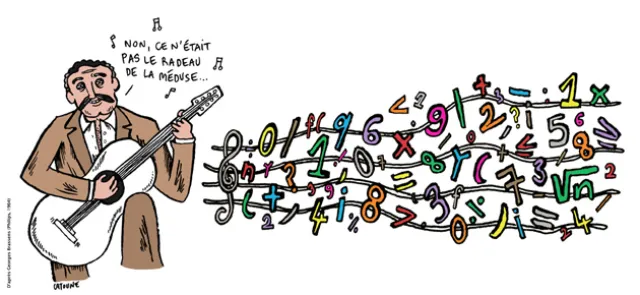
In search of friends
Integers never cease to fascinate us: divisibility raises some formidable questions, as several conjectures about perfect numbers attest. Here, experimenting with a computer is a valuable aid in the hunt for counterexamples.
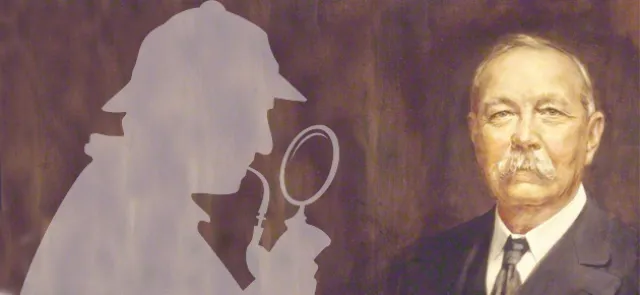
Deduction, induction, abduction: three forms of logic | Tangente
A host of tiny clues leads the detective Sherlock Holmes to formulate a theory, moving from the particular to the general. He is well aware that his method leads to the truth only if it is confirmed by the facts—that is, by observation!
Simulation and proof: two complementary approaches
Some problems involving chance are easier to solve by simulation... but a proof is always more convincing! Although simulation produces a result more quickly in practice, the value of a theoretical study lies in its generality.
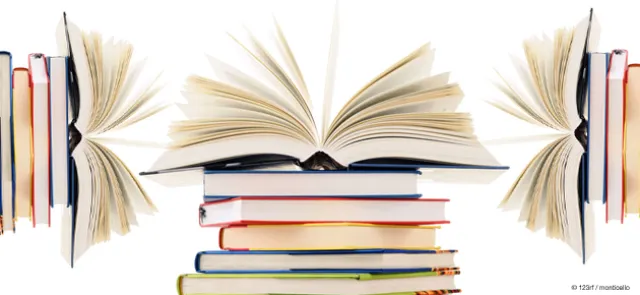
A taste for maths... through reading!
Inspiring an interest in mathematics through popular science books lies at the heart of many recent initiatives. By a happy coincidence, in early 2017 the City of Paris libraries are launching an event with precisely this aim. Its title? "A taste for maths."

2016 Awards: the winners
The 2016 Tangente Awards were presented on November 28 at the Palais du Luxembourg. Here is our report on awards that are gaining ever greater prominence in France's scientific and cultural landscape.
Those darn paradoxes! (4): A Mathematical Brief | Tangente
Every claim must be proved properly.
Those pesky paradoxes! (3) — Maths brief | Tangente
Logic may sometimes try to deceive us—beware!
Those darn paradoxes! (2) — Mathematical note | Tangente
God exists because mathematics is consistent, and the devil exists because we cannot prove it...
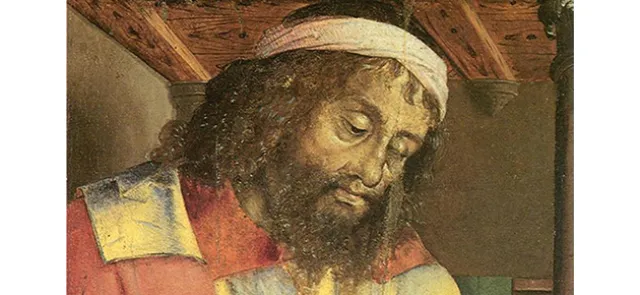
The multiplicity of infinities
Actual infinity is a mathematical fiction, useful in calculations and proofs alike. We may reject it and make do with potential infinity. But if we accept the notion of infinity, there must be more than one. Georg Cantor—him again!—proved it.
Holy paradoxes! (1): A mathematical brief | Tangente
Paradox is to logic what experiment is to the physicist: it allows us to adjust theory in response to the question posed by an alarming result. It is a springboard for the mind.
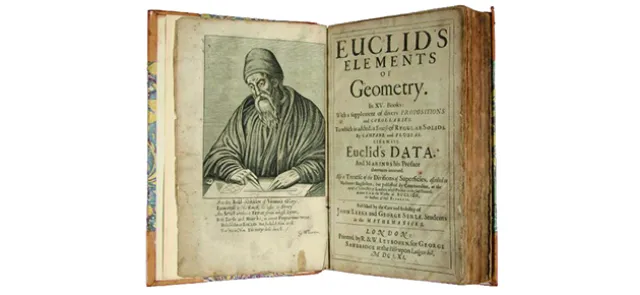
What exactly are axioms? — Geometry | Tangente
In mathematics, every proof starts from premises assumed to be true. What particular form must these premises take to become axioms, the foundation of all our current theories?
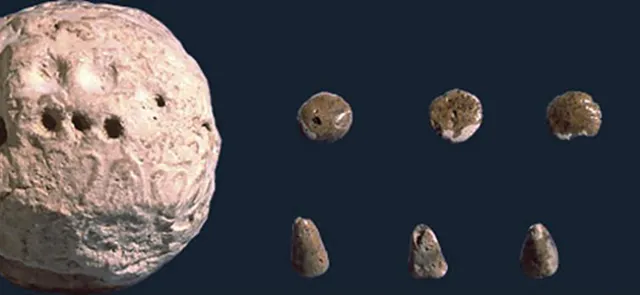
Constructing numbers: a long history
In the beginning was number... If we go back to the very origins, these objects were represented by pebbles before being encoded by symbols. In fact, there are numbers to suit every taste! As everyone knows, when you love something, you don't count the cost...

Dazzling binary relations
All people are born free and equal in rights. Yet someone like Coluche could add, not without mischief, that "some are more equal than others"! Defining an order, or an "equality" of some kind, requires us to establish precisely what these notions mean.

Naming the elements of a set
As David Hilbert famously remarked, assigning a name to a mathematical object is artificial. Identifying an object with its image under a bijection, however, so as to bring out its properties, can be decisive.

Relations and maps: structuring sets
A notion of relation between sets is essential if we are to begin doing mathematics. At the heart of the foundations of mathematics, the concept of a relation includes maps as a special case and gives sets structure.