



Math for everyone
Mathematical content accessible to everyone
The rules of infinity
You cannot play with sets without abiding by certain rules...
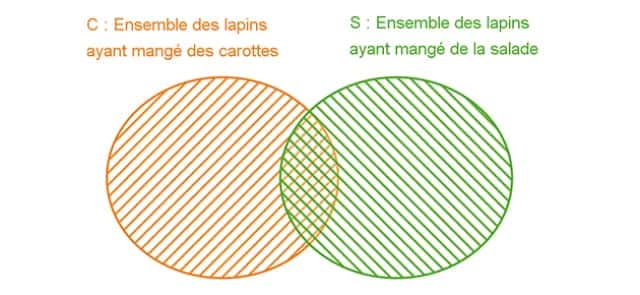
Potato diagrams: a chipper idea
When considering several subsets of the same set, it can be difficult to distinguish their various intersections. Representing these subsets as "potato-shaped blobs" often makes things clearer—and keeps us from looking like potatoes when faced with questions that are simpler than they seem.

The set and its subsets
Elementary operations on sets include inclusion, union, intersection and symmetric difference. The notion of a power set is equally natural and fruitful. How can we describe, count and structure the subsets of a set?

From a collection of objects to a set
A set can be defined extensionally or intensionally. Constructing the natural numbers then becomes an easy but instructive exercise. Yet beware the apparent simplicity of a set viewed as a mere collection of objects: paradoxes lurk...
Set and Dobble: two smash-hit games | Tangente
Here are two well-known games whose structure is based on set theory
The New Math controversy — A Tangente math brief
By the late 1960s, reform of the mathematics curriculum had become essential. The reform proposed by the Lichnerowicz Commission took the conceptual approach too far, at the expense of intuition.
The language of sets
Words and symbols are also crucial to set theory...
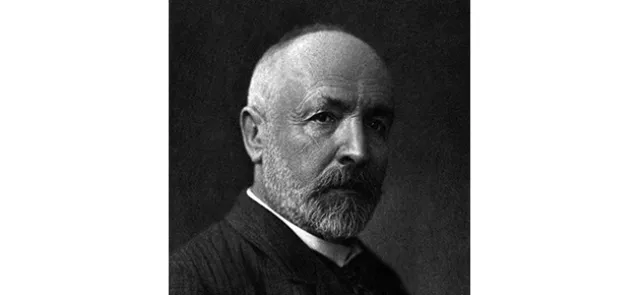
An unsettling approach to mathematics | Tangente
Set theory, iconoclastic in Cantor's day, has become universal. Nothing like it had been seen since Euclid: it provides a foundation for mathematics! That foundation seemed solid—until paradoxes emerged. So what is this highly controversial mathematical construction?
Paradoxes of infinity — Math brief | Tangente
Infinity must be handled with care, lest we lose ourselves (in its paradoxes)...
Lewis Carroll: toward modern logic | Tangente
The marvelous storyteller behind Alice's Adventures in Wonderland was also a photographer, a mathematics teacher at the University of Oxford and… an inspired logician.

The axiom of choice
Being able to choose an element from a set seems natural. But it is truly natural only when the set is finite. Beyond that, an axiom is needed before we can choose! Some consequences of this axiom are surprising, so… should we accept it?
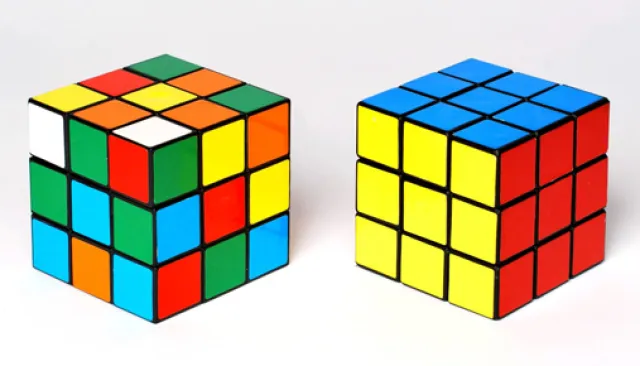
Join the groups!
The concept of a group first emerged from efforts to solve equations in the 19th century and soon became indispensable, highlighting parallels between situations that at first seem quite different. Let's see why mathematicians are so group-minded.
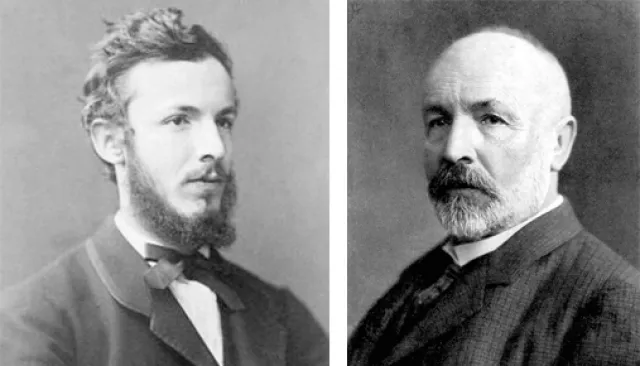
Georg Cantor: from finite to infinite
To extend useful results about finite sets to infinite sets, Cantor defined equality of cardinalities in terms of bijections, and hence inequality in terms of injections and surjections. Remarkably, this yields an order relation.
Municipal grants: the maths that decide | Tangente
They are a key part of the budgets of municipalities and intermunicipal authorities. They are often calculated in rather strange ways, involving logarithms and the fifth power of the population!
What if it were false?
Is Pythagoras' theorem really true? The question may seem strange, but in fact it all depends on the setting in which we wish to apply this geometric result.
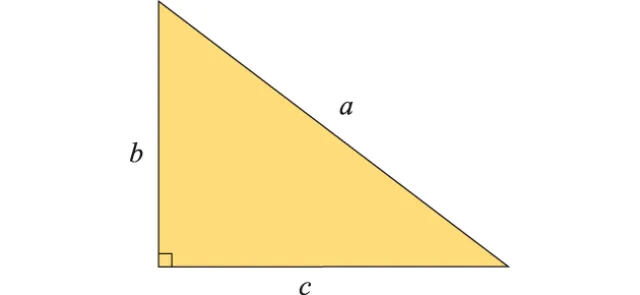
Pythagorean triples
In a right triangle, the square of the hypotenuse equals the sum of the squares of the two sides forming the right angle. When three integers satisfy this relation, they are called a Pythagorean triple. What are these numbers, and how can they be characterized?
A few classic paradoxes
Paradoxes are fun to explore and require no specialist knowledge. They help us better understand rationality, truth, probability, uncertainty and information… along with the many theories built around them. Prepare to be surprised by a few spectacular classics.
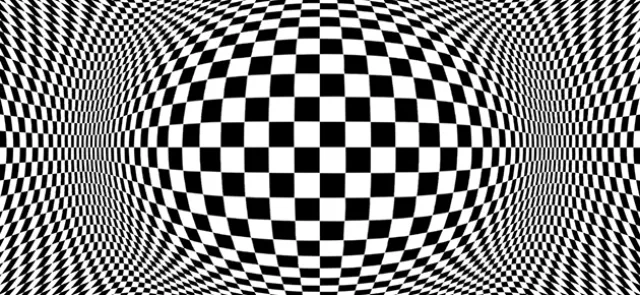
Illusory geometry: baffling squircles | Tangente
Spectacular optical illusions are taking the Internet by storm: two pieces that appear to be different sizes fit perfectly on top of each other; square shapes appear circular when reflected in a mirror; a chocolate bar loses its squares one by one without ever getting smaller... Here is the explanation behind some of these cognitive deceptions.
They make mathematics an art: art and geometry | Tangente
Many contemporary artists incorporate mathematical concepts into their work.
Prologin: computer science for young people | Tangente
Have you heard of Prologin, a dynamic organization of young computer scientists?