



New
Problems presented in the form of a short story or narrative account
 Podcast
Fermi's wacky problems
They contain no data, yet a little ingenuity and plenty of common sense are all you need to work them out in your head: welcome to the world of the wacky problems invented by physicist Enrico Fermi.
 Podcast
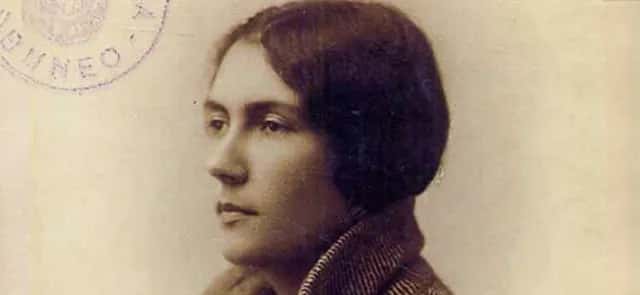
Peano by his great-niece | Tangente
Alongside official biographies, family accounts offer other glimpses into figures known mainly through their work. Lalla Romano, the celebrated Italian author, bears witness to her intellectual closeness with her great-uncle, Giuseppe Peano.
 Podcast
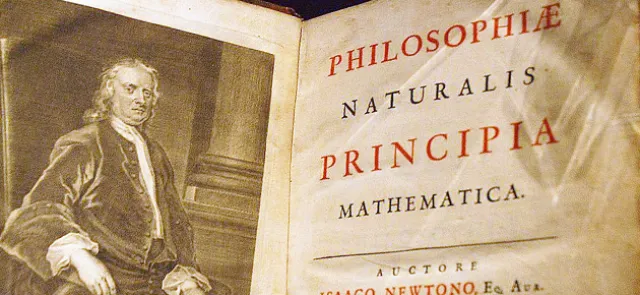
More than a translation of Newton | Tangente
Émilie du Châtelet is famous for having translated Isaac Newton's scientific work into French. Yet she did not simply reproduce the Latin text identically in French; she undertook an original rewriting of the proofs and concepts of Newtonian physics.
 Podcast
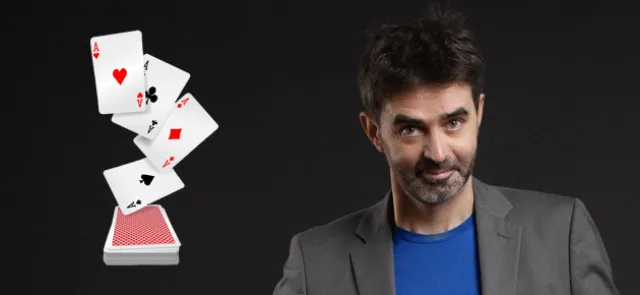
Mathemagical interview with Yves Meret | Tangente
Yves Meret teaches mathematics at Lycée Blaise Pascal in Rouen, but he is also a magician. Here he tells us how he lives out these two passions, which he has turned into his profession.
Clairaut.com: a complete online biography | Tangente
As its name suggests, clairaut.com is devoted entirely to Alexis Clairaut. It provides a comprehensive inventory of his works, with links to them, along with his correspondence, academic reports, and the principal tributes and portraits devoted to him by his contemporaries.
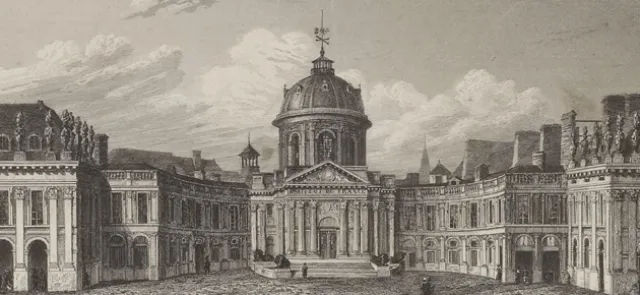
Cauchy: Conviction, maths and politics | Tangente
Cauchy's century was a veritable political laboratory: France passed through a succession of radically different regimes. Amid this constant change, Cauchy, a Legitimist, showed no lack of courage in defending his beliefs. Yet he remained steadfastly devoted to science, even when it meant helping regimes for which he had little sympathy.
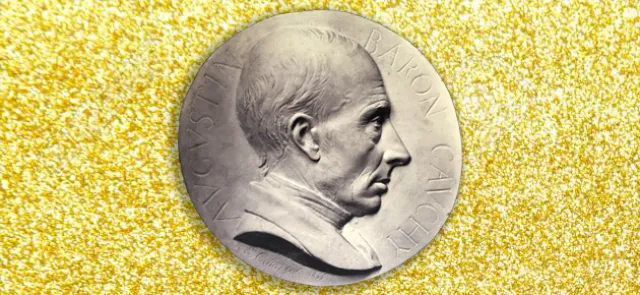
The origins of complex analysis
Cauchy is often credited with single-handedly founding complex analysis. The reality is subtler: although Cauchy gave the subject its structure and rigor, he drew on a wealth of earlier research, notably dating back to d’Alembert. Moreover, his involvement was prompted by debates between Laplace and Poisson over whether the use of complex numbers in integral calculations was legitimate. To understand Cauchy’s work, then, we must reconstruct its entire intellectual context.
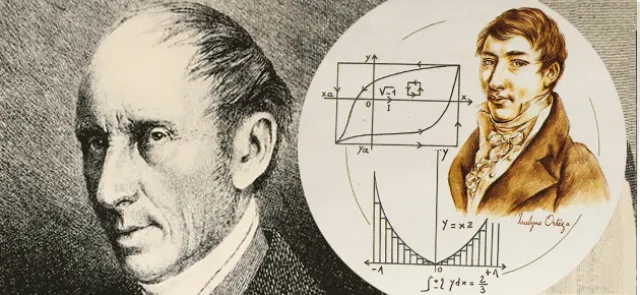
Editorial
The latest elections were a fiasco for the government, which has faced intense popular opposition and serious economic difficulties for months. Hoping to regain the initiative, the head of state then decides, to everyone’s surprise, to dissolve the National Assembly…
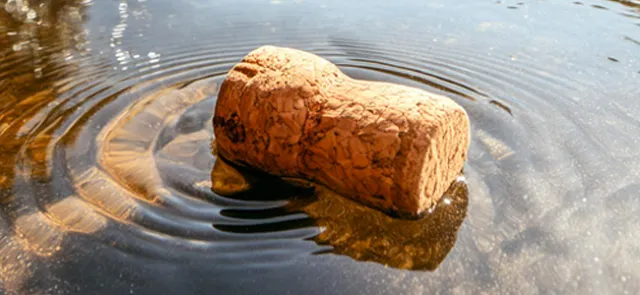
A cork on the river | Tangente
Set a cork adrift on the surface of a river. When its path is too difficult to calculate, approximation methods are the only option. Sometimes, however, the way the water flows makes the reliability of such methods problematic.
The egg equation | Tangente
Three researchers, Valery Narushin, Michael Romanov and Darren Griffin, recently published a paper proposing a general formula for drawing the outline of any real egg.
The man of fractures
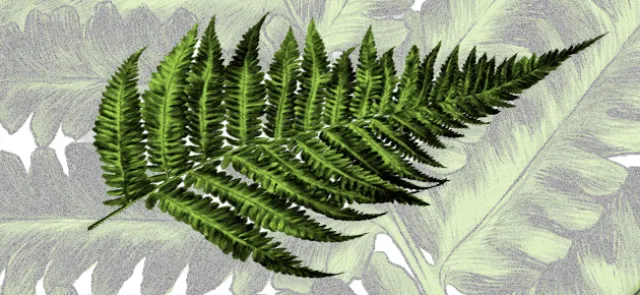
For millennia, straight lines, circles, parabolas, and other smooth surfaces had reigned supreme and unchallenged over geometry. Then Mandelbrot unleashed the "mathematical monsters" of the early 20th century, transforming our picture of the world forever.
Old-time fraction puzzles to solve | Tangente
Thirds, quarters and other fractions have long provided the basis for puzzles in a wide range of settings. Here are three from centuries past.
Fractions in the temple of integers?
As its name suggests, Neil Sloane's On-Line Encyclopedia of Integer Sequences contains only integers. Yet there is a roundabout way to introduce fractions into it…
2023 Tangente Awards winners | Tangente
Since 2010, the Tangente Club has used the Tangente Awards to honor creative works that showcase mathematics. The winners receive a work of art. The awards ceremony took place at the Musée des Arts et Métiers in Paris on December 3, 2023, during Tangente Day.
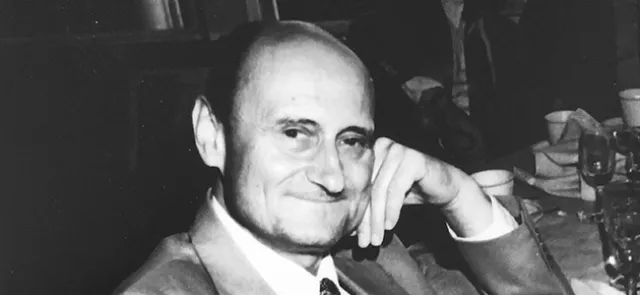
Egon Balas | Tangente
Egon Balas's life story reads like an adventure novel. Discover the remarkable story of this mathematician from communist Romania, who managed to escape the turmoil brought upon him by his love of freedom and whose name is associated with numerous discoveries, particularly in operations research.

A history of ordered means: AM, GM, HM | Tangente
“The” mean of two numbers is defined “naturally” according to the context. It is not always the familiar arithmetic mean! Several different notions coexist and are closely interconnected, as Liouville, Cauchy and Jensen clearly understood.
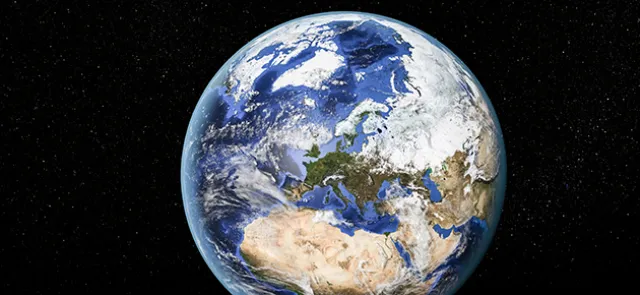
Stereographic projection
Since 2021, the Bourse de commerce in Paris has been open to the public, showcasing contemporary art from the Pinault Collection. Its superbly renovated interior offers mathematicians an opportunity to explore… stereographic projections!
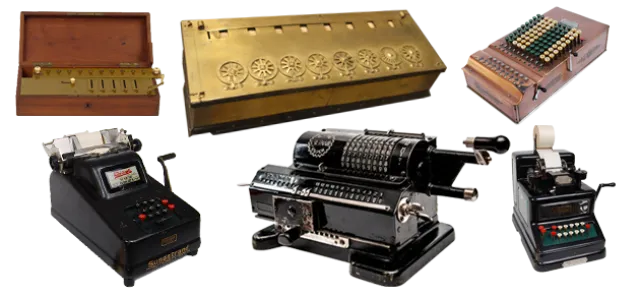
Mechanical secrets of the 1642 Pascaline | Tangente
Electronic calculators, now built into our phones, have made us forget the mechanical marvels that came before them. At just 19, Blaise Pascal developed the first calculating machine and, after a hard struggle to perfect his invention, captivated his contemporaries.
Pierre de Fermat, Pascal's famous contemporary | Tangente
Who was Pierre de Fermat? Pascal regarded him as the greatest mathematician of his time. He was a very modest man, probably aware of his extraordinary mathematical abilities, who readily shared his often original ideas. We know that he was a man of great learning, capable of translating works from Latin and Greek and writing sophisticated poetry, even… in Spanish.

The barber was a woman
The barber paradox is said to be just the thing for dazzling people at parties. Although it serves an educational purpose by illustrating one of the most fundamental results in set theory, taken out of context it may well backfire on you!