After three years of restoration and transformation under the direction of several figures, notably Japanese architect Tadao Ando, one of the project’s lead architects, the Bourse de commerce in Paris opened to the public in 2021. Now devoted to modern and contemporary art, the building houses a remarkable heritage collection. Most notably, the inside of its dome bears an immense fresco celebrating global trade across the five continents in the 19th century.
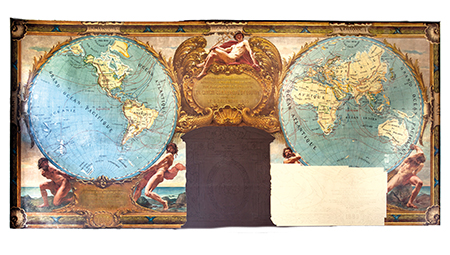
A map of the world
------------------
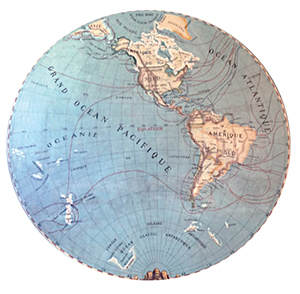
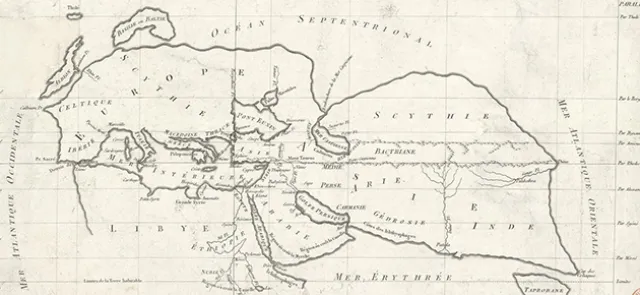
In a room on the ground floor, continuing the same theme of showcasing France’s commercial might, there is a map of the world depicted on two discs. Apparently dating from 1865, the painting remains unfinished, and its artist has yet to be identified.