



Graphs and strategies
In games of perfect information, graphs play a fundamental role: in theory, by working backwards from the final positions, they make it possible to know whether a position is winning or losing for the player who inherits it. Reality is more complicated, particularly when the number of positions, like in the game of Go, is too large. But elaborate theories make it possible to know one's lead or lag behind the opponent or to bring together games that, a priori, had no common points. The famous game of Nim is part of these references.
All articles in this folder
Learning maths through Go at school | Tangente
With adapted rules and smaller boards, Go provides a way to learn mathematics that can be introduced as early as preschool.

Half-move advantage in combinatorial games | Tangente
In a board game, it is fairly common, partway through a match, to feel that you are ahead of (or behind) your opponent. Through the example of Domineering, this article invites you to discover how John Conway formalized this notion.
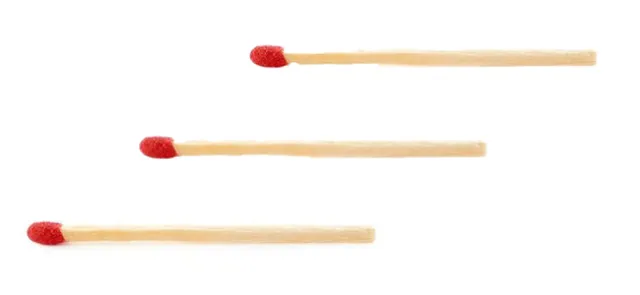
Nimbers applied to the game of Cram
The game of Cram consists in placing dominoes on a grid. Remarkably, its study can be reduced, via the definition of a category of mathematical objects called "nimbers", to the Marienbad matchstick game.
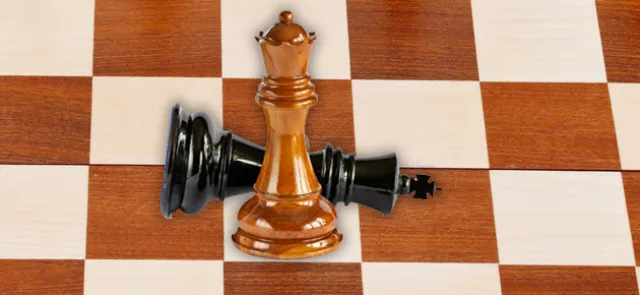
A strategy for moving the queen
Two players take turns moving a queen across a chessboard. This seemingly innocuous game offers a way to discover and illustrate a major result in game theory: the Sprague–Grundy theorem. It also has another mathematical surprise in store…
Symmetric play in chess: does it work? | Tangente
In some two-player sequential games with complete information, one player may be tempted, when possible, to mirror the opponent's moves. When this gives one player a winning strategy, the game loses all interest unless the rules are changed to avoid this pitfall.

Grundy's game: graphs and winning strategy | Tangente
Graphs are crucial to strategies in games of complete information, provided the positions are not too numerous and can be represented. Patrick Grundy devised a game to formalize these strategies.
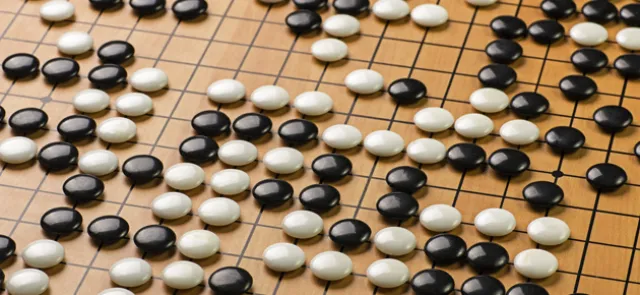
A short mathematical history of the game of go
Both millennia-old, as a game and as a science, go and mathematics are two worlds of phenomenal depth that intertwine, enrich each other, and shed light on one another. Go constantly draws on various forms of mathematics, to the point of becoming a research subject in its own right.
Ko in Go: rules and strategies | Tangente
A ko arises when a stone is threatened with capture, but after the opponent captures it, the capturing stone is itself in a position to be captured.