



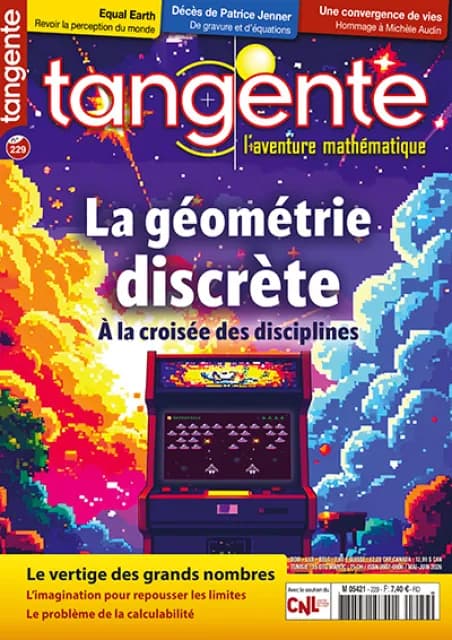
This issue is not fully translated into English yet; only translated content is shown.
Read the French versionAll folders in this issue
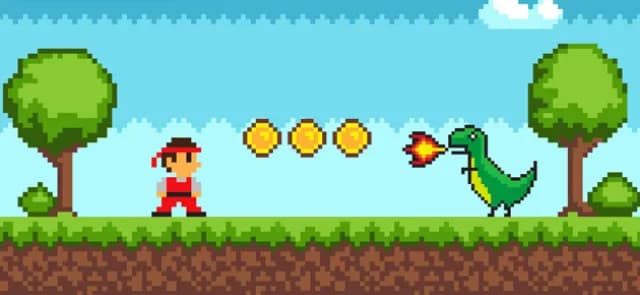
Discrete geometry, at the crossroads of disciplines
Discrete geometry is a field at the crossroads of several disciplines, such as geometry, arithmetic or combinatorics. To get an idea, let us replace the continuous Euclidean plane with a grid, made up of points with integer coordinates. The geometric objects we encounter there are, for example, polygons whose vertices lie on these points. Can we define a line, a circle? These questions arose with particular acuity from the 1950s onwards, when it became necessary to represent images on screens, discrete sets of pixels. Many problems in discrete geometry are still open and lead to exciting developments.


Very large numbers!
In science as well as in everyday life, we are led to encounter large numbers. The way to name them then depends, according to countries, on the choice of the scale used, long or short. The imagination of scientists, particularly mathematicians, being boundless, techniques for designating even larger numbers have been developed. This is the case, from Antiquity, with Archimedes' The Sand Reckoner. More recently, in the 20th century, John Conway and Donald Knuth developed new notations for numbers immensely larger than the number of elementary particles in the universe. And what is even more surprising, is that they are found in certain theories!
All articles in this issue
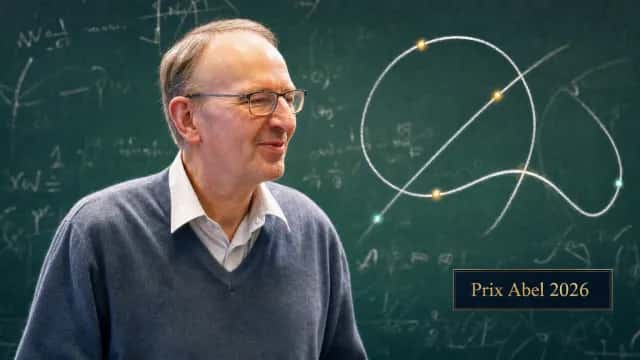
The 2026 Abel Prize
Awarded annually by the Norwegian Academy of Science and Letters since 2003, the Abel Prize is one of mathematics’ most prestigious honors: for many, it is the field’s equivalent of a "Nobel Prize."
 Podcast
The Boltzmann equation: the triumph of statistics
Formulated in 1872 by the Austrian physicist Ludwig Boltzmann (1844–1906), this equation describes how a gas or fluid evolves toward equilibrium. It bridges molecular collisions at microscopic scales and the macroscopic world.
 Podcast
A bug in 2038?
A massive bug related to the way computers represent large numbers looms on January 19, 2038, at 3:14:08 a.m.
 Podcast
From geometry to geopolitics
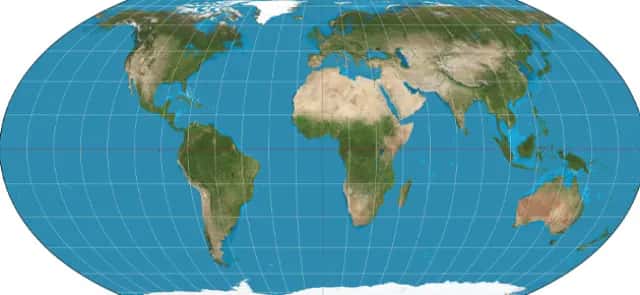
We tend to think of mathematics as a perfectly neutral science. Yet, like any human construct, its uses can prove more political than they appear. That is how an age-old geometry problem found its way into diplomatic debates in recent months.
An equation engraver's imprint
Patrice Jeener (1944–2026) passed away on March 3 in his village of La Motte-Chalancon, in the Drôme.
 Podcast
Michèle Audin: a convergence of lives*
Michèle Audin's life brought together several forms of commitment. Professional mathematician, writer, social and political activist: every strand was intertwined with and enriched the others.