




This issue is not fully translated into English yet; only translated content is shown.
Read the French versionAll folders in this issue

Everyday polynomials
In the unforgiving universe of continuous functions, where objects sometimes so anarchic that they cannot be faithfully represented graphically evolve, the family of polynomials is reassuring. What could be simpler, a priori, than these combinations of monomials 1, X, X², X³…? Besides, from Viète to today's mathematical competitions, they are often called upon in challenges that feature them. Polynomials also make it possible to approach, as closely as desired, the majority of functions we encounter in everyday life. But this effective approximation sometimes comes at the expense of intuition, and therefore of the requirements!


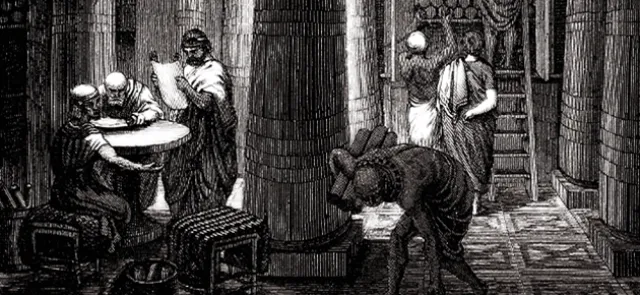
Translating mathematics
Due to their timeless and universal character, mathematics is a subject of choice for translation. Scholars, juggling between different languages, have strived to make scholarly texts available to everyone in the language of culture, sometimes making it possible to save fundamental works. Thus, the history of the translation of mathematical texts includes iconic places, such as Alexandria, Baghdad or Toledo, and stars like Boethius, the Banu Musa brothers or Adelard of Bath. But beware of imprecise transcriptions: the smallest deviation from the original meaning can ruin the entire endeavor. How, then, to translate a technical term, a new concept or a subtle idea into a language whose vocabulary is not sufficiently adapted? Some amusing awkwardnesses have thus come down to us.
All articles in this issue
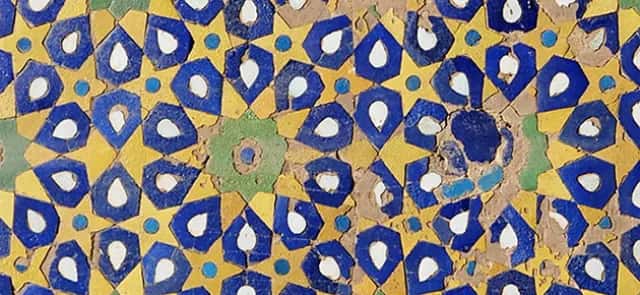
Persian tilings
A highly debatable approach to Persian pentagonal patterns has been repeated so indiscriminately in scientific journals that it has become received wisdom. It is high time to offer another perspective.
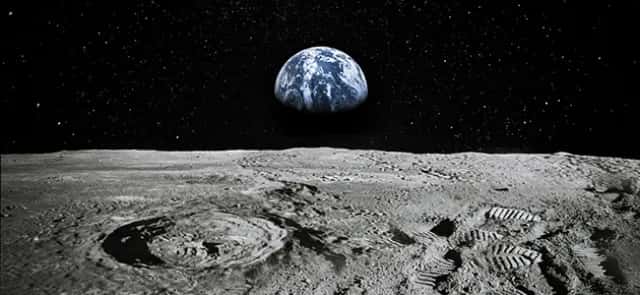
Katherine Johnson, an extraordinary woman
Mathematician Katherine Johnson died at the age of 101. She was one of the scientists who helped derive the equations describing the trajectory of an orbital spaceflight—essential to bringing the first astronauts to land on the Moon back to Earth!
Leonardo da Vinci: nature as a source of inspiration
Everything you need to know about Leonardo da Vinci

The emergence of probability theory
In the second half of the 17th century, Blaise Pascal and Pierre de Fermat exchanged letters on the development of a mathematical theory of probability that went beyond the elementary observations one might make about rolling a die. Christian Huygens would take their ideas further.

What if we replayed the match?
Predicting the result of a football match from statistics alone is impossible. Yet methods have been developed to refine such predictions. Goals often seem to come down to chance—but might analysing how the match unfolded provide a more reliable way to assess the teams?
Jumps in sequences
By playing with letters, digits and numbers, we can build sequences whose "stop" and "restart" rules reveal surprising arithmetic phenomena. It would take a clever mind indeed to fathom the jumps between successive terms!

What's new at the Académie des sciences
Of the eighteen newly elected members of the Académie des sciences, eight are women, including two in the mathematics section: Nalini Anantharaman and Mireille Bousquet-Mélou.