



Mathematical Themes
Explore the major mathematical themes: geometry, algebra, analysis, arithmetic, logic, and many other fascinating fields.
Textual self-reference: Hofstadter | Tangente
Wordplay is fertile ground for self-reference. Examples can be found in Douglas Hofstadter's books (see Tangente 131, 2009, and Tangente 154, 2013), as well as in countless anonymous creations (found online, for instance), whether apocryphal or well documented. Here is a selection.
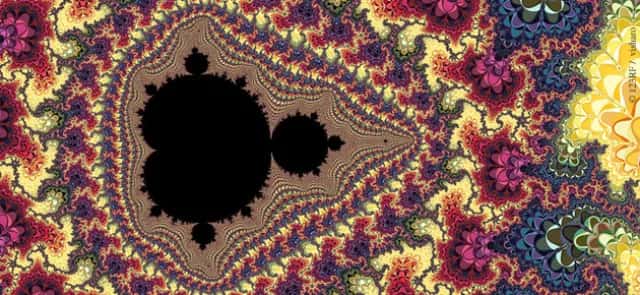
Paradoxes and self-contradictions in logic | Tangente
A source of amusement, self-reference also lies behind some famous and profound mathematical paradoxes. Logic, our senses and our certainties are all sorely tested. Reflection then takes over… and often leads to wonder!
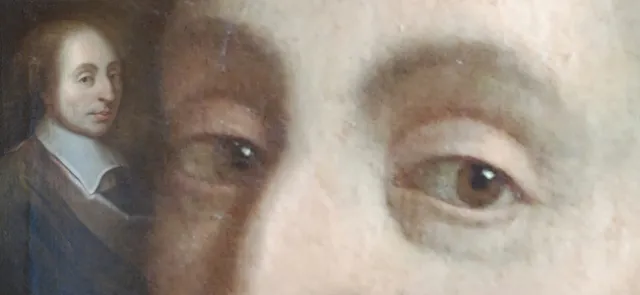
Pascal's ribbons
In the past, arithmetic mattered as much to merchants and accountants as it did to scholars. In the 17th century, Blaise Pascal devised a method for automatically testing whether one integer is divisible by another.
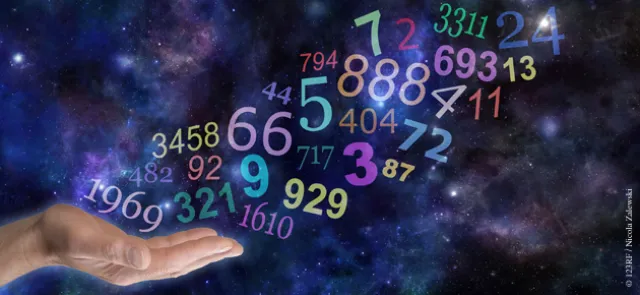
Finding divisors... without dividing
Telling almost at a glance whether one integer is divisible by another can sometimes be quite a challenge. Yet there are perfectly reliable ways to do so, even with fairly large numbers!

Simulated annealing
During an approximate computation, how can we distinguish a local minimum from a global one? Simulated annealing, based on a common practice in metallurgy, offers a subtle yet effective heuristic method for many applications.
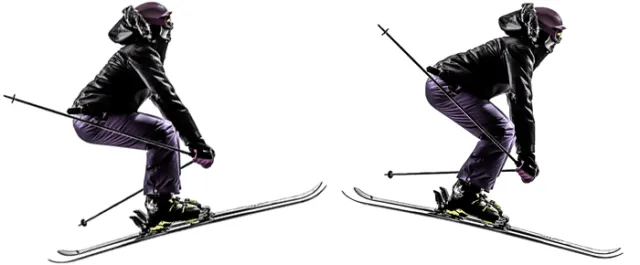
Gradient descent: skiing your way to a minimum
You are on a ski slope, surrounded by fog. Which route should you take to get all the way down? One approach is to follow the steepest slope—that is, the gradient. This idea yields both a numerical method and a way of finding optima.
Heilbronn triangles
How should points be placed in a region of the plane to maximize the smallest area determined by any three of them? Despite the elementary nature of this geometry problem, no general solution is known even today!

D'Arcy Thompson and the geometry of nature
Can the forms we see in nature be explained mathematically? Physics has had its principle of least action since Maupertuis in the 18th century, but biology had to wait until the early 20th century for anyone to attempt a synthesis.

Optimizing welfare?
Is the welfare of a population simply the sum of its members' satisfaction scores? This is far from certain, especially since measuring, comparing and aggregating individual utilities is no straightforward matter. Italian economist Vilfredo Pareto proposed a novel approach.
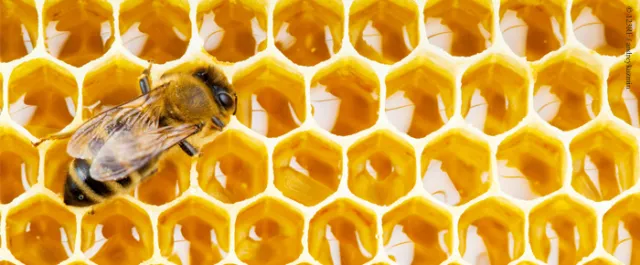
Thrifty bees
Optimize, optimize! That seems to be the bees' motto when they build their honeycombs. Let's take a closer look at their thrifty "methods." Geometry will prove invaluable in calculating the areas and angles of the cells.

Linear programming
Linear programming deals with problems that seem elementary in formulation: optimizing linear functions over a set defined by linear inequalities. Yet this theory has many highly practical applications.

The Monte Carlo method
In practice, finding an optimal value often involves computing demanding integrals. How can this be done? Physicists developed the Monte Carlo method, whose complexity does not increase with the dimension of the integrals involved.

Good divisions
Beautiful problems are like delicious dishes: we love to share them. Sometimes the question of how to share them out becomes interesting in its own right, especially when we are generous by nature and want to be able to let as many people as possible enjoy them.

Shortest paths: graph algorithms | Tangente
Is the shortest path from A to B always a straight line? Usually, yes. But when we must follow the network of roads and intersections in a city, we need a different perspective. That is where Dijkstra's algorithm comes to the rescue!
Using the derivative to hit bottom
Finding the lowest point on a given curve requires considering how the curve is approximated by a line near one of its points. This is where the tangent enters the picture

Coloring problems for all ages
Assigning colors—and their associated sets of constraints—to the vertices of a graph opens up the fascinating world of graph-coloring problems.

Triangles, and more triangles!
What is the maximum number of triangles that can be drawn with a given number of line segments?

On persistence
Apply the same algorithm to the digits of a number, then repeat the process with the digits of the result, and you encounter the notion of persistence… and the questions it raises.
Kissing numbers: kisses in geometry | Tangente
Kiss anyone you like...

Optimal packing of squares in a larger square | Tangente
You'll never arrange your boxes the same way again!