



Mathematical Themes
Explore the major mathematical themes: geometry, algebra, analysis, arithmetic, logic, and many other fascinating fields.

Rollers: when a triangle rolls | Tangente
The circle always seems to be the ideal shape for moving an object on rollers. Yet this is not so: a kind of equilateral triangle with rounded sides proves better suited to certain everyday situations.

Invaluable statistical software
Bayesian statistics has become an essential technique for establishing a chronology of archaeological events.

Statistical software for archaeology | Tangente
Bayesian statistics has become an essential technique for constructing chronologies of archaeological events.

Jean-Claude Gardin: a free-thinking archaeologist | Tangente
Few works offer as critical an overview of the state of a discipline as Archéologie théorique, written by Jean-Claude Gardin and published by Hachette in 1979.

Jean-Claude Gardin, a free-thinking archaeologist
Few books offer as critical an overview of the state of a discipline as Jean-Claude Gardin's Archéologie théorique, published by Hachette in 1979.

Jean-Paul Benzécri, the father of correspondence analysis
Initially a mathematician, Jean-Paul Benzécri (born in 1932) turned to multivariate statistics.

Jean-Paul Benzécri, father of correspondence analysis | Tangente
Jean-Paul Benzécri (born in 1932) began as a mathematician before turning to multivariate statistics.
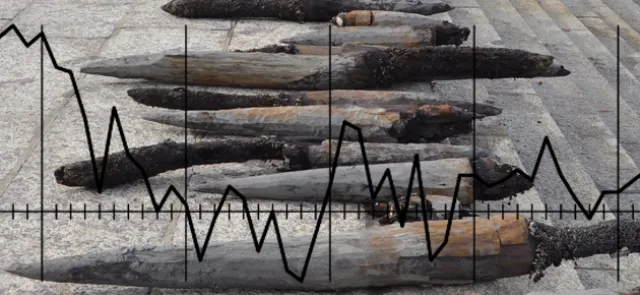
Dendrochronology: dating by tree rings | Tangente
How was a harbour built in Roman times? When was this violin made? When was a mine's infrastructure built? Dendrochronologists seek to answer all these questions by precisely dating objects, structures or remains containing wood.
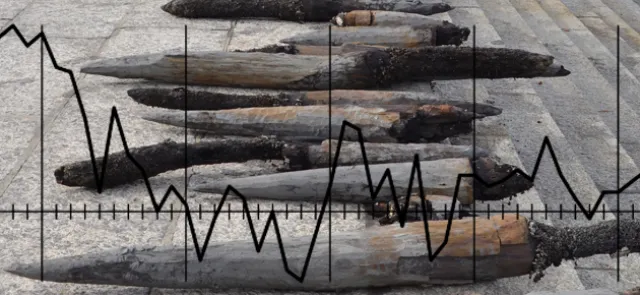
Dendrochronology
How was a harbor built in Roman times? When was this violin made? When was a mine's infrastructure built? Dendrochronologists seek to answer all these questions by precisely dating objects, structures, or remains containing wood.
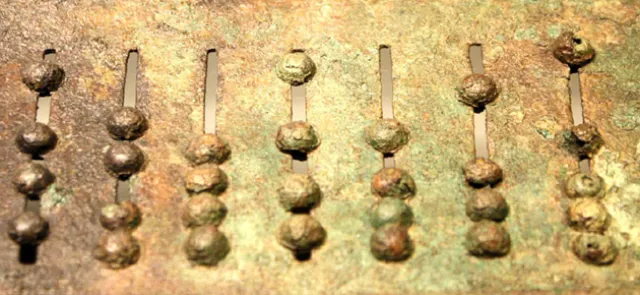
Beneath the paving stones… maths
Counting, measuring and building: these were the mathematical aims of the ancients. To achieve them, they created instruments that archaeologists have since unearthed.
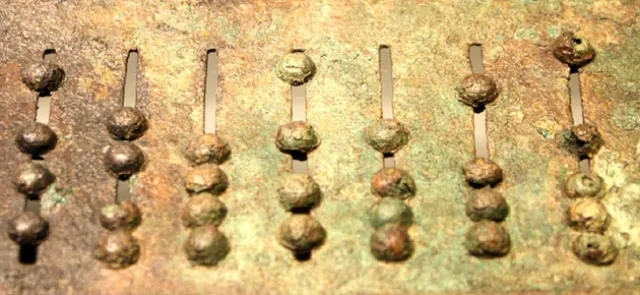
Beneath the paving stones… mathematics – Ancient mathematical instruments | Tangente
Counting, measuring and building: these were the mathematical aims of the Ancients. To achieve them, they created instruments that archaeologists have since unearthed.
Archaeological chronology: statistical methods | Tangente
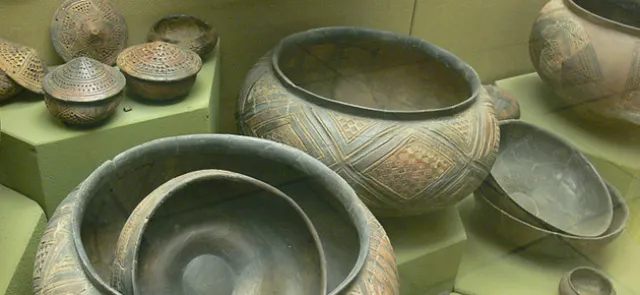
To establish a chronology, archaeologists draw on a variety of statistical models, including correspondence analysis. Monte Carlo numerical methods are also brought into play. Mathematics is becoming indispensable to archaeology!
Chronology
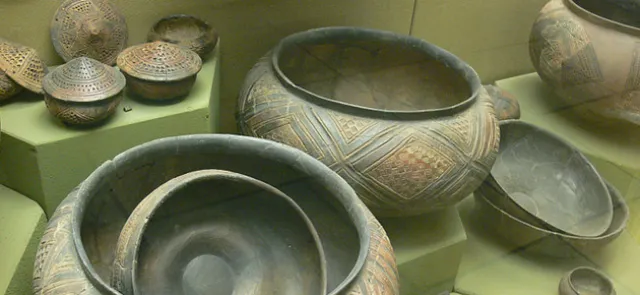
To establish a chronology, archaeologists draw on a range of statistical models, including correspondence analysis. Monte Carlo numerical methods also come into play. Mathematics is becoming indispensable to archaeology!
Bayesian statistics applied to dating
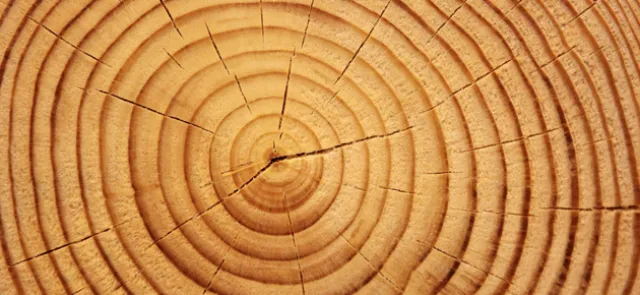
When we think of the tools archaeologists use to date objects or events, radiocarbon dating and dendrochronology immediately spring to mind. Mathematical techniques based on probability are also used.
Bayesian statistics applied to dating
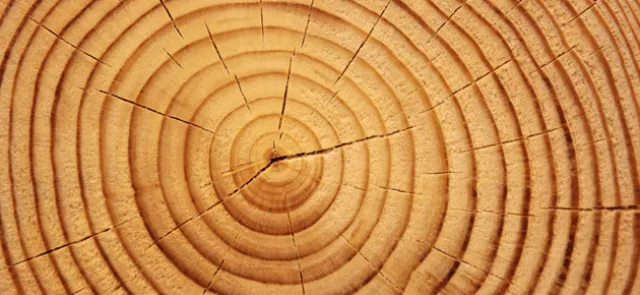
When we think of the tools archaeologists use to date objects or events, radiocarbon dating and dendrochronology immediately spring to mind. Mathematical techniques based on probability are also used.
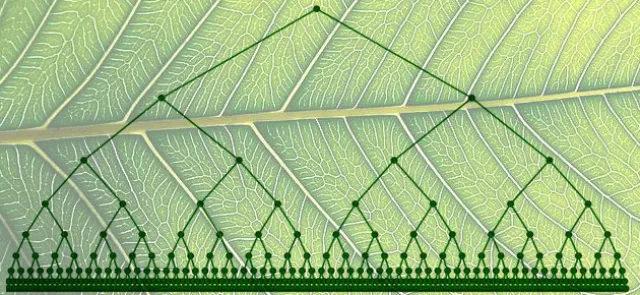
The dyadic tree
An infinite tree can be used to construct either the positive integers or the dyadic integers. The trick is to choose carefully where to put the 0s and 1s.
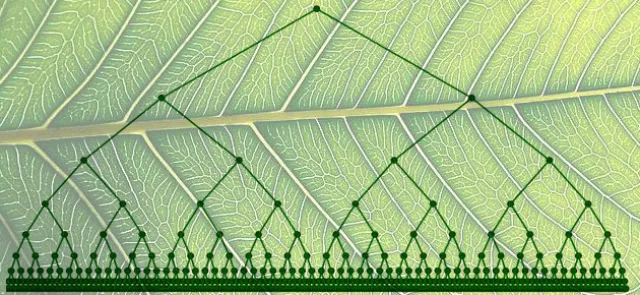
Dyadic tree: integers and p-adic order | Tangente
Starting from a tree whose leaves extend indefinitely, we can construct either the positive integers or the dyadic integers. The trick? Put the 0s and 1s in the right places.

Waves of settlement
Mathematical models developed by mathematician Albert Ammerman and geneticist Luca Cavalli-Sforza, combining human genetics and archaeology, have challenged prevailing views of population expansion and the myth of great invasions.

Settlement waves: A mathematical model | Tangente
Mathematical models developed by mathematician Albert Ammerman and geneticist Luca Cavalli-Sforza, combining human genetics and archaeology, have challenged prevailing accounts of population expansion and the myth of large-scale invasions.

A dive into a strange world of numbers
At the beginning of the 20th century, the German mathematician Kurt Hensel "invented" new numbers, written with infinitely many digits as in the decimal system, but based on a very different notion of proximity. This curious theory has proved highly fruitful in arithmetic!