Counting in France: a Belgian perspective
--------------------------------------------------
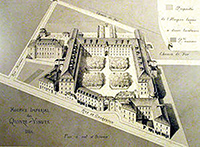
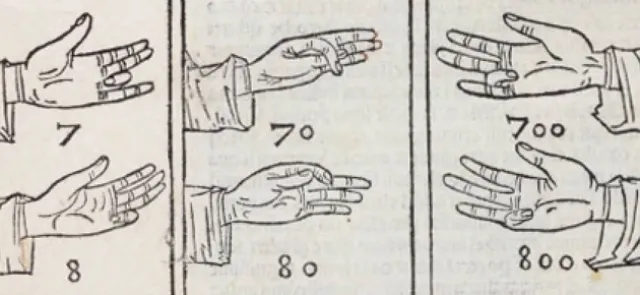
Do the French realize that their numbering system mixes base 10 and base 20? They count in base 10 up to 69, then switch to base 20 at 70. Historically, base 20 is thought to be a legacy of our Gaulish ancestors. This way of counting has left traces even in Belgium—for example, in the term for 80 ("four twenties"). Our Swiss friends prefer octante or, better still, huitante. Base 20 also appears in Molière (Frosine in L'Avare (The Miser), addressing Harpagon: "But you will live past six twenties"), in François Villon (who mentions the Onze-Vingts corps, comprising the 220 sergeants of the royal watch, in Testament CVII), and in the name "hôpital des Quinze-Vingts" (a healthcare institution that is still operating on rue de Charenton in Paris and had 300 beds when it opened).
But have we ever really considered the problems posed by this kind of mixed system? How should we write down an eight-digit telephone number dictated as "zero six sixty-ten sixty-ten"? And what about a child who is told "four-twenty-ten-eight" to indicate 98? The child hears 4, 20, then 10—and has to write "9"! Let's hear from one of France's greatest specialists in mathematics education, Guy Brousseau, who studied the subject and summed up his conclusion in this final statement: "Using forms such as ‘sixty-fourteen’ and the (even worse) ‘four-twenty-ten-seven’ holds six-year-old children back by at least two months compared with those who have a more sensible system."
Converting spoken numbers: a naïve algorithm