In 1770, it was not yet known whether equations of degree greater than 5 could be solved by radicals. Formulas existed for degrees 2, 3 and 4 (see "Before Abel and Galois"), but no one knew whether a formula existed for degree 5. With clarity, insight and a methodical approach, Lagrange set out to analyze the problem, carefully studying degrees 3 and 4 and drawing on historical sources (Cardano, Descartes, Euler…). His memoir Réflexions sur la résolution algébrique des équations (1770–1771) would become essential reading for every mathematician working on algebraic equations in the early 19th century.
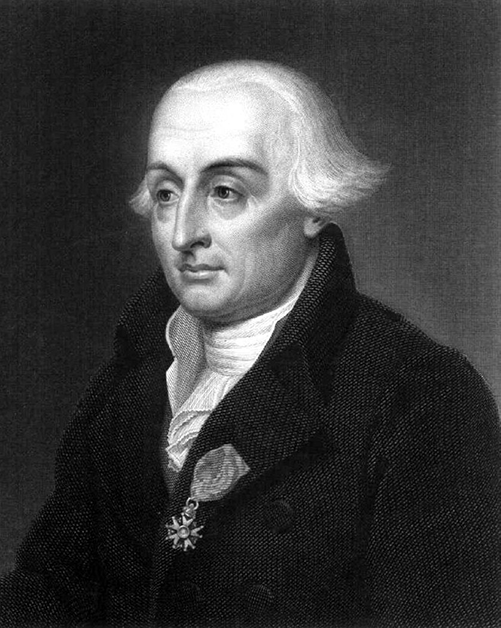
Joseph-Louis Lagrange (1736–1813).
Toward a simpler equation
-----------------------------
Lagrange examined transformations of algebraic expressions involving the roots of the equations under consideration. His idea was to start from a given equation and seek one that was "simpler to solve," either because it had lower degree or because it could be reduced to an equation of lower degree.