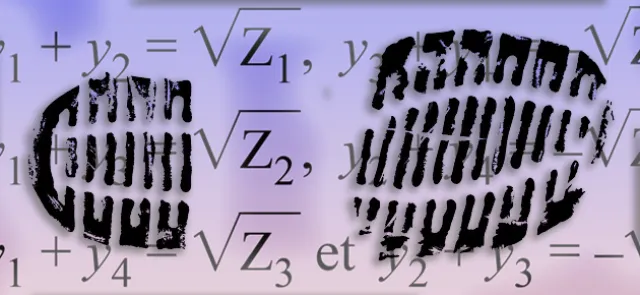
Solving algebraic equations has always interested mathematicians. Techniques for solving quadratic equations were known as early as antiquity, at least in many special cases, among the Babylonians and Egyptians, for example. For cubic equations, after attempts by Arab mathematicians to solve them geometrically or approximately, it was not until the 16th century and the Italian algebraists—such as Scipione del Ferro (1465–1526), Niccolo Fontana, known as Tartaglia (1499–1557), and Girolamo Cardano (1501–1576)—that a method of solution emerged. Quartic equations followed soon afterwards: in the 1540s, the Italian Lodovico Ferrari (1522–1565), a student of Cardano, proposed a method that reduced them to cubic equations. Two centuries later, in 1770, Lagrange proposed another method (see the article "A first step towards the concept of a group") that highlighted the role of permutations through the definition of auxiliary quantities, now called Lagrange resolvents. The resulting equation is cubic and therefore solvable by radicals (that is, using only the four operations +, ?, ×, / and the extraction of nth roots), which then makes it possible to calculate the solutions of the original equation.
What about fifth-degree equations?
--------------------
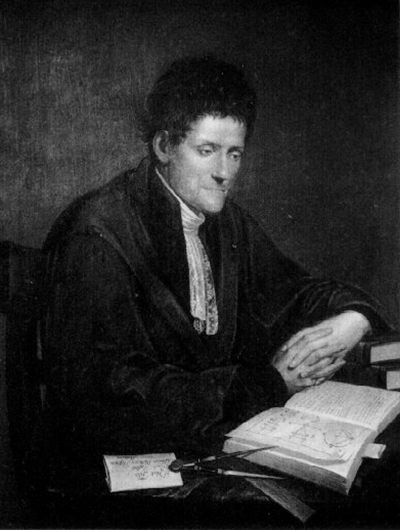
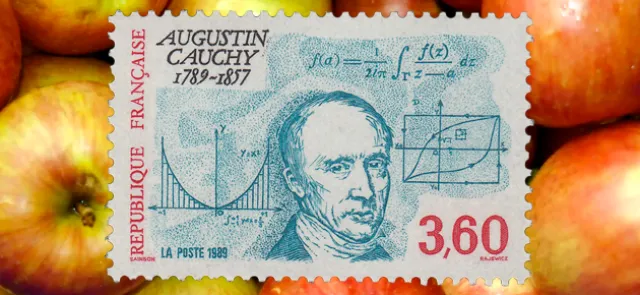
The question then arises: can these methods be used to solve fifth-degree equations? In 1800, after giving an initial, incomplete proof of the fundamental theorem of algebra, which states that every polynomial equation has at least one complex root (implying that an equation of degree n has n complex solutions), Carl Friedrich Gauss (1777–1855) expressed doubts that fifth-degree equations could be solved using radicals, but did not prove that it was impossible. Beginning in 1799, the Italian physician and mathematician Paolo Ruffini (1765–1822) published several proofs purporting to establish this impossibility. All his attempts focused on permutations of the solutions and on the impossibility of constructing an auxiliary equation of degree less than 5. To this end, he composed permutations and introduced the notion of the order of a permutation—techniques characteristic of the concept of a group. But his proofs were extremely long and contained gaps, so he struggled to gain recognition. Only Augustin Louis Cauchy (1789–1857) drew on Ruffini's work in his studies of permutations, published between 1813 and 1815.
####