


La résolution des équations algébriques a toujours intéressé les mathématiciens. Les techniques pour résoudre celles de degré 2 étaient connues, au moins dans de nombreux cas particuliers, dès l’Antiquité, chez les Babyloniens ou les Égyptiens par exemple. Dans le cas des équations de degré 3, après des tentatives par les mathématiciens arabes pour les résoudre géométriquement ou de manière approchée, il faut attendre le XVIe siècle et les algébristes italiens, tels Scipione del Ferro (1465–1526), Niccolo Fontana, dit Tartaglia (1499–1557), et Girolamo Cardano (1501–1576), pour avoir une méthode de résolution. Celles du quatrième degré suivent rapidement, et c’est l’Italien Lodovico Ferrari (1522–1565), élève de Cardano, qui propose, dans les années 1540, une méthode permettant de se ramener à une équation de degré 3. Deux siècles plus tard, en 1770, Lagrange propose une autre méthode (voir article « Premier pas vers le concept de groupe » ) où il met en lumière le rôle des permutations avec la définition de quantités auxiliaires, maintenant appelées résolvantes de Lagrange. L’équation ainsi construite est de degré 3 et est donc résoluble par radicaux (c’est-à-dire en utilisant uniquement les quatre opérations +, ?, ×, /, et l’extraction de racines n-ièmes), ce qui permet ensuite de calculer les solutions de l’équation initiale.
Et pour le degré 5 ?
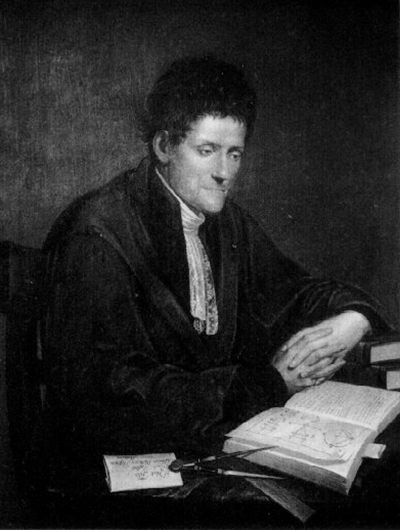
Une question se pose alors : ces méthodes permettront-elles de résoudre les équations de degré 5 ? En 1800, après avoir donné une première preuve (incomplète) du théorème fondamental de l’algèbre, indiquant que toute équation polynomiale admet au moins une racine complexe (ce qui implique qu’une équation de degré n possède n solutions complexes), Carl Friedrich Gauss (1777–1855) émet des doutes sur la résolution des équations de degré 5 à l’aide de radicaux, mais il ne prouve pas l’impossibilité. C’est l’Italien Paolo Ruffini (1765–1822), médecin et mathématicien, qui, à partir de 1799, publie différentes démonstrations montrant cette impossibilité. Ses tentatives portent toutes sur l’étude des permutations des solutions et l’impossibilité de former une équation auxiliaire de degré inférieur à 5. Pour cela, il compose des permutations, introduit la notion d’ordre d’une permutation : toutes ces techniques sont caractéristiques de la notion de groupe. Mais ses démonstrations, très longues, comportent des lacunes et il a du mal à être reconnu. Seul Augustin Louis Cauchy (1789–1857) puise dans le travail de Ruffini pour ses études sur les permutations publiées entre 1813 et 1815.