Towards a definition
--------------------------
We speak of duality when something has two seemingly contradictory aspects. Thus, the Church Fathers spoke of the dual nature of Christ, both God and man. Physicists adopted the same terminology when discussing wave–particle duality, after Louis de Broglie "revealed" the wave nature of particles (see Équations de la physique moderne (Equations of Modern Physics), special issue 71, 2019).
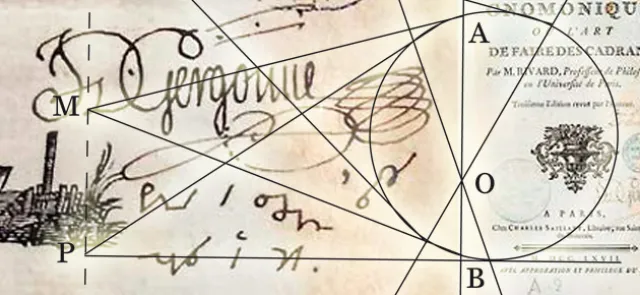
In mathematics, there is no general definition encompassing every use of the term across different branches. The word did not appear until 1826, when Gergonne used it in his celebrated journal.
Today, projective geometry is studied within the theory of vector spaces. Duality has naturally come into its own in that theory; more generally, however, it is invoked whenever interchanging terms yields new statements.
-