



All articles
Dive into the fascinating world of mathematics with our captivating articles, written by passionate experts. Whether you are a curious amateur or a seasoned mathematician, our articles cover a wide range of topics, from fundamental concepts to the latest discoveries, including practical applications and philosophical reflections.

Medical imaging: picturing disease
The spectacular advances in medical imaging in recent years have come from combining mathematical ingenuity with computing power, drawing on theories devised long before they found practical applications.

The Birth of Rational Medicine
Among the theorists of medicine in Antiquity, the names of Hippocrates and Galen, the first to use rational methods for studying disease, have gone down in history. Before them, Pythagoras had laid the first foundations of Western medicine.
Daniel Bernoulli and the mathematical modelling of smallpox
In the mid-18th century, it was discovered that inoculation with a small dose of smallpox could prevent the disease. But there was a risk of contracting it rather than becoming immune. Daniel Bernoulli devised the first mathematical model for comparing the risks of the two options: whether or not to accept inoculation.

Innovative, mathematically minded doctors
They applied innovative scientific methods and models to medicine. Profiles.

Connected health devices
Connected devices that monitor our health and allow doctors to intervene before an illness even develops seem to be the future of medicine. Yet they raise serious security concerns: via smartphones, they communicate over the Internet, a realm where hackers thrive…

The saga of medical curves (3)
Curves for prediction

They healed and cured through mathematics
Trained in mathematics, two trailblazing figures applied it to medical care. Giovanni Borelli developed a scientific approach to physiology, while Florence Nightingale modernized nursing care by drawing on new statistics.

Markov: chains of hope
For a disease transmitted by insects, a treatment campaign may not necessarily prove effective in the long term, as a particular case study using the mathematical concept of a Markov chain will show.

Differential equations in oncology
The effectiveness of chemotherapy in treating cancer depends on tailoring the dosage to the individual patient. To adjust it effectively, the physician must solve a first-order differential equation.

A probabilistic model for cancer immunotherapy
How can the interaction between cancer cells and immune cells be modelled mathematically? The model presented here sheds light on the mechanisms that allow cancer cells to evade therapy and helps in developing more effective treatment protocols.
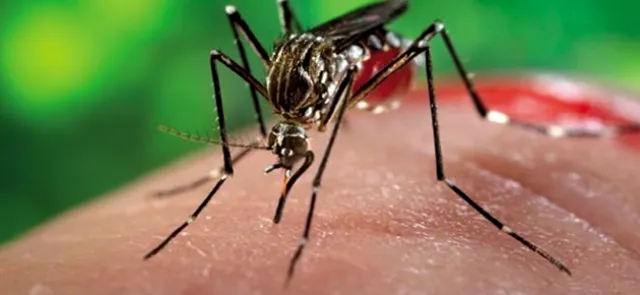
Ross's model: explaining the spread of malaria
Malaria remains a scourge that continues to ravage Africa today. Ronald Ross discovered its cause and developed a model of how the number of infected people changes. Will the arrival of chikungunya in our part of the world increase interest in his model?

Advances in medicine in the Arab-Muslim world
Three great thinkers of the Arab-Muslim world revolutionized medical knowledge and practice in the Middle Ages. Their teaching influenced the West for centuries.
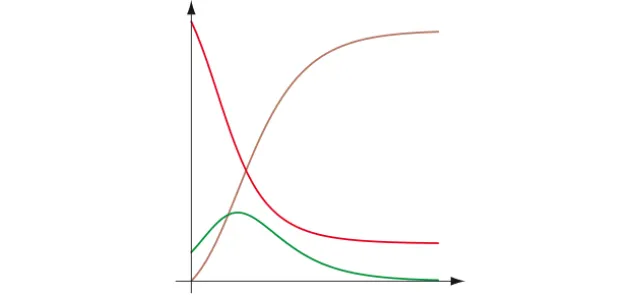
The spread of epidemics
When faced with what seems to be the start of an epidemic, how can we predict how it will develop and spread geographically? Mathematical models attempt to answer these questions.
Odds ratio: relative risks
In healthcare, a common question is whether there is an association between a risk factor such as diabetes and a disease such as cataracts. Questions of this kind can be addressed using a mathematical concept: the odds ratio.

Bayes' theorem: a tool for physicians
Bayes' theorem, which concerns conditional probabilities, has many medical applications as an aid to diagnosis and prognosis.

The saga of medical curves (1)
Curves for visualizing medical data.

Body mass index
According to the World Health Organization, the Quetelet index—also known as body mass index, or BMI—provides an indicator of the "ideal" weight for good health. Why is this index used, and how did Quetelet devise it?

Homeopathy: alternative medicine or pseudoscience?
The origin of the little granules

Two statistical paradoxes in medicine
Statistics (like probability theory) is a fascinating field full of paradoxes. These anomalies are usually harmless and inconsequential. Yet they become dangerous when medical researchers or practitioners stumble over statistical logic and make risky decisions based on misleading intuitions...

Drug versus placebo
Choosing the best treatment for a particular condition is a delicate matter. Several factors come into play. Statistical methods can help establish a treatment's effectiveness or compare several treatments. Placebos play an important role in this process.