Thales's historians
------------------------
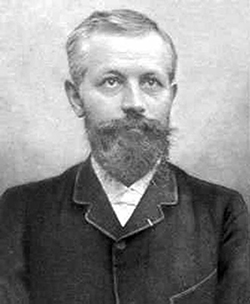
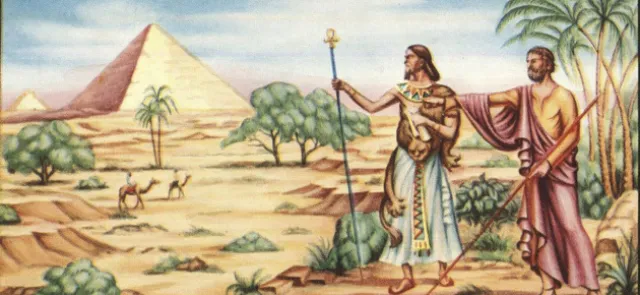
The Greek historian Herodotus (484–420 BC) is said to have collected accounts of the great geometer's life. Shortly afterwards, Eudemus of Rhodes, a pupil of Aristotle, wrote a History of Mathematics. Hieronymus of Rhodes, also a disciple of Aristotle, is the author of historical memoirs. Apollodorus, known as the Calculator (2nd century BC?), is said to have written chronicles, now lost, in which he mentions Thales. Victor Hugo, incidentally, speaks of them in Promontorium somnii. Pliny the Elder, a Roman writer and naturalist of the 1st century AD, gathered the scientific knowledge of his time. Under Nero's reign, the noted historian Pamphila produced numerous compilations. In the years that followed, Plutarch (46–125), a philosopher and biographer of ancient Rome, tells of Thales in his Banquet of the Seven Sages. Diogenes Laërtius, a doxographer and biographer of the 3rd century, would long be regarded as the most reliable and complete source on the philosophers of Antiquity. Proclus (412–485), a Neoplatonist philosopher, recounts Thales's journey to Egypt. Finally, in the 19th century, the historian of science Paul Tannery devotes an entire chapter of his book Pour l'histoire de la science hellène (Jacques Gabay, 1990) to Thales, and another chapter, "la tradition touchant Pythagore, Œnopide et Thalès," from his book Géométrie grecque (Gauthier-Villars, 1887), in which he reviews the certainties and, above all, the historical doubts concerning the scholar of Miletus.
-
Menelaus and Ceva
----------------