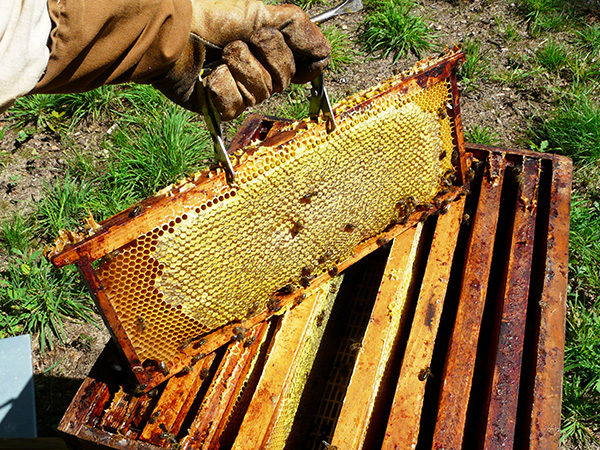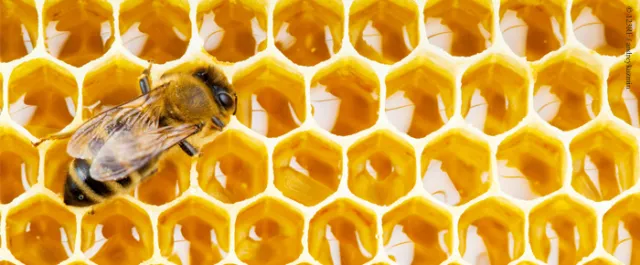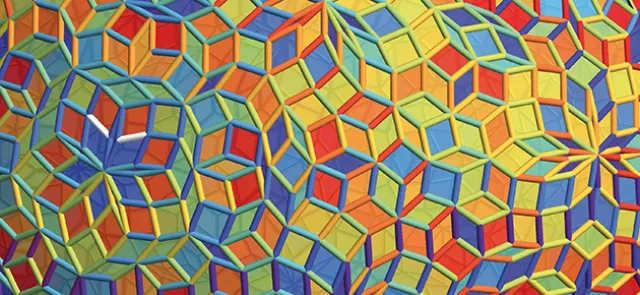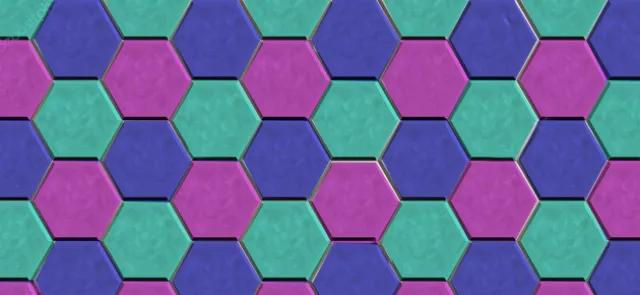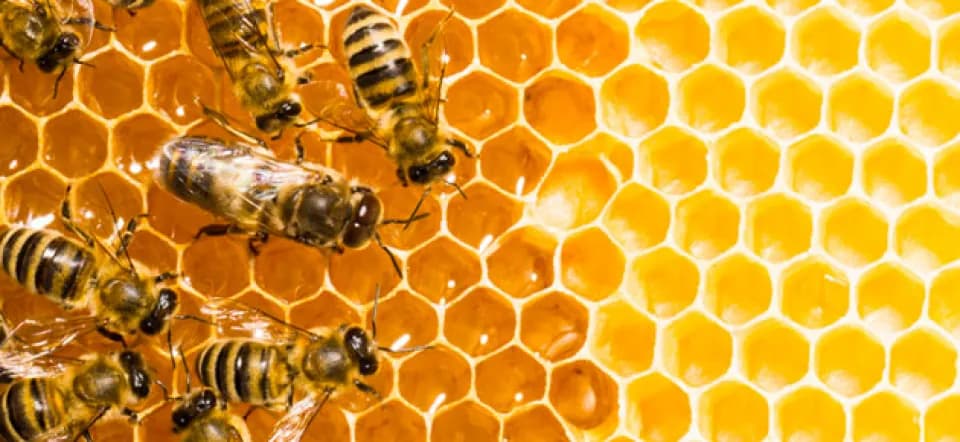
The wax that bees produce is used to build the cells of the hive, which protect the brood and store the bees' food. The cells are built on each face of a comb set vertically. Construction of a comb begins at the top of the hive and then extends downward. The wax comb is made up of adjoining cells. The visible part of each cell is a regular hexagon whose side measures about 3 mm. A cell is 11.5 mm deep, and the thickness of its walls is about 1/20 of a mm. Each cell backs onto three other cells through a surface formed of three rhombi. The cells are not, in fact, placed perfectly horizontally. They tilt upward at an angle of 7 to 8 degrees, to prevent honey from flowing out of the cells by capillary action. Its shape and arrangement give the wax comb great strength.
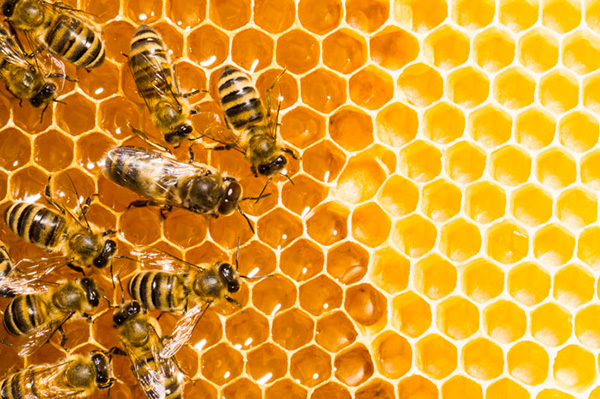
The wax cells.