




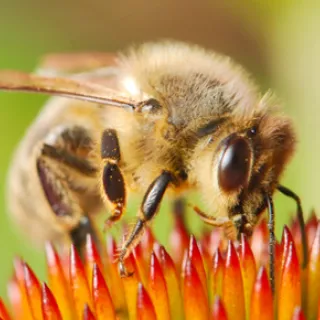
Bees, they prick curiosity
This issue is not fully translated into English yet; only translated content is shown.
Read the French versionAll folders in this issue

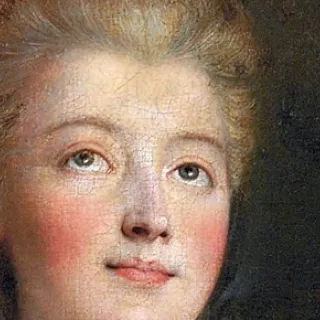
Émilie du Châtelet, Scholar and Free Spirit
Too little known by scientists, reduced to a mere translator of Newton or a popularizer of German science philosophy, often even characterized solely as Voltaire's mistress, Émilie du Châtelet was in reality a very great scholar, both mathematician, physicist and philosopher. Her life as a woman of learning in a misogynistic century meant that she did not always benefit from great recognition despite her extensive work. She was nevertheless elected to the Academy of Bologna and her Institutions de Physique were required reading for many scientists, to the point of being regularly cited in the Encyclopédie. Now celebrating a woman who was both a great scientist and also a free and feminist woman!
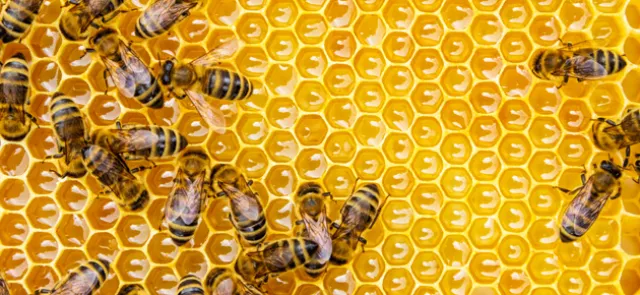
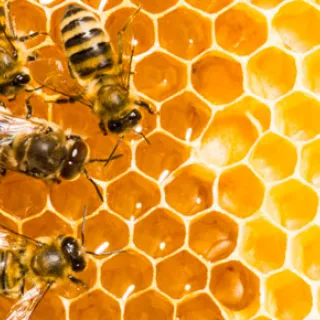
Bees, they can count!
Bees are now at the center of public debate regarding the importance of their survival for natural balance. They are also fascinating for their unexpected mathematical abilities: they can count up to five and even perform simple operations! This suggests the idea of universality of the simplest mathematical reflexes and allows, in turn, for a better understanding of human phenomena such as learning in children or dyscalculia problems. However, their supposed geometric genius, which we think we perceive through the hexagonal shape of the cells, would not be their doing but attributable to physical laws. Let us go and harvest the mathematical honey of bees!
All articles in this issue
New developments in polynomial equations
Did you think the subject of polynomial equations had been more or less settled since Galois's work? Think again.

André Deledicq honoured
On April 24, 2025, in the magnificent library of the Institut Henri-Poincaré, amid its historic collection of geometric solids, Gilles Hallout, education adviser to the Élysée, appointed André Deledicq a Knight of the Legion of Honour.

A stamp bearing Grothendieck's likeness
At the instigation of Éric Bouhier, who had already been behind four other stamps, mathematician Alexandre Grothendieck (1928–2014) was honoured with a stamp issued on 16 June 2025.

The 2025 Tangente Prize
Every year since it was created in 2009, the Tangente Prize has honored a book "that has inspired a wide readership to learn more about one or more areas of mathematics." The jury had to choose among six shortlisted books.
 Podcast
The 2025 Tangente High School Students' Prize
The Tangente High School Students' Prize is now in its tenth year. Throughout the school year, students from tenth grade through their final year of high school scrutinized every book on the shortlist before choosing the winners.
The Tangente middle school prize
Given the annual success of the Tangente High School Prize, the Littéramath association (litteramath.fr), in partnership with the APMEP and Tangente magazine, has decided to launch the Tangente Middle School Prize, which aims to promote mathematical culture through storytelling.
 Podcast
Hilbert spaces, a framework for quantum mechanics
The mathematical modeling of quantum physics rests on probability theory, but also on Hilbert spaces and linear maps (generally not continuous) on these spaces. The power of this mathematical structure has made it possible, for example, to calculate the energy levels of the hydrogen electron.
 Podcast
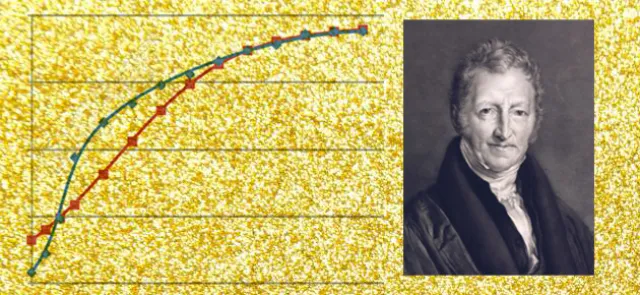
Logistic functions, from demographics to marketing
Driven by the desire for reliable demographic models, logistic functions emerged around 1840. They provide the best model for growth limited by external factors, extending Malthus's approach. Today they have unexpected applications, whether in marketing or household equipment.