



Everyday Math
Applied mathematics to everyday life: elections, sport, music, road traffic, weather, computer science, finance

Science podcasts worth listening to | Tangente
Canal Académies is a podcast platform created by the Institut de France in 2004.

Images des mathématiques gets a makeover | Tangente
You can hardly have missed the Images des mathématiques website since its launch in 2009! This online magazine quickly established itself as an essential resource for sharing and popularizing mathematics.

Women in science: where are they? | Tangente
On June 18, 2024, the French Academy of Sciences published a 32-page report highlighting the shortage of women in scientific professions in France.

Markov recommends Avenue Henri-Martin
The well-known board game Monopoly is a fine example of a stochastic process—a situation whose evolution is governed by the laws of probability. So, to find out whether you should buy Gare Saint-Lazare or Rue de Vaugirard, follow the guide…
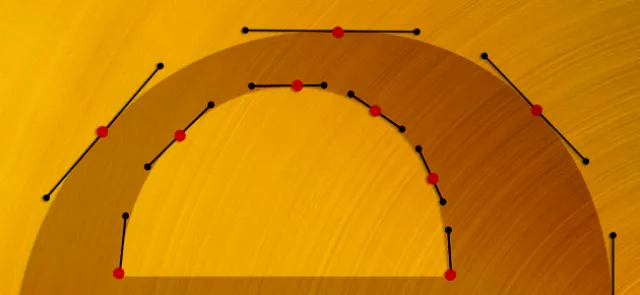
Bézier curves in modeling | Tangente
Bézier curves are particularly common in computer-aided design and can be generated easily from a small number of points that completely determine them.

The turtle algorithm in Vanuatu | Tangente
Mathematical modelling offers one way to make sense of Vanuatu's sand drawings. In particular, it will lead us to a surprising "turtle theorem".

History of ethnomathematics | Tangente
Today, ethnomathematics is the study of cultural variations in mathematical practices and knowledge, particularly those developed outside scholarly and institutional settings. It offers fresh and original perspectives on mathematics and its teaching.

Beyond Gauss in finance | Tangente
Gaussian curves are unsuitable for modelling risky financial assets such as stocks. To overcome this problem, Benoît Mandelbrot introduced the concept of a multifractal measure and generalized Brownian motion.

Sports performance trends: a maths brief | Tangente
Citius, altius, fortius. The Olympic motto ("Faster, higher, stronger") sums up athletes' ambition to push the limits of human capabilities; for more than a century of competition, they have regularly broken records.
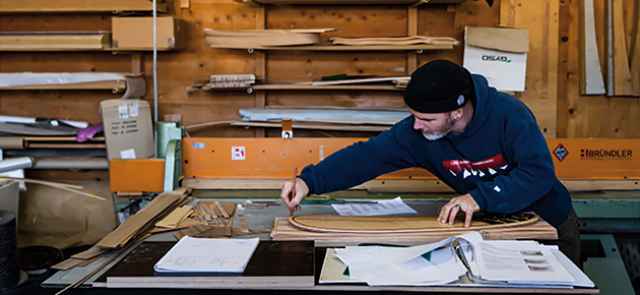
Spotlight on skateboarding
Skateboarding became popular in Europe around 1990. Whether tackling a straight line, a flat surface, a curve or an aerial trick, skateboarders must read their surroundings and have spatial and architectural awareness. This is where physics and mathematics come into play…

Statistics, what else? A mathematics article | Tangente
Among the branches of mathematics applied to sport, statistics holds a prominent place. It is used to analyze large datasets—big data—to combat doping, and in media coverage of sport, typically for questions concerning the Olympic Games.

Sport and longevity
Age is, of course, a predominant factor in athletic (and intellectual!) performance. This nonlinear decline can be modeled using an exponential model, which seems to hold at every physiological scale: cellular, skeletal, pulmonary…

The weight of social inequalities in mathematics | Tangente
While gender inequalities in mathematics are now widely recognized, other forms of exclusion remain less studied: people from the working classes are also notably absent. This finding challenges the idea that mathematics is socially neutral and open to everyone, as it is often assumed to be.

Equivalent functions: a tool for calculating limits
Why go to the trouble of finding equivalents for seemingly well-behaved functions? To gain detailed insight into local or asymptotic behavior—and for applications, too! Without these techniques, even spreadsheets would be unable to perform seemingly innocuous calculations.
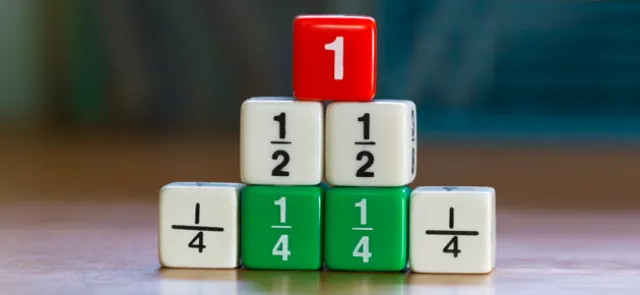
Fractions of fractions, full speed ahead
A very simple way of constructing a sequence of fractions can lead to surprisingly deep mathematical tools. Here is an example that leads to the famous Prouhet–Thue–Morse sequence and its many applications.

Editorial
How long is a fraction of a second? In everyday life, we would simply say that it is a very short time; in mathematics, however, we would be led to look for two integers—a numerator and a larger denominator—with which to quantify it.

Egon Balas | Tangente
Egon Balas's life story reads like an adventure novel. Discover the remarkable story of this mathematician from communist Romania, who managed to escape the turmoil brought upon him by his love of freedom and whose name is associated with numerous discoveries, particularly in operations research.

Convexity in geometry and analysis | Tangente
Convex geometry took off during the 1960s, particularly because of its applications in probability theory and optimization

And order was established
The notion of order is part of our daily lives, whether we are putting objects away, comparing quantities or deciding what order to tackle a series of tasks in. Yet it took a very long time for these natural activities to be conceptualized mathematically.

Social inequality: the Gini coefficient | Tangente
Statisticians often publish averages, reducing a snapshot of a country's socioeconomic situation to a single figure. But these averages often (always?) conceal stark disparities. One way to bring them into sharper focus is to quantify inequality as well.