



Everyday Math
Applied mathematics to everyday life: elections, sport, music, road traffic, weather, computer science, finance
 Podcast
Divisibility in 19th-century textbooks | Tangente
Divisibility rules are numerous and are used by everyone who practises mental arithmetic. Blending arithmetic with common sense, they are a source of countless mathematical recreations, and have long been used in teaching.
 Podcast
Calculating prodigies
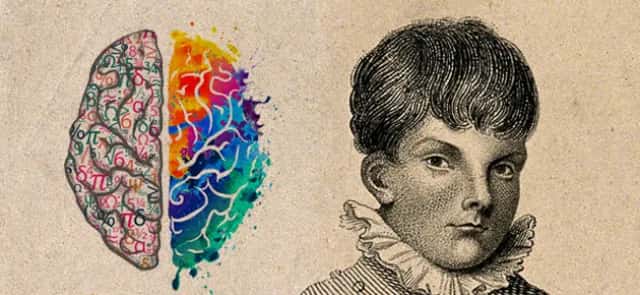
Calculating prodigies fascinate the public with their ease in rapidly performing operations on large numbers. The tricks used by these number magicians draw on abilities that are more mnemonic than mathematical, but also on numerous methods and stratagems based on various theorems.
 Podcast
Éric Trouillot: Mental arithmetic, a path to jubilation | Tangente
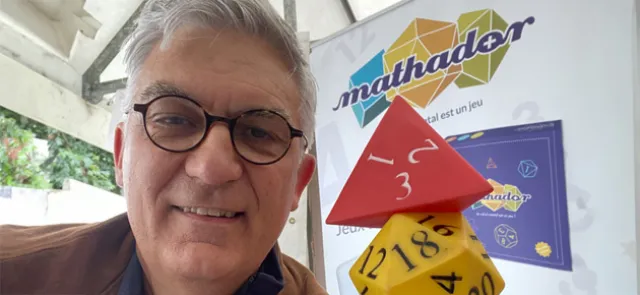
The inventor of the calculation game Mathador, Éric Trouillot is one of those working to bring mental arithmetic back into teaching practice. In his view, far from being tricks performed by trained monkeys, techniques for calculating in one's head are an excellent gateway into the world of numbers, as well as an irreplaceable way to put mathematical properties — such as the distributivity of multiplication — into concrete practice.
 Podcast
Mathematics at school | Tangente
Worrying results show that attainment among young French pupils continues to decline, and new baccalauréat examinations in the penultimate year of high school aim to rekindle high school students' enthusiasm for mathematics.
 Podcast
The challenges of tomorrow's agriculture
The AgroStat project studies the dynamic evolution of living organisms of interest to agronomy using an approach based on the overall study of agroecosystems. This leads to interdisciplinary work bringing together numerous scientists.
 Podcast
Bacteria carried by the crowd
Collective dynamics abound in the animal world, from flocks of birds to colonies of bacteria. The MAMUTCELL project aims to explore and mathematically model the movements of large bacterial assemblies in heterogeneous environments.
 Podcast
Calculated distances, lived distances
Did you know that in Manhattan, the ways of connecting two places a few hundred metres apart number in the millions? Whereas in Cabourg, there is generally only one shortest path connecting two points? These are the very properties of mathematical distance that can help geographers and urban planners better design the spaces we live in.
 Podcast
Financing the environmental transition | Tangente
The MIRTE project studies incentives and regulations in key sectors such as finance, energy and transport, with the aim of steering behavior toward a low-carbon economy.
 Podcast
Mathematics in Interaction | Tangente
The Mathematics in Interaction program, launched in 2024, aims to foster interaction between mathematics and other disciplines around the themes of life sciences, the environment and society. Backed by funding of €50 million, it brings together nineteen scientific projects led by multidisciplinary teams.
 Podcast
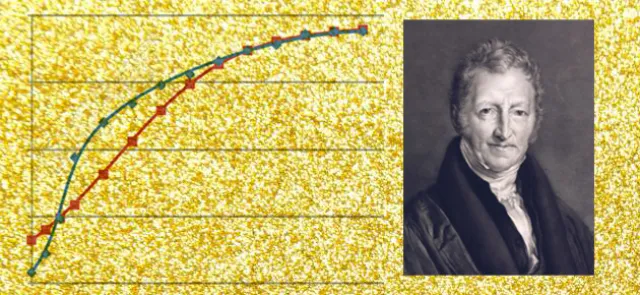
Logistic functions, from demographics to marketing
Driven by the desire for reliable demographic models, logistic functions emerged around 1840. They provide the best model for growth limited by external factors, extending Malthus's approach. Today they have unexpected applications, whether in marketing or household equipment.
 Podcast
Hilbert spaces, a framework for quantum mechanics
The mathematical modeling of quantum physics rests on probability theory, but also on Hilbert spaces and linear maps (generally not continuous) on these spaces. The power of this mathematical structure has made it possible, for example, to calculate the energy levels of the hydrogen electron.
 Podcast
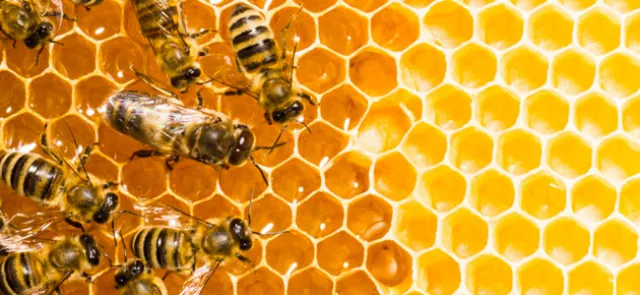
The geometry of honeycomb cells
Bees do not shape their honeycomb cells into hexagons deliberately, but because of the viscoelasticity of wax: the cells, initially circular, compress against one another, the wax melts and angles begin to form; the circular shape becomes hexagonal.
Friends to count on — Graham, Chung and Erdős | Tangente
The married mathematicians Fan Chung and Ronald Graham were among Paul Erdős's closest friends. They took care of some of the practical aspects of Erdős's itinerant life.
 Podcast
Maths on France Musique: a podcast | Tangente
Many mathematicians enjoy or play music, and the two disciplines have long been far more closely connected than we might imagine today.
 Podcast
La saga des maths: a France Inter podcast | Tangente
A historical approach to mathematics in the new podcast "La saga des maths".
Citizens, embrace mathematics! | Tangente
The CNRS Institute for Mathematical Sciences and their Interactions (Insmi) is launching a major nationwide consultation on mathematics.

Evaluating mathematics education policies | Tangente
The international TIMSS survey (Trends in International Mathematics and Science Study) has just released its results for 2023.

Sylvie Méléard wins the Irène-Joliot-Curie Prize | Tangente
A specialist in probability theory, particularly stochastic processes, Sylvie Méléard has spent the past twenty years applying mathematical models to living systems: changes in population size over time (such as bacterial growth), the proportion of an allele in a population, and genetic evolution (such as antibiotic resistance).

Condorcet and physiocratic political economy | Tangente
Condorcet's ideas were influenced by the Physiocrats, who championed free trade and restricted voting rights to property owners.

Working environments for mathematicians
The abstract notion of space in mathematics is very different from what intuition suggests. Depending on the type of structure available, we can work with concepts from algebra, analysis, or geometry.