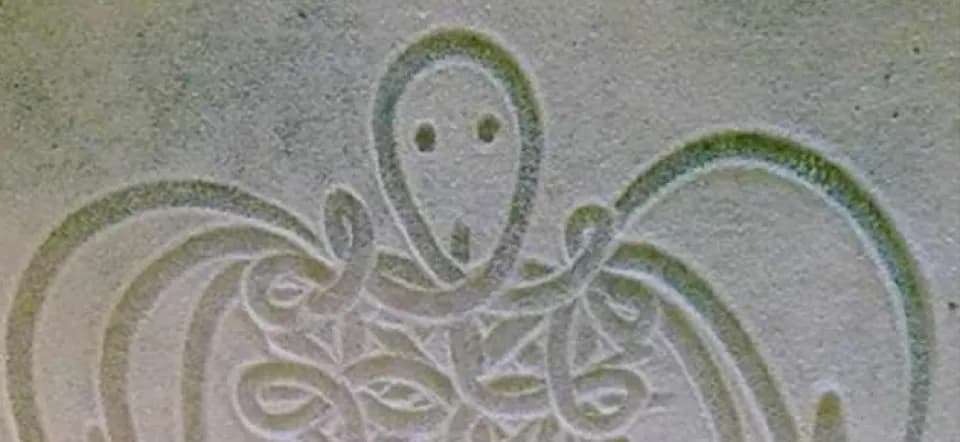
We are in Vanuatu (formerly the New Hebrides), a Pacific archipelago of 83 islands, and more specifically among the Raga people of northern Pentecost Island (see map opposite). Here, people practise an activity known as "sand drawing", which offers a window onto the world as the Raga see it.
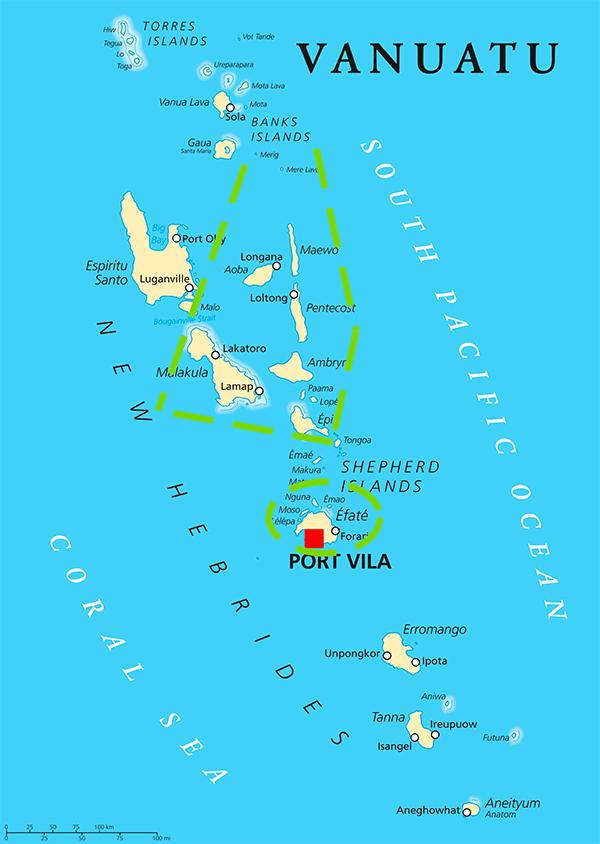
The green dashes indicate the areas where sand drawing is practised.
With a population of around 315,000 today, Vanuatu has the world's highest linguistic density, with 138 languages spoken across the country. This linguistic diversity is reflected in distinct cultures and ways of life: while all Vanuatu societies share certain traits, numerous cultural variations set each one apart. Thus, although we will refer below to "Vanuatu sand drawing", it should be borne in mind that the practice is widespread only in the central islands. On these islands, everyone is familiar with it and the simplest drawings circulate freely, but only a small number of experts—men and women whom we will call practitioners—know the most difficult drawings. They may be of any age, from young artists creating new drawings to elders renowned for their encyclopedic knowledge of the practice. This ephemeral art—the drawing is erased once completed—also encourages storytelling: practitioners generally conclude their drawings by recounting a myth or tale. It is not uncommon for them then to call upon the spectators' imagination, suggesting details within the drawing that relate to their story: places, characters, animals...