



Famous figures
Portraits of famous mathematicians, historical and contemporary
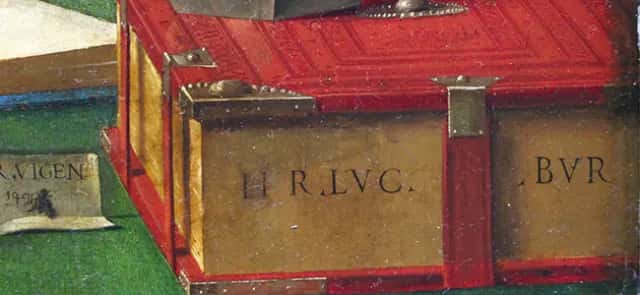
Multiplying with rods | Tangente
Before the advent of modern technology, techniques or tools had to be devised to perform the basic calculations required by craftspeople, engineers and everyone else! From John Napier to Édouard Lucas, mathematicians distinguished themselves in this pursuit.
2024: a new year with many properties
What spectacular mathematical advances, major scientific discoveries and gains in knowledge does the new year have in store for us? It is hard to say! What is certain is that the natural number 2024 abounds in wonderful arithmetic and combinatorial properties…
Tributes to a puzzle maker
This article brings together several puzzles, some created especially as a tribute to Gilles Cohen and his tireless work creating puzzles.
Mathematicians make progress on coloring
Coloring problems are often very simple to state and may appeal to many amateur mathematicians. Unfortunately—or perhaps fortunately?—they conceal deep difficulties that continue to tax the mathematical community. A new breakthrough was made recently.
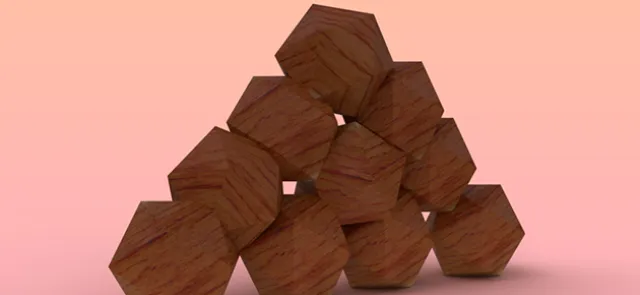
A form of harmony between geometry and arithmetic
Many mathematicians have taken an interest in figurate numbers. But their concerns have not always been the same! In ancient times, people sought to construct and represent numbers using counters. The resulting shapes illustrate a host of arithmetic relationships.
A new life for figurate numbers
Figurate numbers entered Arabic mathematics through Thabit ibn Qurra’s translation of the work of the mathematician and philosopher Nicomachus of Gerasa. Thabit’s name is associated with Thebit numbers (the "e" replacing the "a" in medieval Latin transcription).
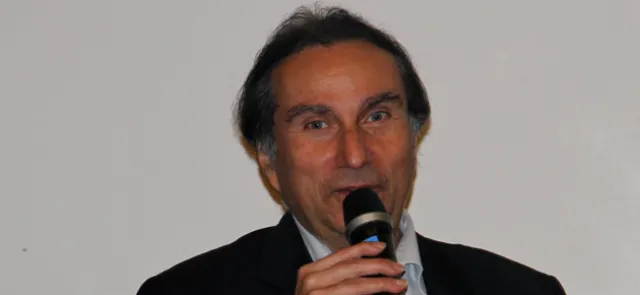
Gilles Cohen, Tangente founder and director, dies

Laplace is in the house: stations, high schools and memory | Tangente
The scientist's legacy lives on today in the various places and institutions… that bear his name!
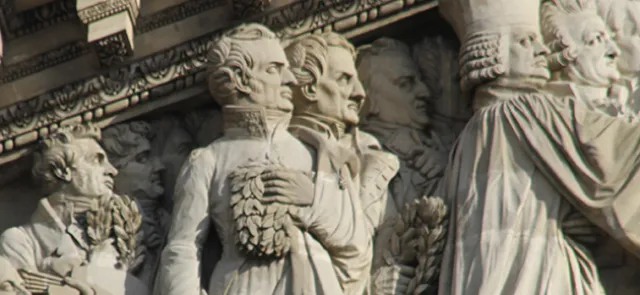
Pierre-Simon Laplace: a giant for the ages | Tangente
Laplace's scientific output is colossal. A tireless researcher, the "French Newton" also devoted himself to making the latest discoveries widely known and to providing scientific training for new generations.
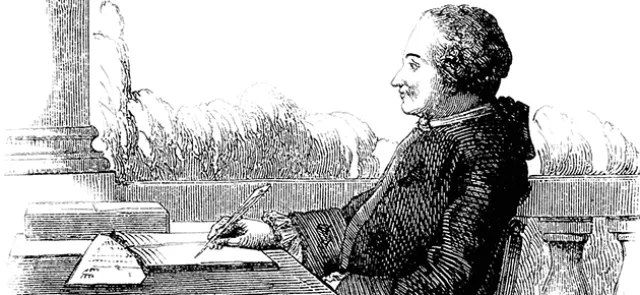
A pedagogical interest in transmitting knowledge
An exceptional scientist, Laplace was also a driving force behind the development of education at the highest level, helping to devise curricula and concerned that mathematics teaching should not be detached from philosophical reflection.
From Laplace's equation to the Laplacian
The Laplacian operator is used to describe most diffusion phenomena in physics. It is central to analysis, geometry and probability theory, among other fields. Its origins lie in an equation discovered by Laplace that governs the gravitational interaction between bodies separated by empty space.
Census-taking and the normal distribution
To calculate France's population, Laplace proposes a sampling method based on births and introduces the normal distribution to estimate the error. It would take until the 21st century for Insee to draw inspiration from his method.
Three laws of error
Observations of celestial bodies are invariably subject to error. How can we choose the "most relevant" value from several measurements? Laplace, along with Legendre and Gauss, developed theories that ultimately led to the celebrated normal distribution.
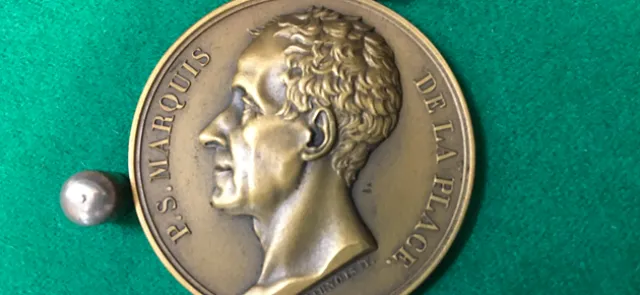
Laplace's many mathematical functions | Tangente
In his scientific work, Laplace introduced and used numerous mathematical functions. Alongside the Laplacian and the Laplace transform, we find generating functions and the potential function.
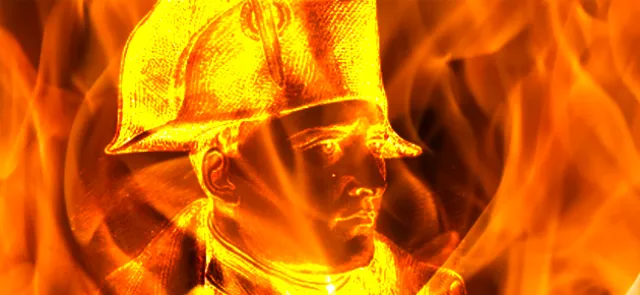
Laplace's role in Napoleon's deposition | Tangente
Laplace the scientist, but also Laplace the politician: on March 31, 1814, Paris surrendered as coalition forces reached its gates. Raised to the highest honors by the emperor, Laplace hesitated over signing Napoleon's deposition. Let's follow his inner struggle.
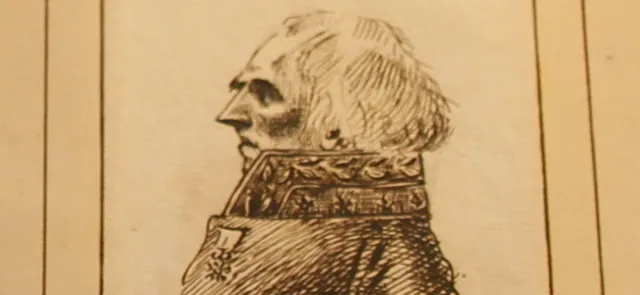
Laplace, unloved by historians: an ambiguous portrait | Tangente
Although Laplace's scientific work is recognized worldwide, his political role remains controversial and is sometimes disparaged. Historians often judge him harshly—when they do not ignore the scientist altogether. Does this reflect a French difficulty in finding a place for science in the shared cultural imagination?

Editorial
"Laplace's name has resounded in every part of the world where science is held in honor." With these words, Joseph Fourier began his funeral oration for the great scientist in 1827. Nearly two centuries later, this remains true. His Wikipedia page is available in more than a hundred languages!
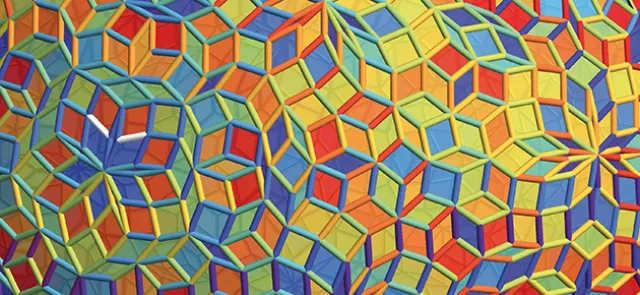
Rhombi filling space – Article | Tangente
Are there polyhedra whose faces are all rhombi? Various mathematicians have studied this problem in solid geometry since the 17th century, each contributing to what is now a complete classification of the convex polyhedra.
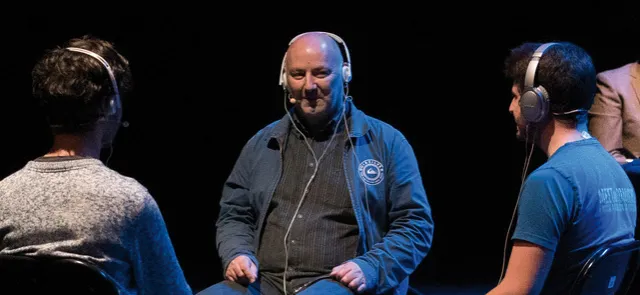
La Maison des mathématiques de l’Ouest - Article | Tangente
Activities that bring artists and mathematicians together to share mathematics with the public are flourishing across Pays de la Loire and Brittany. A Maison des mathématiques de l’Ouest was established to bring them together.
Reading ancient and medieval mathematicians | Tangente
In 2018, the British publisher Routledge launched a series entitled "Scientific Writings from the Ancient and Medieval World" with a Babylonian astronomical handbook.