



History and Culture
History of mathematics and cultural connections
Mathematical groups, even in literature | Tangente
Formal structures, particularly groups, are a major focus of constrained literature that emerged from the Ouvroir de littérature potentielle (Oulipo), the literary movement founded by Raymond Queneau and François Le Lionnais in 1960.
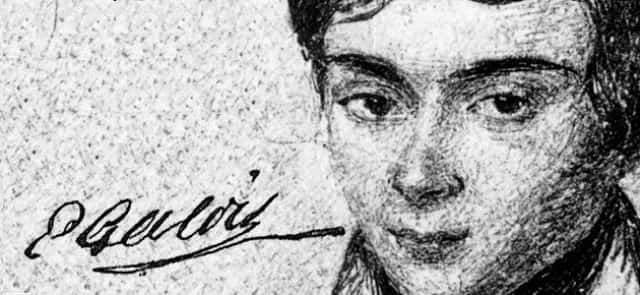
Galois's brilliant contribution
Following his work on solving fourth-degree equations, Lagrange turned to the fifth-degree case. It was not until Abel that these equations were shown not to be solvable by radicals. Galois would provide a necessary and sufficient condition for an equation of any degree to be so solvable. In doing so, he founded group theory.
First step towards the concept of a group
As early as 1770, Joseph-Louis Lagrange took an interest in solving polynomial equations. He wanted to understand why cubic and quartic equations could be solved by radicals. This led him to study permutations of their roots.
Hunting down groups in the Tangente collection | Tangente
To explore further...
Turing machine contest: the 14-year-old winner | Tangente
A young Tangente reader has won the Turing machine offered as a prize by thaM thaM.
Elegant problem-solving: eight puzzles | Tangente
The final installment in our three-part series on methods for solving problems with a minimum of technical machinery. The aim is to discover an imaginative, original approach that shifts the puzzle into familiar territory.
Hypercube: a mathematical conjecture is disproved | Tangente
The challenge: covering sets of points with as few hyperplanes as possible, particularly sets consisting of certain vertices of the hypercube.
Schwarz's theorem
From Euler to Cauchy, via Clairaut, no one doubted that reversing the order of partial differentiation left the result unchanged. Hermann Schwarz overturned this belief with a superb counterexample.
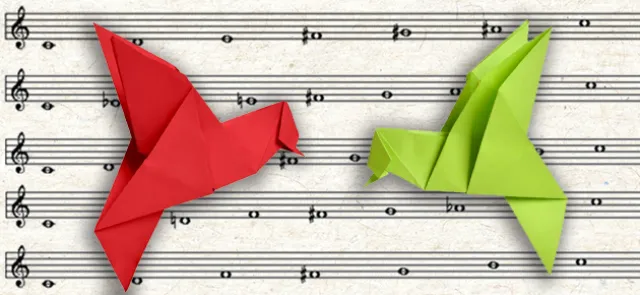
Olivier Messiaen: music and congruences
Mathematics and music were intertwined for centuries before gradually going their separate ways. Yet many composers remain attached to the language of numbers. Olivier Messiaen is a notable example: congruences play a part in the construction of his modes.
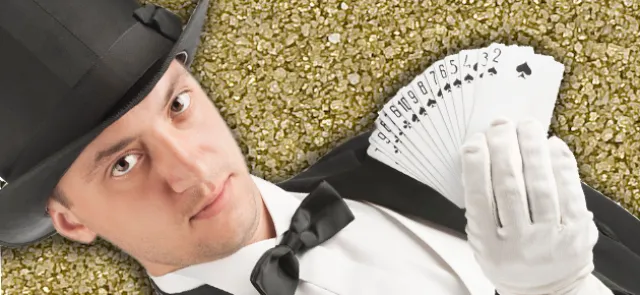
Number magic and self-working tricks | Tangente
Nowhere are congruences more vivid, striking or spectacular than in self-working magic tricks. Though "swept under the rug," they are there, guaranteeing the performer success. The audience can only marvel at the effect... and suspect that the magic of numbers is at work.

An incongruous little tour through the world of congruences
Cooks have long known that making the most of leftovers is an art. The same is true in mathematics, where congruence is a remarkably rich concept. This notion has applications ranging from everyday life to highly theoretical settings.
Divisibility without calculations
We cannot forget them: they are ingrained in our memories from elementary and high school—but is that really certain? Do we still remember all those divisibility tests our mathematics teachers drummed into us so often?
The Parisian origins of the Nicolas Bourbaki group | Tangente
A plaque honoring the Bourbaki group at the site of its first meeting in a Paris café.
Are the French averse to assessment? | Tangente
An attempt to analyze young French people's poor performance in international assessments.
Littéramath: the mathematical literature site | Tangente
A project highlighting the links between mathematics and literature
Constant mean curvature surfaces
The study of surfaces still holds plenty of surprises! Anyone who enjoys making bubbles with soapy water will be familiar with minimal surfaces. Constant mean curvature surfaces, such as catenoids and unduloids, are less well known.
Artificial intelligence to the rescue
Using computers to solve mathematical problems is nothing new. Adam Zsolt Wagner of Tel Aviv University (Israel) has now shown how artificial intelligence can uncover counterexamples to several previously open conjectures. A promising path for the future?
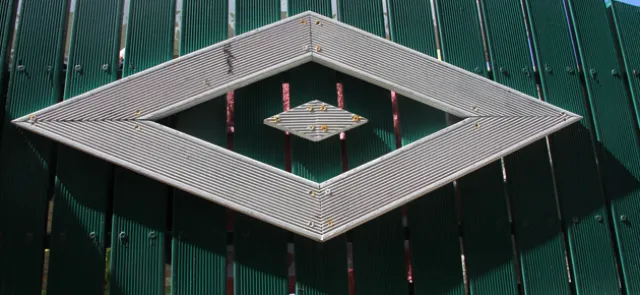
The exception that does not prove the rule
A persistent belief holds that counterexamples are primarily a source of amusement. Yet they play a fundamental role in several areas, both as mathematical proofs and as teaching tools—not to mention their entertaining, or even artistic, side, depending on how one looks at them.
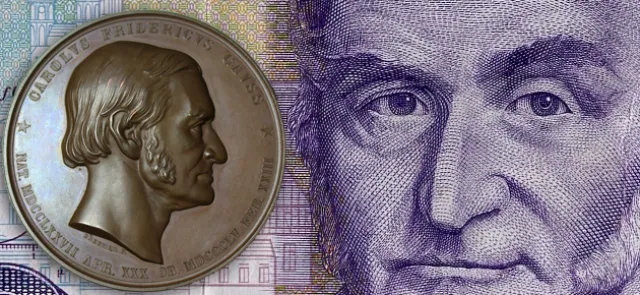
A history of modular arithmetic
The idea of working with the remainders obtained when numbers are divided by certain integers, rather than with the numbers themselves, gradually gained ground. Gauss formalized the idea with his notion of congruence, giving rise to modern modular arithmetic. Congruences have quite a history!
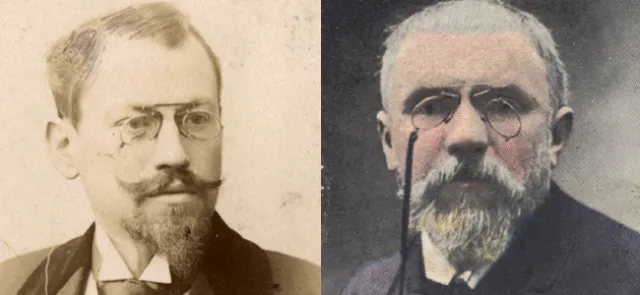
Poincaré: psychology of mathematical invention | Tangente
Henri Poincaré wrote extensively about his experience as a mathematician and the role of intuition in mathematics. Less well known is that he also agreed to take part in a clinical study conducted by the psychiatrist Dr Toulouse. Even so, the origins of mathematical creativity remain mysterious.