



History and Culture
History of mathematics and cultural connections
 Podcast
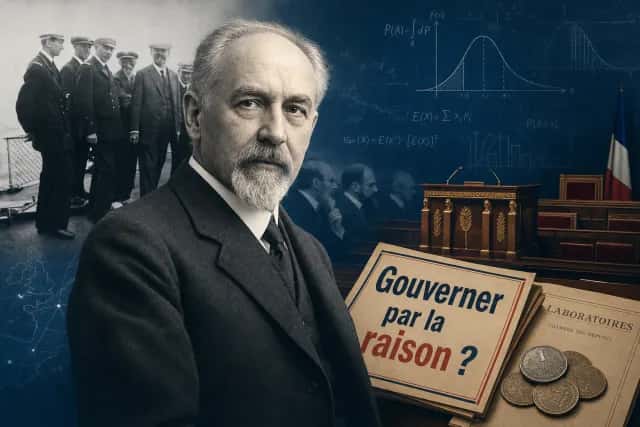
Can you govern a country the way you solve an equation?
A portrait of Émile Borel, an École normale supérieure alumnus and scholar who combined a scientific career with political activism, from Dreyfusism to the Resistance, through radicalism and international intellectual cooperation.
 Podcast
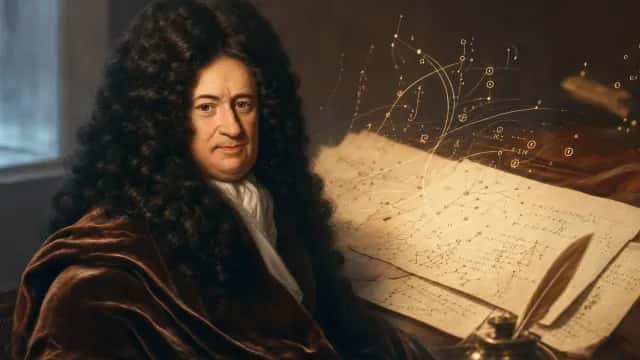
Did Leibniz really invent the ancestor of the computer?
The article dispels the myth of Leibniz as a forerunner of the computer by examining the historical reality of his universal-language project.
 Podcast
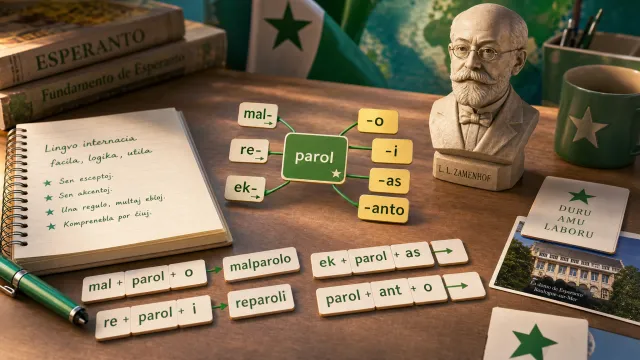
Esperanto and mathematics: a coherent universal language
Esperanto, created by Zamenhof in 1887, shares mathematics’ ideal of perfect coherence. Discover why this constructed language fascinates logicians and mathematicians.
 Podcast
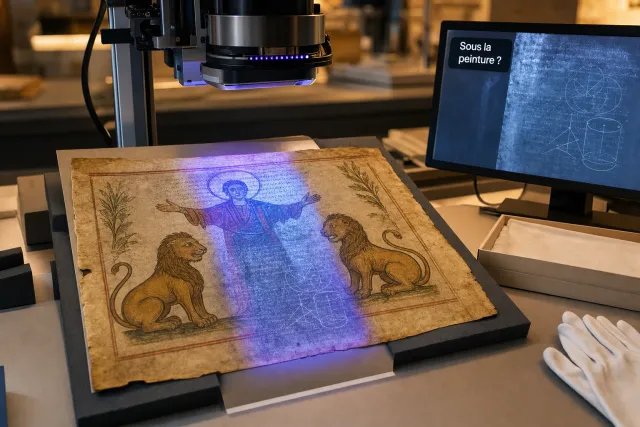
Archimedes page found at Blois museum: palimpsest and ancient geometry
Victor Gysembergh has found a leaf from the Archimedes palimpsest, missing since 1906, hidden beneath an illumination of the prophet Daniel at the Musée des Beaux-Arts in Blois.
 Podcast
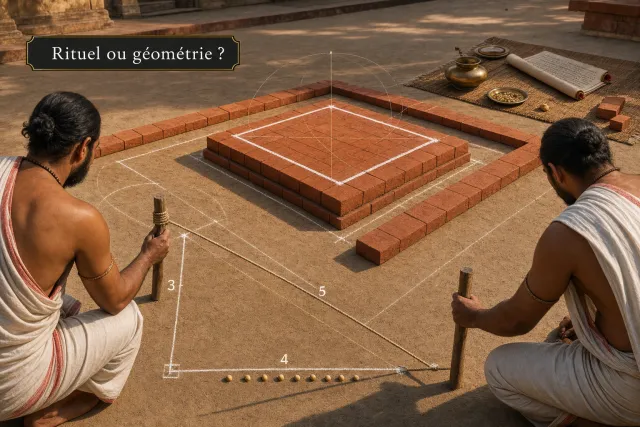
Vedic mathematics: a history of ritual geometry and the Śulba Sūtras
Discover how Vedic rituals gave rise to some of the oldest geometric, arithmetic and algorithmic texts in human history.
 Podcast
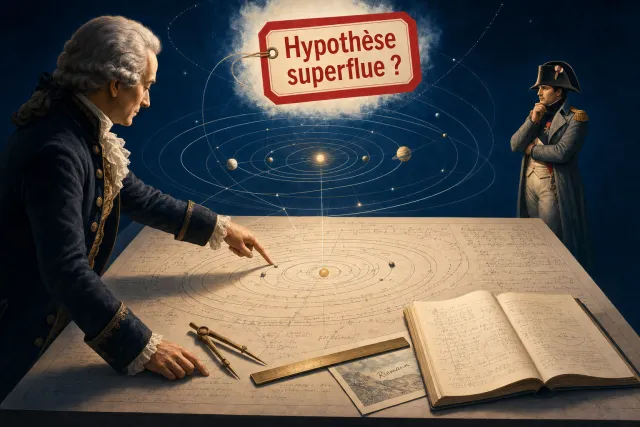
Mathematicians and atheism: Laplace, Erdős and Hardy defy God
Laplace, Erdős and Hardy: three anecdotes about mathematicians who used logic and mathematics to question the existence of God.
 Podcast
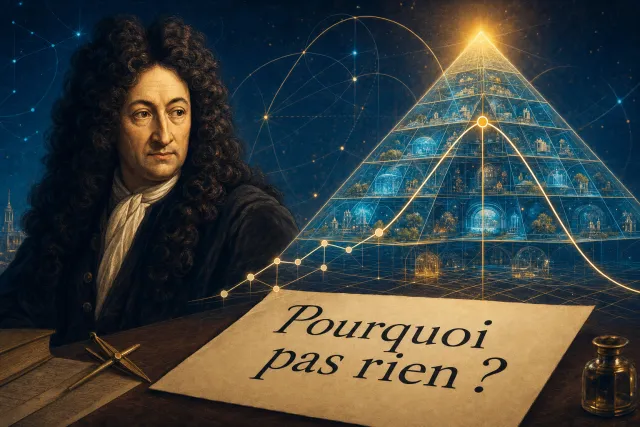
Leibniz and the best of all possible worlds: mathematics and philosophy
How Leibniz uses mathematics to justify the existence of the best of all possible worlds through infinitesimal calculus, symmetry, and philosophy.
 Podcast
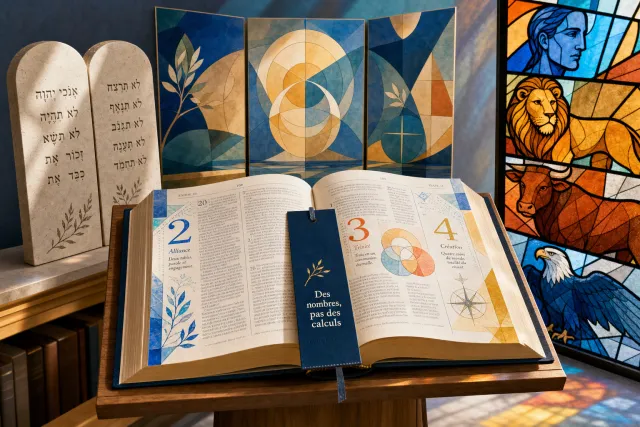
Number symbolism in the Bible: the spiritual meaning of 2, 3 and 4
Explore the spiritual meaning of the numbers 2, 3 and 4 in the Bible: the divine covenant, the Trinity and the whole of creation.
 Podcast
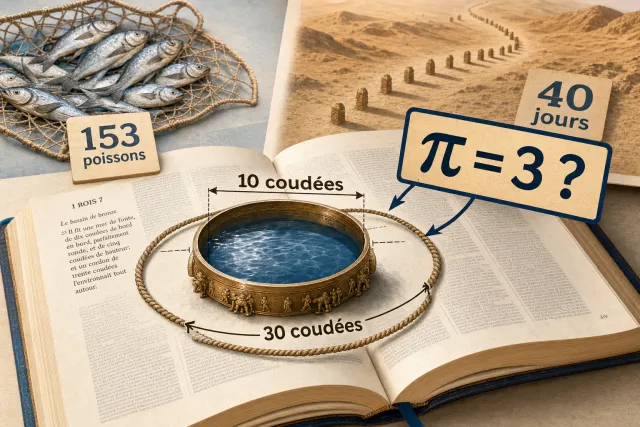
Biblical numbers: 40, 153 and π—meanings and mathematics
An exploration of the symbolic and mathematical meanings of 40, 153 and π in Scripture, from spiritual trials to calculating a circle's circumference.
 Podcast
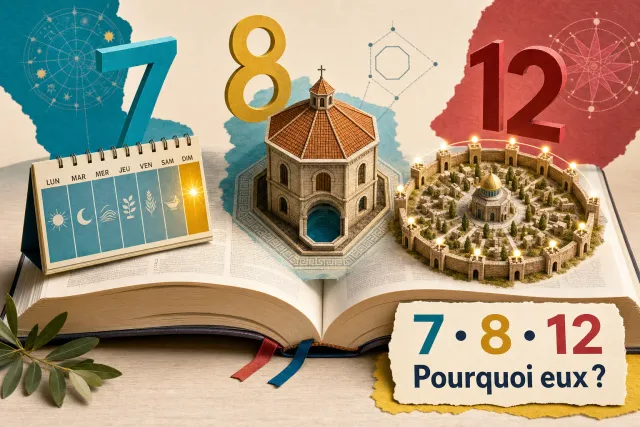
The Bible’s sacred numbers: 7, 8 and 12
Discover the symbolic meaning of the numbers 7, 8 and 12 in the Bible and their impact on culture, architecture and the Christian faith.
 Podcast
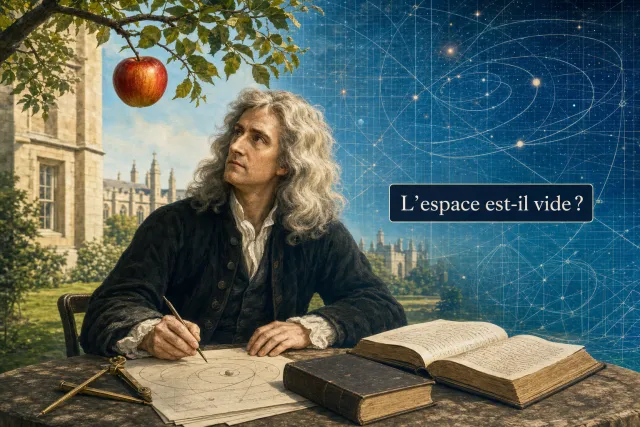
Newton on space and the divine: a philosophical and historical analysis
Isaac Newton revolutionized our understanding of space by conceiving it as an absolute mathematical framework, distinct from the bodies within it.
 Podcast
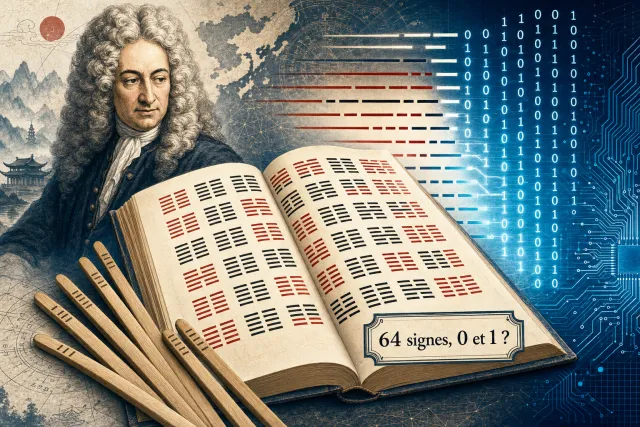
Leibniz, the Yi Jing and binary: an unlikely encounter
Discover how Leibniz found a forerunner of the binary system that would revolutionize modern computing in the Chinese Book of Changes.
 Podcast
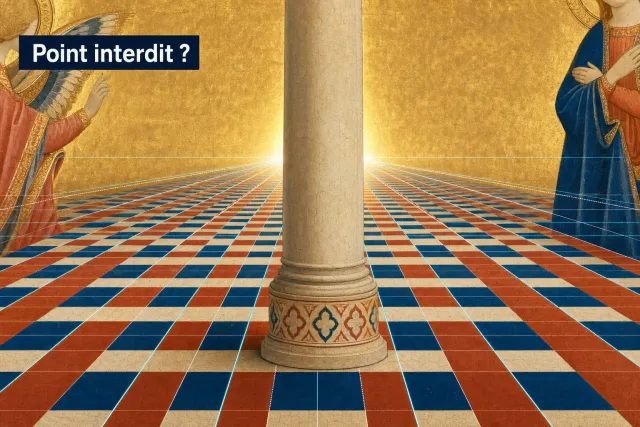
The divine perspective: geometry and art in the Renaissance
How did Renaissance painters work around the vanishing point—a profane image of divine infinity—before projective geometry formalized their intuitions?
 Podcast
The Boltzmann equation: from molecular chaos to macroscopic equilibrium
Formulated in 1872 by the Austrian physicist Ludwig Boltzmann (1844–1906), this equation describes how a gas or fluid evolves toward equilibrium. It bridges molecular collisions at microscopic scales and the macroscopic world.
 Podcast
Edward Kasner: the man behind googol and googolplex
Staggeringly large numbers invented by an eccentric mathematician that would inspire an iconic domain name...
 Podcast
Long and short scales: billion, trillion, milliard—how to name large numbers
From colossal fortunes to the limits of mathematical language, words struggle to keep pace as numbers explode. From long and short scales, through international conventions, to mathematicians' bold inventions, the way we name extremely large quantities tells a story in which language, science and imagination meet.

Skewes's numbers: enormous bounds in number theory
Skewes's numbers are among the large numbers encountered in arithmetic.
 Podcast
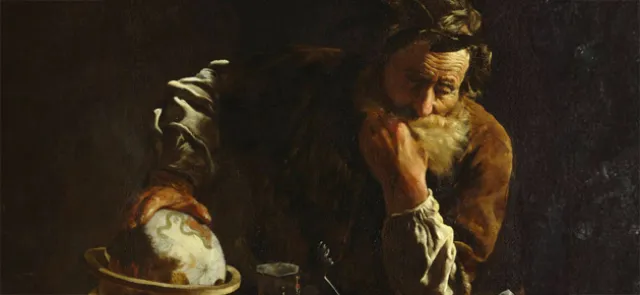
Archimedes' Sand Reckoner: counting the grains of sand in the universe
If the universe is finite, then it can be filled with grains of sand. Yes, it would take a great many, but the quantity required would still be a finite number—one that can be expressed. Drawing on the most advanced astronomical knowledge of his time, Archimedes set out to do just that.

Patrice Jeener: the mathematical engraver who turned equations into art
Patrice Jeener (1944–2026) passed away on March 3 in his village of La Motte-Chalancon, in the Drôme.
 Podcast
Theaetetus and the diagonal: why stop at √17?
How should we understand the famous passage in the Theaetetus where Theodorus mysteriously stops at the square root of 17? A new hypothesis emerges, involving continued fractions and triangular numbers.