



Games and Challenges
Mathematical problems, games and challenges
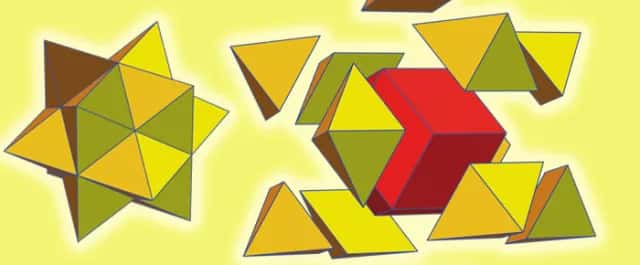
The mysterious crystal
For a change, beneath its polyhedral exterior, the subject of this instalment in our mathematical objects saga is a puzzle. You will find everything you need to build it on the Tangente website.
Joseph Bertrand's probability paradoxes
Joseph Louis François Bertrand (1822–1900) is known for his research in analysis. Less well known is the remarkable book on probability that he published in 1889 (see

Crop circles and mathematics: Fibonacci in the fields
Another form of optical art is found in the famous crop circles, or "crop formations" (technically known as agroglyphs). These geometric patterns, most often created in cereal fields, range in size from a few square metres to several hectares. They are made by cutting, twisting or bending stalks of grain, usually at night and in record time.

The tippe top: a mystery of mechanics
In playgrounds, the tippe top is often called a "magic top" because it flips itself over, turning upside down. Its counterintuitive behavior is subtle...

The ever-surprising curiosities of the harmonic series
The harmonic series is one of the few divergent series that frequently arises in science. In mathematics, naturally, but not only there: it also turns up in a theater, in the guise of an absent-minded spectator who has forgotten his seat number, and in problems involving stacks of sugar cubes.
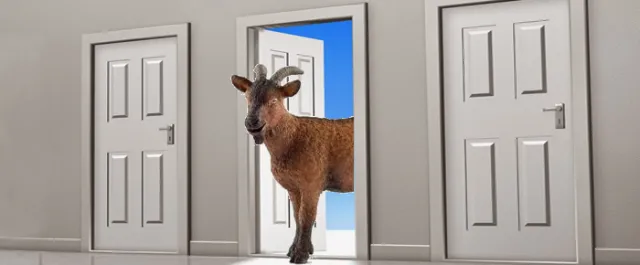
The Monty Hall paradox
Who has never dreamed of hitting the jackpot, of beating the odds? Games of chance such as roulette and Loto leave considerable uncertainty over whether you will win. Probability helps us understand these games and make the best decision as they unfold.
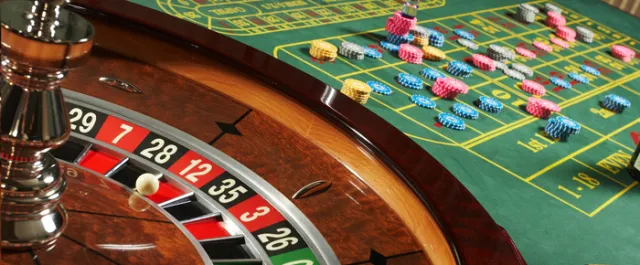
Expected value and its surprising paradoxes
Expected payoff is essential to rational decision-making, but tricky to use. Many paradoxes arise from misinterpreting what it represents. Casinos—and the unscrupulous people who encourage you to wager your money—understand this only too well...
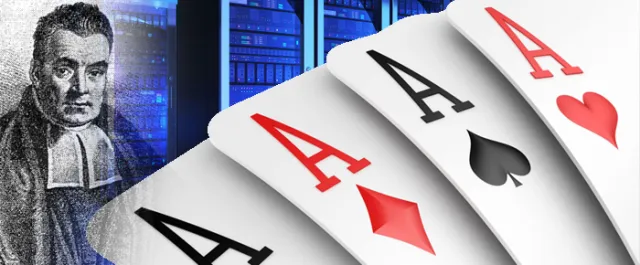
Bayes' theorem: the star of web algorithms
If the Internet can now suggest books or holiday plans to you with remarkable accuracy, it is thanks to yesterday's researchers, who envisioned computing when computers barely existed. One remarkable figure stood out, though he remains far too little known: Thomas Bayes.
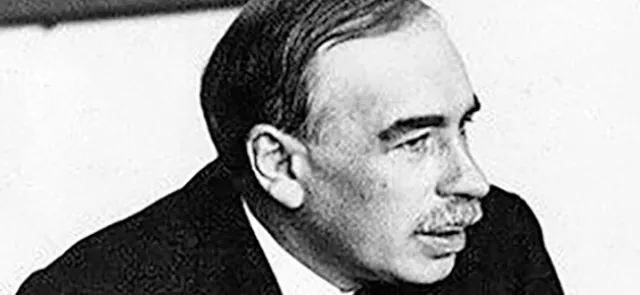
The very delicate principle of indifference
The principle of indifference invites us to reflect on the subtle blend of knowledge and ignorance. The probabilities it generates are sometimes surprising, but always consistent. By analyzing a problem's data, it dictates the probabilities that should rationally be assigned.
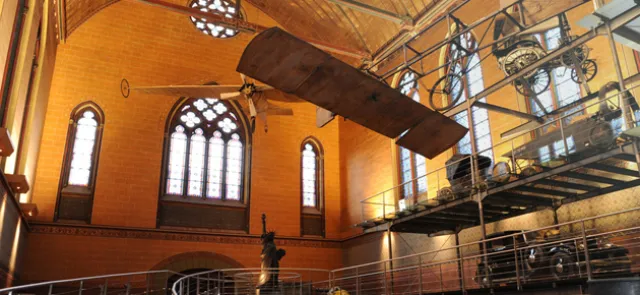
A tour of the Museum of Machines: mathematics and mechanisms at the CNAM
Mathematics isn't visual? You can't really represent it "in the real world," let alone make it tangible? Think again! The Musée des arts et métiers (60 rue Réaumur, 75003 Paris) invites you to revisit its collections… through the surprising lens of mathematics.

Tangente at 30: lectures on surprising mathematics
For Tangente's 30th anniversary, on Sunday, December 3, renowned experts will talk about the mathematics they love. Here are the summaries.

2018 Championship
The 32nd Mathematical and Logical Games Championship, organized by the Fédération française des jeux mathématiques, is under way. Tangente brings you an exclusive look at the eighteen problems from the individual quarterfinals.

Raymond Smullyan (1919–2017): logician and magician
An eclectic mathematician, Raymond Smullyan, who died last June, was best known to the general public for his books of mathematical recreations centered on logic.
Applying the Chinese remainder theorem to RSA cryptography
The Chinese remainder theorem finds, among other things, applications in cryptography
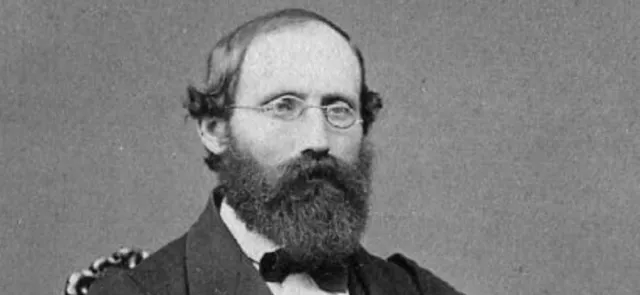
The zeta function and the Riemann hypothesis
The most important problem in contemporary mathematics can be stated in entirely elementary terms, requiring only a rudimentary knowledge of complex analysis. Despite mathematicians' titanic efforts, the Riemann hypothesis remains stubbornly out of reach.

Numbers in a triangle: math puzzles to explore
The arrangement of numbers in Pascal's triangle obviously lends itself to play, and many mathematical recreations refer to it.
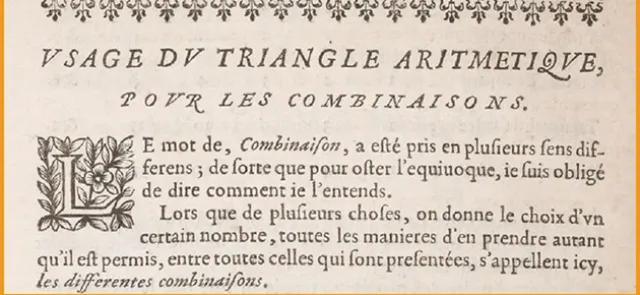
Journey into the heart of a mathematical classic
If you know how to fill in Pascal's triangle, you may be less aware of the treasures it contains. Arithmetic, geometric, combinatorial: it has no shortage of astonishing mathematical properties! And there are undoubtedly many more still to be discovered…
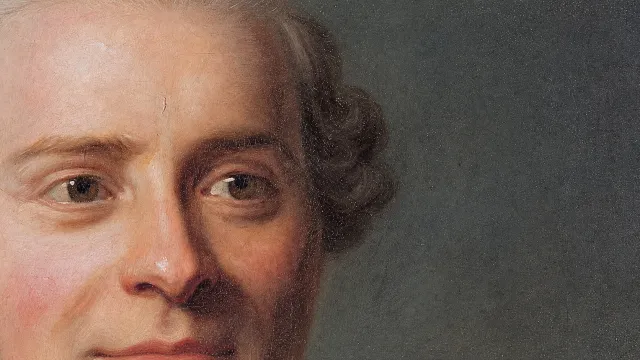
? is an algebraically closed field
The field ? of complex numbers was constructed to provide solutions to every quadratic equation. Surprisingly, it also contains the solutions to all algebraic equations with coefficients in ?. In technical terms, it is algebraically closed.
Magic square: a new world record | Tangente
Magic squares still fire the imagination… and keep their designers racking their brains (see Tangente 161).

Have you heard of Yakazu, a Japanese logic game? | Tangente
There are dozens of number-grid puzzles, often hugely popular. Yakazu, created in 2015 by hobbyist Patrick Tirone, is perhaps a little less so.