



Knowledge
In-depth articles on mathematical knowledge and theories

Envelopes by folding
Every regular curve is the envelope of all its tangent lines. For conics, these tangent lines are particularly easy to construct geometrically, making it possible to produce them by folding.
Equilateral triangles from any triangle | Tangente
There are at least two ways to derive an equilateral triangle from any triangle T—in other words, to obtain a triangle with the greatest possible symmetry from one that initially has none.
Simson line and Steiner's hypocycloid | Tangente
This delightful geometric property was familiar to French secondary-school students in the 1970s, although few knew how to prove it.
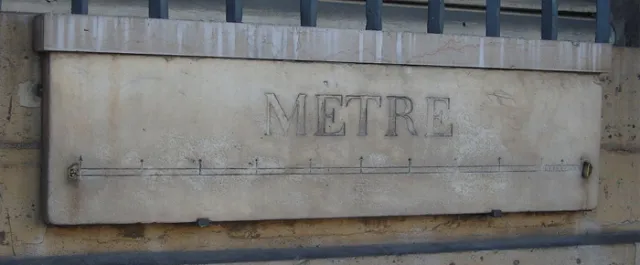
A new definition of the International System of Units
The conference held in Versailles in November 2018 changed four units of measurement, including the kilo. These new units will no longer depend on specific experiments. Their definitions will take effect in May 2019. What better opportunity to look back at the origins and evolution of our units of measurement?
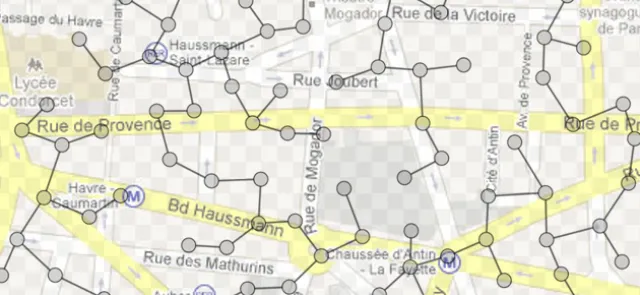
When physics “proves”
Some mathematical results are so vivid, so “concrete,” that they lend themselves beautifully to physical experiments. With a little ingenuity, they can even be “proved” physically! This is true of the Pythagorean theorem, the law of cosines and, indeed, triangle geometry as a whole.
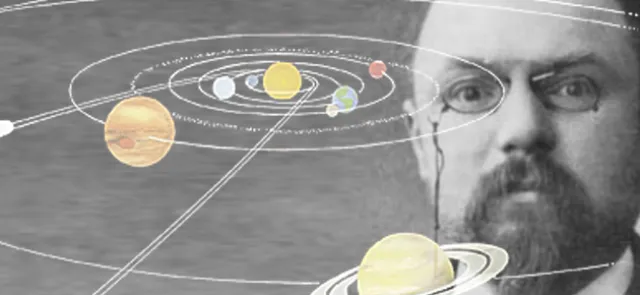
From the three-body problem to mathematical chaos
The elusive three-body problem saw spectacular progress thanks to Henri Poincaré. The French mathematician went further, devising new, more geometric methods for studying dynamical systems. His research has shaped our understanding of the stability of the solar system.
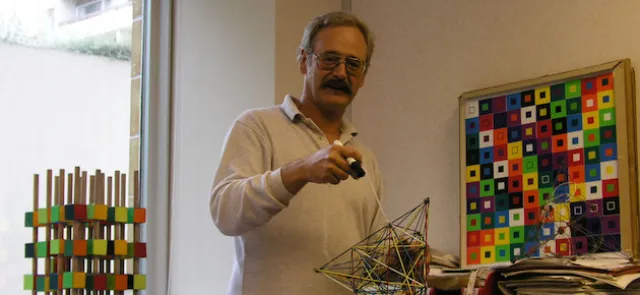
Combinatorics, past and present: An interview with Pierre Duchet
The study of combinatorial structures is a recent branch of mathematics, rich in counting problems. A journey into a far too little-known realm.
Pierre Duchet: research in action | Tangente
Mathematician Pierre Duchet died on October 27 last year at his home in Mexico City. A friend of the editorial team at Tangente, this specialist in combinatorics, discrete mathematics and especially graph theory was always eager to share his work with younger generations.

Binary notation for representing data
A computer's memory can store only 0s and 1s. Despite this limitation, we now use it to store numbers, text, photographs and even videos. This encoding relies on a host of standards and conventions that are well worth knowing.

The Klein bottle
The bottle named after Felix Klein is a classic of topology, yet its mathematical properties are still sometimes poorly understood. Let's delve beneath the surface to uncover its connection with the Möbius strip.
Coloring the plane: when geometry gets involved | Tangente
For plane coloring, we already knew that four colors were enough to color any map so that no two neighboring countries ever had the same color.

This is not a Möbius strip! | Tangente
Think you know everything about the Möbius strip, topology's quintessential object? Think again! Paper models of it have thickness, which undermines some of their properties. Let's explore these subtleties.
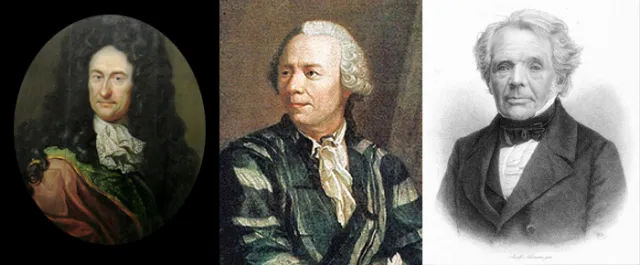
The story of a geometry unlike any other
A science that is hard to define in a few words, topology has found its way into geometry, analysis and even algebra. How did it emerge in the mathematical world? Where is it useful? And above all, what is topology? Let's look back at the birth of a new way of seeing our space…

Untangling the mysteries of rubbery deformations
The metric properties of modelling-clay objects change when they are deformed. Other properties, known as topological properties, remain unchanged. Surprisingly, algebra enters the picture. This naturally leads us to consider knots and the constituent molecules of DNA.
The blablatech craze | Tangente
Discover the labels for the new jobs in artificial intelligence.
Machine learning and neural networks
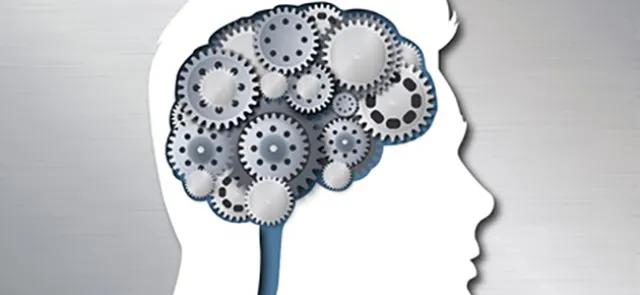
Neural networks are computational concepts born of the desire to imitate and model the human brain. They now underpin deep learning. With the emergence of new algorithms, these abstract ideas now lie at the heart of the digital revolution.
Machine translation: a challenge for the future
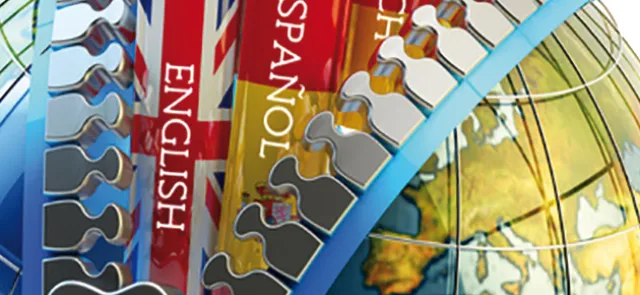
Born out of linguistic thinking in the immediate postwar period, machine translation later turned to purely statistical methods. More recently, a new approach has emerged, based on neural networks that mimic how the brain works.

How computers sort photos
Automatically sorting files leads us to a broader question: how neural networks learn. Have you always wanted to "look under the hood" of artificial intelligence and find out "how it works"? Your vacation photos and a little mathematics will help…

Population dynamics: overcoming data scarcity | Tangente
In some fields, data are scarce. Descriptive statistics are out of the question! Mathematics offers other tools: topology and probability help ecologists predict how groups of species will evolve.
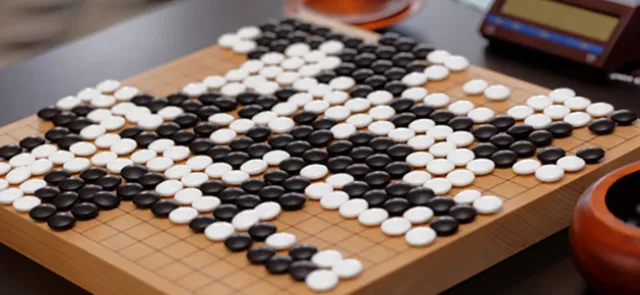
Go: the triumph of deep thought | Tangente
Go is the quintessential game of pure strategy. Chance plays no part in it. Until very recently, it remained the preserve of human intelligence, but computers eventually established their strategic superiority here too, twenty years after their triumph at chess.