



Knowledge
In-depth articles on mathematical knowledge and theories

Ross's model: explaining the spread of malaria
Malaria remains a scourge that continues to ravage Africa today. Ronald Ross discovered its cause and developed a model of how the number of infected people changes. Will the arrival of chikungunya in our part of the world increase interest in his model?
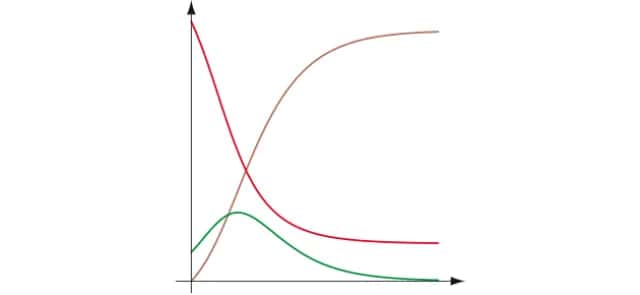
The spread of epidemics
When faced with what seems to be the start of an epidemic, how can we predict how it will develop and spread geographically? Mathematical models attempt to answer these questions.

Bayes' theorem: a tool for physicians
Bayes' theorem, which concerns conditional probabilities, has many medical applications as an aid to diagnosis and prognosis.

Drug versus placebo
Choosing the best treatment for a particular condition is a delicate matter. Several factors come into play. Statistical methods can help establish a treatment's effectiveness or compare several treatments. Placebos play an important role in this process.

The king of geometry: Thales' theorem
In France, Thales' theorem concerns parallel lines and proportionality. Its proof, combining algebra and plane geometry, is remarkably elegant. It also leads naturally to two landmark results in triangle geometry: Menelaus' and Ceva's theorems.

Dynamic geometry: plane motion | Tangente
Plane motion provides a valuable framework for using kinematics to study the geometric properties of figures. In particular, it offers an efficient and insightful way to determine loci. In the past, it was studied in connection with the connecting-rod and crank mechanisms of locomotives.

Adventurers of the forgotten pentagon: tiling the plane | Tangente
The recent discovery of a pentagon that tiles the plane brings to mind an endearing figure: Marjorie Rice. An American homemaker, she would hide away in her kitchen to indulge her passion for mathematics.

Thales and his theorem: historical uncertainty explained | Tangente
Who has never heard of Thales's theorem? Yet this extremely famous geometric statement is also one of the theorems whose history is least certain. Let's try to separate history from legend...

Yesterday's conjectures, today's progress | Tangente
Egyptian fractions, like Einstein's relativity, provide the subject matter for conjectures that have only just been proved. The strange abc conjecture, simple to state, has just been resolved... if the proof put forward by Mochizuki turns out to be correct.

Tao solves Erdős's discrepancy conjecture | Tangente
Terence Tao is one of the great "problem posers" of his time, since a photograph that went around the world shows him, at ten years old, already at work with the famous Hungarian mathematician.

Percentage tennis: the maths that make you win | Tangente
Everyone talks about them, but few enthusiasts know what they really mean: probabilities play a major role in tennis, and players are best off adapting to them. Although the same issue arises in every sport, it has been studied most thoroughly in tennis.
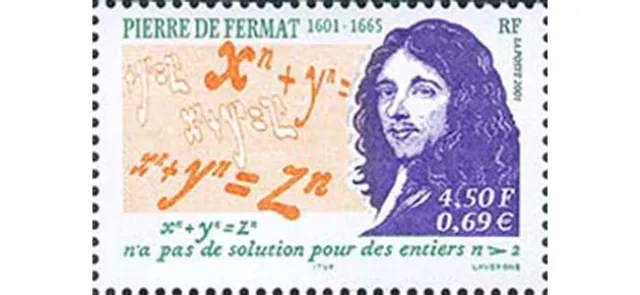
Conjecture, conjecture... something will always come of it
Conjectures are especially famous when they have simple statements and resist mathematicians’ efforts for a long time. They give mathematics an air of mystery and bring great renown to those who solve them, but above all to those who first formulated them, such as Fermat and Goldbach.
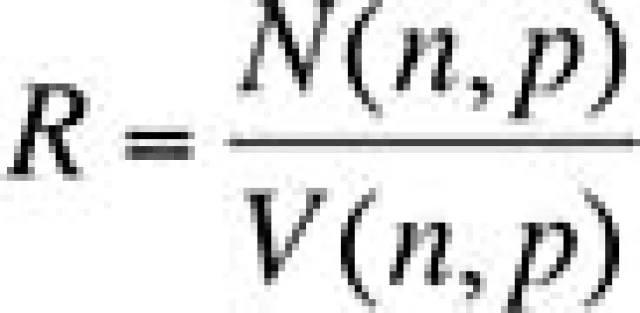
Sports lottery and a fractal
Gambling, long condemned on religious or moral grounds, has flourished over the past century, along with sports betting, which has grown with the rise of online gaming. Statistical studies can help optimize the winnings of the homo ludens that modern humanity has become.

Of machines and men: Catalan and Mihailescu | Tangente
Little stories about conjectures.

The engine of mathematics
Mathematical progress owes much to conjectures, large and small, that challenge mathematicians. This was true long before Landon Clay and others offered million-dollar prizes: conjectures are the engine of mathematics.
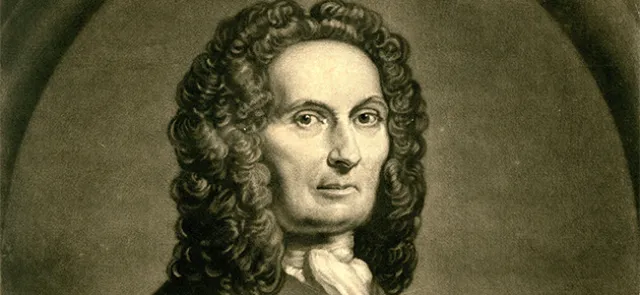
The central limit theorem and the laws of large numbers: so many laws!
One might expect the many independent causes behind a phenomenon to generate chaos (in the everyday, not the mathematical, sense). Nothing could be further from the truth—quite the opposite! The extreme regularity of complex phenomena has been proved to varying degrees...
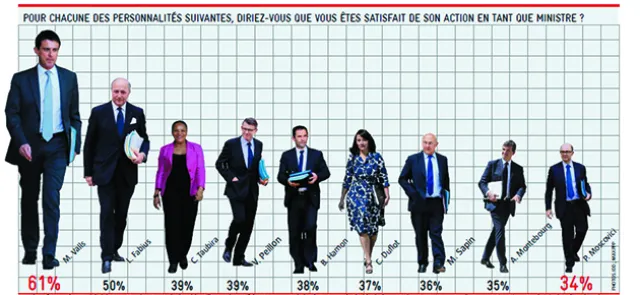
Can opinion polls be trusted?
How are opinion polls conducted? What mathematical theory underpins them? What biases affect them? A survey of surveys...
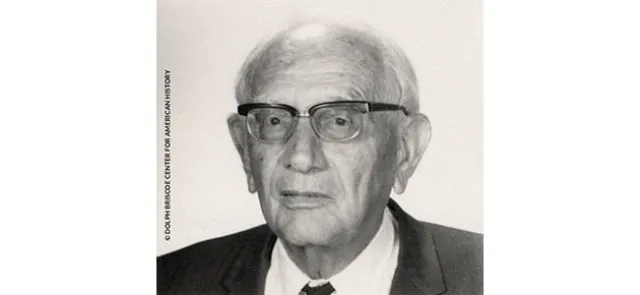
Plausible conjectures… that turn out to be false!
We often assume that the only mistakes good mathematicians make are trivial slips caused by momentary inattention, such as errors in simple calculations. Yet some have put forward mathematical conjectures that proved false—sometimes spectacularly so.