



Math for everyone
Mathematical content accessible to everyone
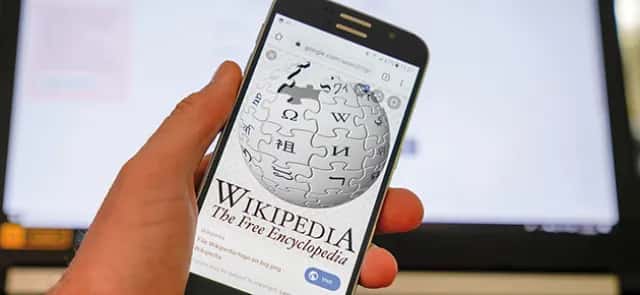
Writing a Wikipedia article—why not… | Tangente
Whenever people have a question or want to check a concept, Wikipedia has become the first port of call for many. But who writes these articles? Can they be trusted? Above all, how can you write one yourself?

Proof desperately wanted | Tangente
One hundred thousand results are stated worldwide each year—but how many of them are proved? In number theory, for example, many problems remain unsolved. Some are well known to enthusiasts, others less so...
Lean: a new library of Alexandria | Tangente
Building a digital repository of mathematics—a new "Library of Alexandria for mathematics"—is the wildly ambitious collaborative undertaking on which many mathematicians have embarked.

Toward new practices | Tangente
Mathematical research and teaching increasingly rely on software that supports collaboration. As this software grows more complex, its development requires large-scale collaboration.
"Winter is coming" | Tangente
In France, the annual influenza epidemic generally occurs between November and April. Timing therefore appears crucial to understanding how the influenza virus spreads: this pathogen has a period during which it is transmitted more readily through the population.
Penrose takes center stage to kick off 2021 | Tangente
To mark the award of the 2020 Nobel Prize in Physics to Sir Roger Penrose—a mathematician well known for his work in cosmology, differential geometry, tilings and science communication—Tangente is shaking up its schedule!
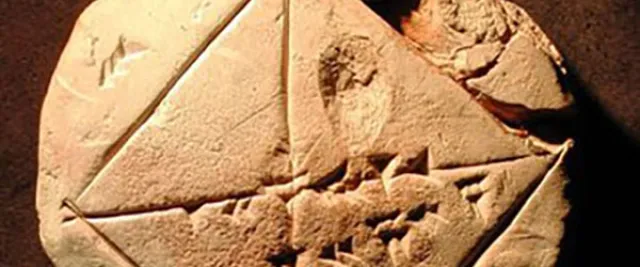
The Euclidean revolution
Some profound results, such as Pythagoras' theorem, predate any awareness of mathematics as a science. Rather, once theorized and proved, these results gave rise to this science.
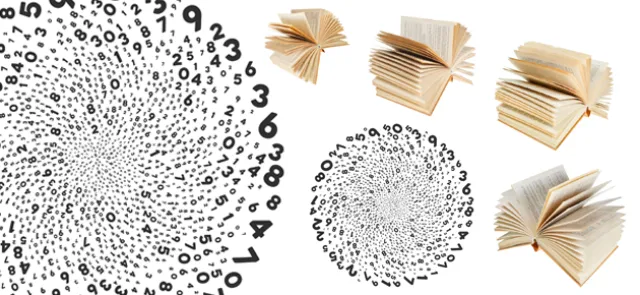
A century of conjectures
Mathematics has always advanced through the curiosity of people seeking to answer new questions and pose new problems. Once solved, these give rise to others, creating an endless chain of advances in knowledge.
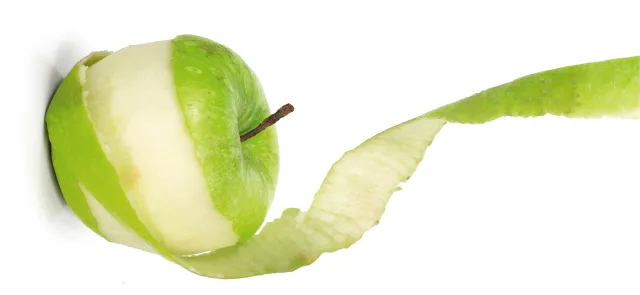
A spiral of digits | Tangente
An entertaining blend of arithmetic and graphics lets us display the successive terms of an arithmetic sequence visually. This calls for some explanation—and decoding!
The thousand-and-first tale | Tangente
Mise en abyme is a classic literary device that masterfully evokes an iterative process. One example is Olivier Salon's 2009 text Les Gens de légende, reproduced by kind permission of Éditions du Castor Astral.
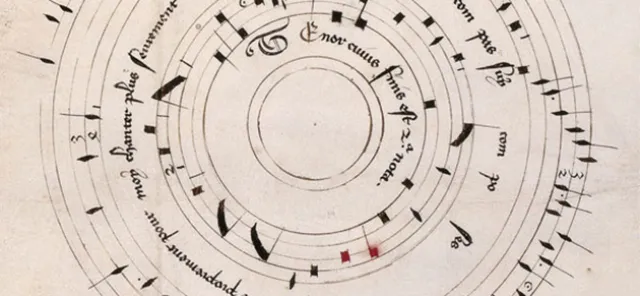
Musical iterations | Tangente
The first iterative process in music gave rise to the Pythagorean scale. Since then, recursive processes have been widely used in musical composition, from Johann Sebastian Bach to contemporary music. Their use is limited only by composers’ imaginations!

Loops in programming | Tangente
The various types of loops are fundamental programming constructs. Although using them often comes naturally, they nevertheless raise a number of issues, such as whether the program will ever stop. Recursion offers useful solutions.

The online encyclopedia of integer sequences | Tangente
Founded in 1995 by British-American Neil Sloane, the OEIS (On-Line Encyclopedia of Integer Sequences) is a collaborative website where anyone can add a new way of generating a sequence of numbers, together with its known properties and the questions it raises. Nearly 400,000 sequences can be browsed there!

Continued fractions,
Real numbers can be written without making an arbitrary choice of base. Euclid's algorithm provides a method that extends to all real numbers and leads to the notion of a continued fraction. In this notation, the golden ratio becomes the simplest irrational number to write!

Computational geometry: key challenges | Tangente
It is easy to overlook, but many geometric problems can be solved by iterative methods or, more broadly, algorithms. These questions are the subject of computational geometry! This is a vibrant, highly active field in which many seemingly elementary questions still await solutions.
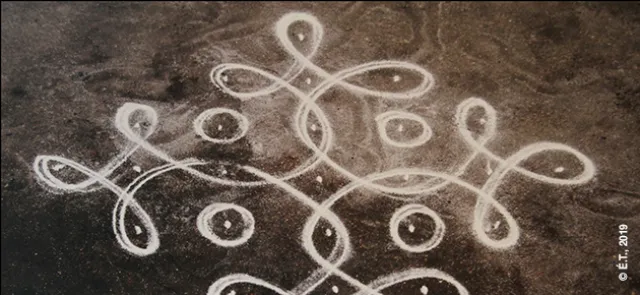
The remarkably rich Prouhet–Thue–Morse sequence
The Morse word, or Prouhet–Thue–Morse sequence, is an easy-to-construct mathematical object with plenty of surprises in store. Join us in exploring a combinatorial sequence that would certainly deserve to be every bit as famous as Fibonacci's!

News from the Collatz conjecture
Syracuse... For some, the name evokes a classic song performed by the late Henri Salvador (1917–2008); for mathematics enthusiasts, however, it refers to the Collatz conjecture, whose statement is very simple but which remains unproved to this day. A recent result lends further support to the conjecture.
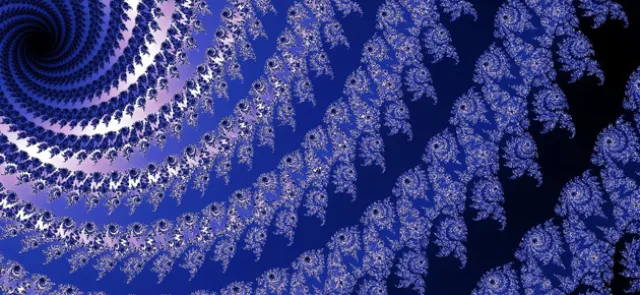
Fractals: the aesthetics of iteration
Repeating a geometric transformation at different scales produces fascinating figures whose aesthetic appeal is far from their only attraction. Let's (re)discover the most iconic fractals!

Iterative methods for solving equations
Sequences, including recursively defined sequences, arise in many areas of mathematics. This is true of numerical methods for solving equations, which are in fact iterative methods—hence the presence of sequences.
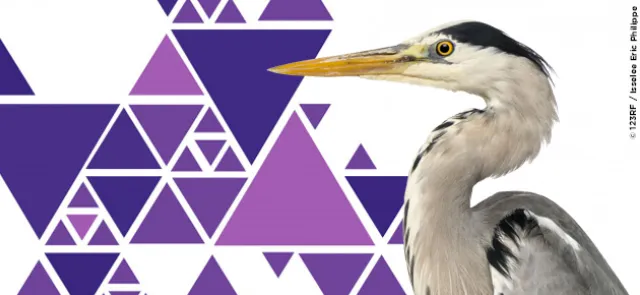
Heron's algorithm
Heron of Alexandria is known for a famous formula that gives the area of a triangle without requiring its height. He also devised highly sophisticated mechanisms and an extraordinarily efficient recursive method for approximating the square root of a positive number.