



Math for everyone
Mathematical content accessible to everyone
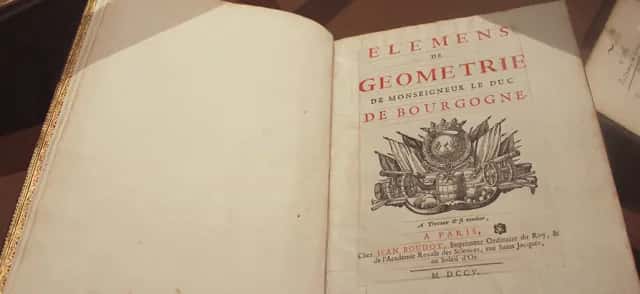
Straightedge and compass in education
How long have schoolchildren been drawing geometric figures with a straightedge and compass? More importantly, why? Even elementary geometric constructions must be introduced progressively, and this requires knowledge to be organized systematically.
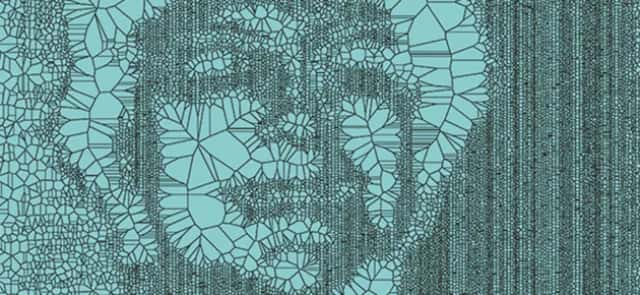
Bernard Cornet's geometric art and Voronoi | Tangente
In art, mathematical tools can help artists develop and create their work. The Nantes painter Bernard Cornet (born in 1952) has brought Voronoi diagrams and Delaunay triangulation into his artistic practice.
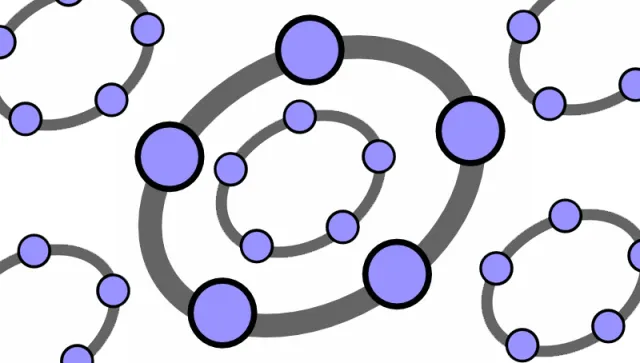
Dynamic geometry in action with GeoGebra | Tangente
Developed in 2002 by an Austrian student, GeoGebra is an educational tool with an unusual history. Designed for mathematics teachers worldwide, it is especially popular among secondary-school teachers in France. Tangente spoke with the software's creator, Markus Hohenwarter.
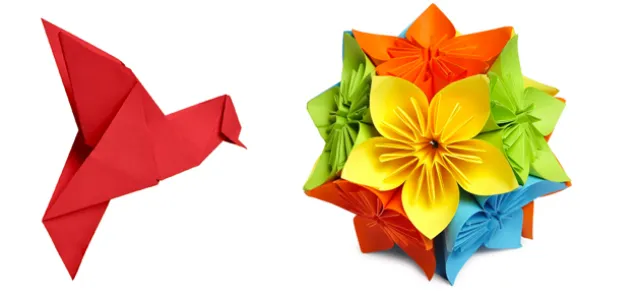
Origami and folds for geometric constructions
Greek geometers regarded only straightedge-and-compass constructions as acceptable. Some problems that defeated their ingenuity—for reasons that would not be understood until the advent of algebra—can nevertheless be solved using origami.
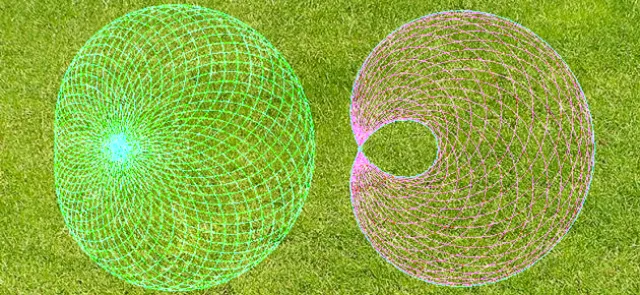
Triangles with an angle trisector that is a median
A geometric question about trisecting an angle can lead to some astonishing discoveries! Along the way, we encounter triangles, angle trisectors that are also medians, the non-constructible 20° angle—and curves not yet catalogued?
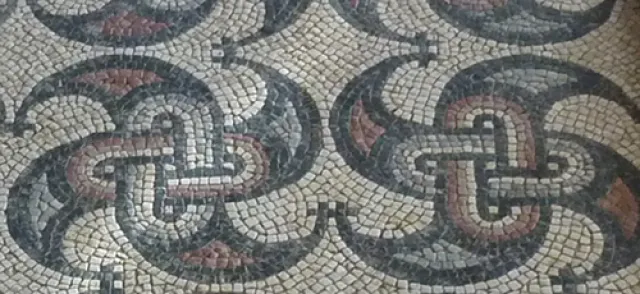
Circles in ancient Roman mosaics | Tangente
Besides their undeniable aesthetic appeal, mosaics and other archaeological remains from our past often hold wonderful mathematical surprises. These geometric examples from Gallo-Roman sites offer ample proof.
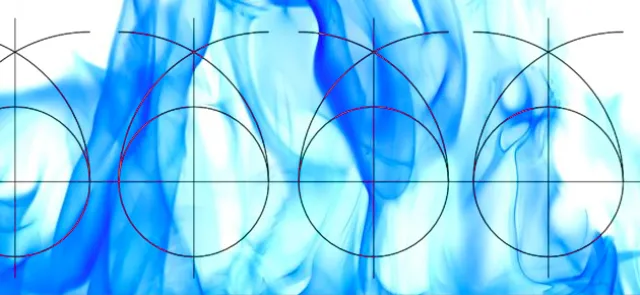
From geometry to algebra: constructing numbers
Starting with two distinct points in the plane and performing only finitely many ruler-and-compass constructions, can we obtain any point in the plane? If not, which points can we obtain in this way?
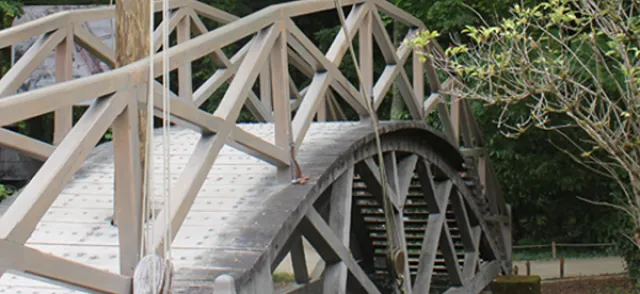
The parabola in all its finery | Tangente
A common exercise in the days of descriptive geometry was to construct a point on a curve and its tangent. Following the ellipse, here is a short survival guide offering a handful of constructions for solving the same problem for the parabola.
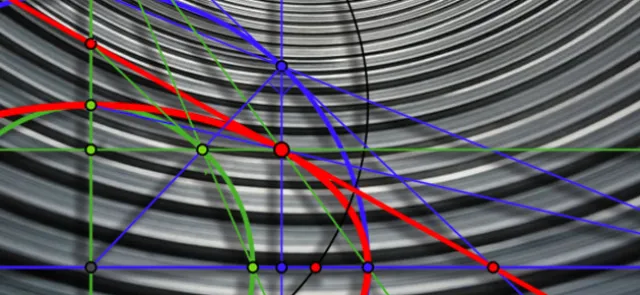
The ellipse and its many features
Although descriptive geometry provides laborious methods for constructing an ellipse with straightedge and compass (see the article "Albrecht Dürer and technical drawing"), other, more conventional methods also exist. A point on the curve, the center, foci, axes and tangents: let's take a quick tour of the available techniques!
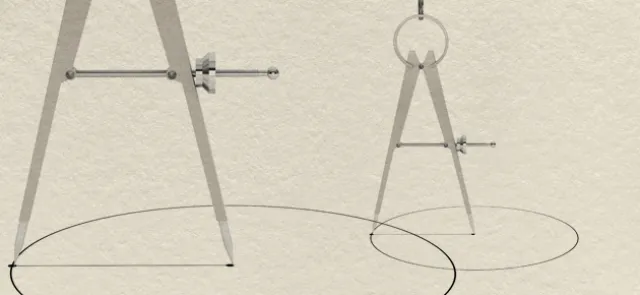
When the compass won't follow the ruler
A famous result in geometry, still surprising when first encountered, states that any point in the plane constructible with straightedge and compass can be constructed with a compass alone. But how is this actually done?
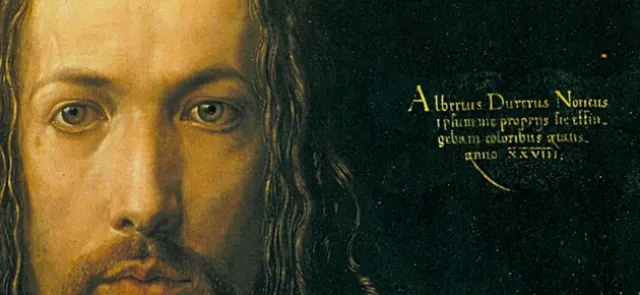
Albrecht Dürer and technical drawing | Tangente
Albrecht Dürer (1471–1528) devised a fascinating straightedge-and-compass construction of the ellipse. It foreshadowed descriptive geometry, which Gaspard Monge (1746–1818) would formalize almost three centuries later.

Math City Map: Math trails | Tangente
If, by chance, you ever find yourself confined to within 10 km of your home, you can always turn the restriction to your advantage by creating mathematical challenges in your local area.

Lovász and Widgerson, winners of the 2021 Abel Prize | Tangente
This year, the Norwegian Academy of Science and Letters has put theoretical computer science and graph theory in the spotlight.
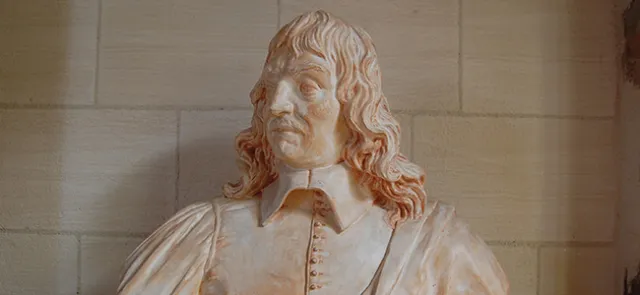
The emergence of Cartesian geometry
Greek geometers were the model for mathematicians when Descartes revolutionized geometry by introducing coordinates, making it possible to approach geometry through algebraic methods. Cartesian geometry was born.
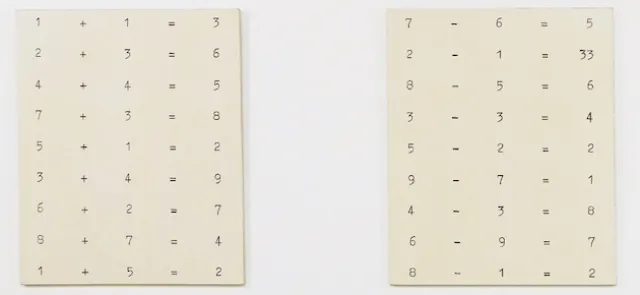
The artist and the number: art and maths | Tangente
Mathematics in general, and numbers in particular, have inspired many artists, including Dalí and Picabia. Some are drawn to the magic of numbers. Others find beauty in number sequences, which they bring to life in graphic art or painting.
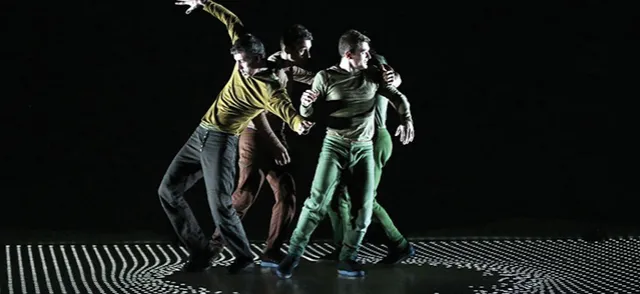
Art and mathematics: creative encounters | Tangente
Digital art takes many forms, surprising us with the new territory it explores. It can be 2D or 3D, static or moving, passive or interactive. It lies at the intersection of art and technology. How have artists moved from a mathematical concept to creating a work of art?

Mapping with Khartis: visualization | Tangente
Most data visualizations in the press are created with this open-source software, developed since 1995 by the mapping workshop at the Institut d'études politiques de Paris ("Sciences Po").
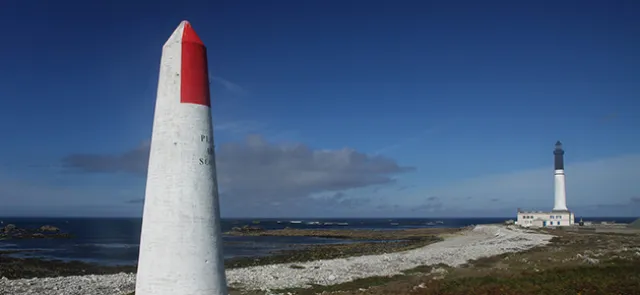
Finding your position at sea
How can you determine your position when sailing offshore or along the coast? With land in sight, one or two landmarks are enough. On the open sea, sailors’ ingenuity led to the invention of sophisticated instruments such as the sextant and the Cras plotter. A little geometry is essential to use them.
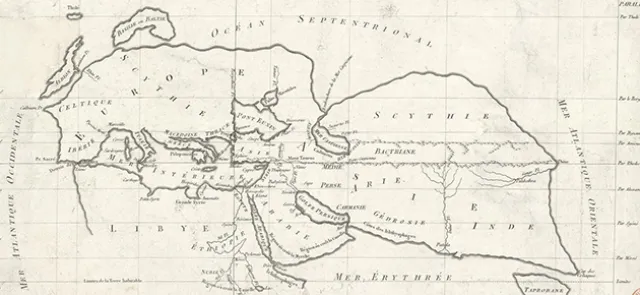
How not to lose your bearings
Since antiquity, navigators have sought to find their position at sea, first developing instruments and then maps before the practice was standardized in the 19th century. This practical and strategic use of mathematics endured for centuries before other tools superseded it.

Xenakis’s UPIC: mathematics and music | Tangente
One of the pioneers of the digital revolution in music was the composer Iannis Xenakis (1922–2001). Music has always had an underlying structure closely related to mathematics, but with a composer like Xenakis, this synergy found concrete expression.