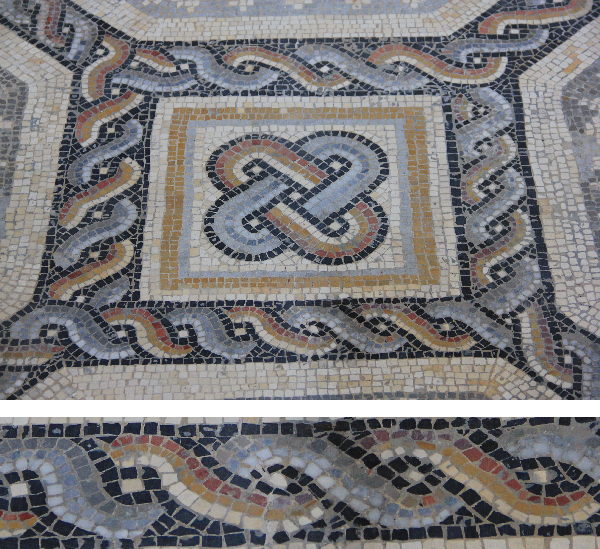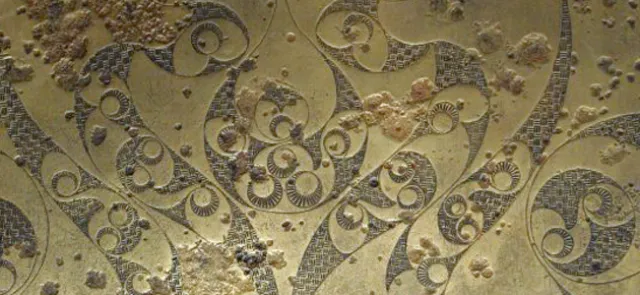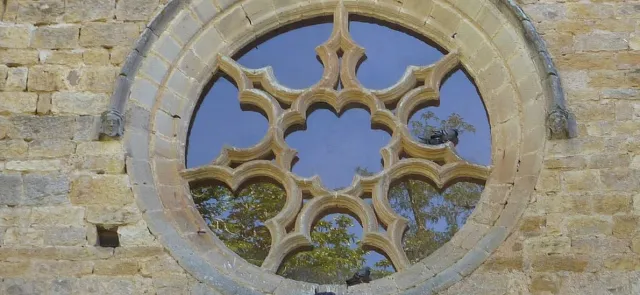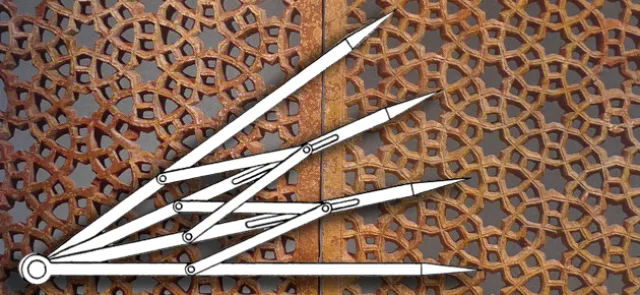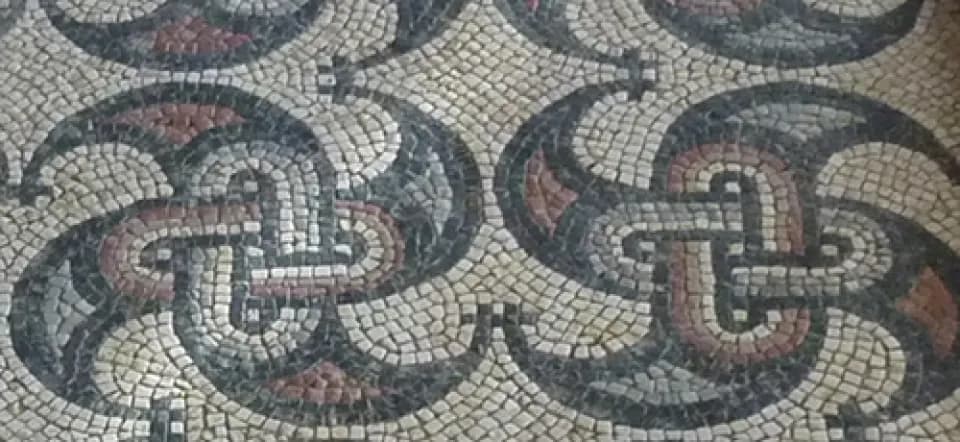
A first visit to an ancient Roman site may evoke a familiar feeling. Among all the collections displayed outdoors or in adjoining museums, visitors’ eyes are often drawn to scenes from mythology or daily life depicted in mosaics, some of them very large. Their gaze then shifts from these central figures to the floral and geometric patterns surrounding these veritable paintings in tesserae. Memories of the many figures drawn with ruler and compass at school come flooding back.
Traces of the preparatory drawings, whether incised or painted, are extremely rare. None of the pattern books mentioned by Pliny the Elder has survived, so the search can begin for the construction procedure used by the pictor, who designed the mosaic. Let’s revisit several geometric designs, both common and unusual, from Gallo-Roman sites and devise straightedge-and-compass constructions for them.
Borders, twists and braids
---------------------------------------
The two-strand braid is a very common geometric pattern. From the second century CE onward, it was reproduced throughout the Roman Empire for more than three centuries. Like borders, such braids were used to separate the different panels making up a mosaic.