Mathematicians are highly inventive. Trisecting an angle, constructing a cube with twice the volume of a given cube, and finding a square with the same area as a given circle are all impossible under the rules of Euclidean geometry—that is, using only a straightedge and compass, in a finite number of construction steps.
The compass: constructions and limitations
----------------------------
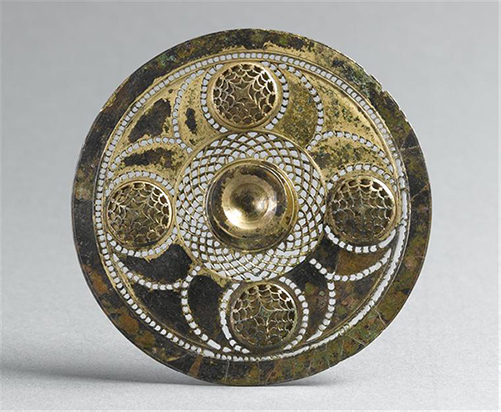
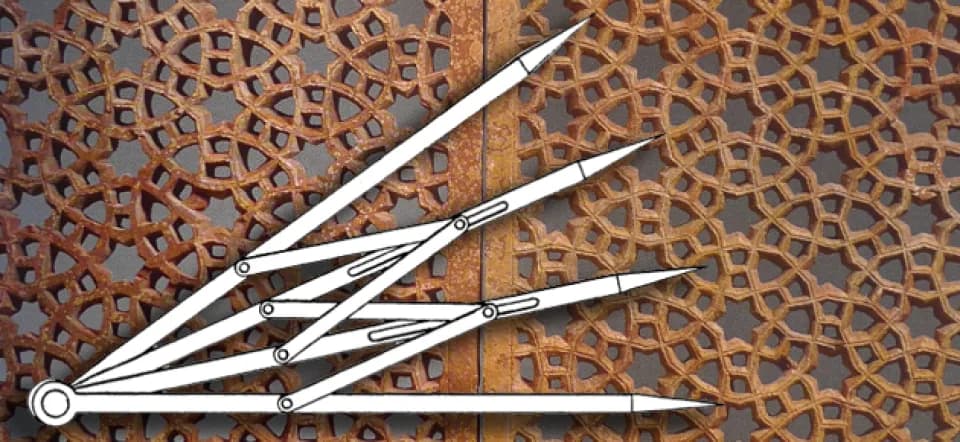
Interlacing patterns, arabesques, rosettes and lunes: compass geometry has worked wonders in decoration and architecture. Master craftsmen had known how to wield the instrument since antiquity. In the 4 th century BCE, for example, they could draw as many as 193 circles with eight to ten different radii to create the bronze phalera (shield ornament) from the chariot burial\* at Cuperly, in the Marne department.
(\* In these burials, the deceased's remains were interred with their ceremonial chariot.)