Curves and trajectories
This issue is not fully translated into English yet; only translated content is shown.
Read the French versionAll folders in this issue

Represent curves
Curves have always invaded everyday life. First lines and circles, of course, but also conics, spirals, helices, or others inspired by the line of a building, the layout of a track or the shape of a rope. Yet it is difficult to propose rigorous definitions. We had to wait for the birth of analysis to have a tool to study them. Arising from parametric or implicit equations, expressed in Cartesian coordinates or polar coordinates, they invariably fascinate scientists as well as lovers of beautiful geometry. Welcome to the land of curves!


Multiple uses
The richness of curves is exploited in many fields. In mathematics, they have served to solve geometric problems, sometimes impossible with a ruler and compass, such as the trisection of the angle or the duplication of the cube. More generally, their visual character gives rise to a thousand enigmas, problems or conjectures. What is the ideal shape of a branch for a vehicle to travel on it? If many curves come from the observation of movements, conversely, others make it possible to provide solutions to problems in astronomy or physics. And, like all beautiful geometric ideas, they have their own aesthetic that is found with joy in art or design.
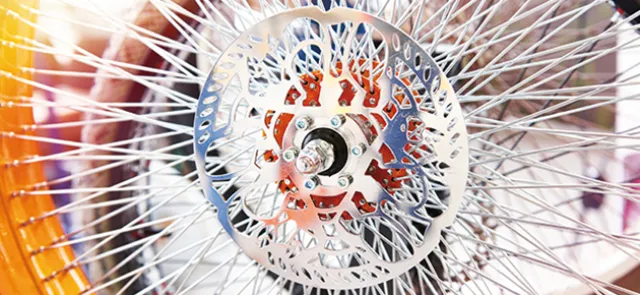
Movements and trajectories
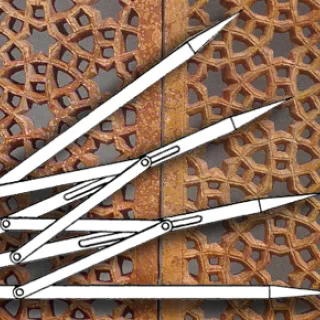
A curve can be seen in its entirety as a static object, but also as the trajectory of a point moving in space. From dynamics to kinematics, curves naturally allow us to represent the movements of bodies, from the most voluminous celestial bodies to the most minute particles or light rays. Another link between theory and practice is materialized by mechanical systems, these sometimes astonishing assemblies that can be used to draw curves.