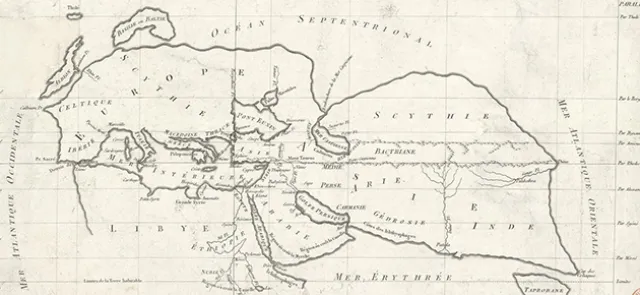
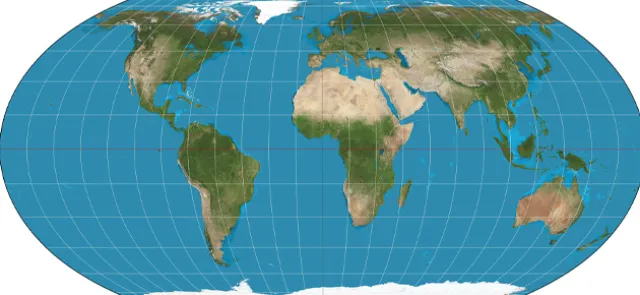
To find their way far from shore and reach Newfoundland to fish for cod, 16th -century Newfoundland cod fishermen had very few instruments: a compass, an improved version of the magnetic compass for keeping a course; a clock, or rather a simple hourglass for measuring time, a useful parameter when calculating longitude; and a weighted line (the log line), which was paid out alongside the ship to measure its speed. One thing is certain: out at sea in those days, sailors could rely only on celestial bodies to find their position and chart their course.
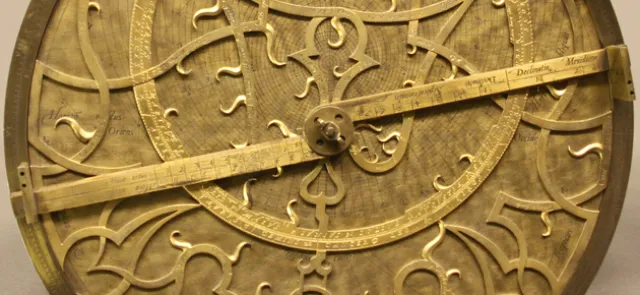
Accurately measuring the altitude of a celestial body above the horizon therefore soon became a challenge. At first, both at sea and on land, this was done with fairly rudimentary instruments such as the cross-staff, astrolabe and quadrant (see "How to keep your bearings").
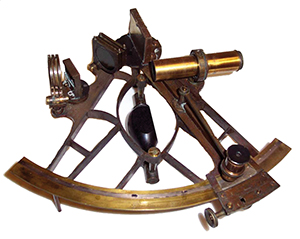
A sextant.
Measuring the altitude of celestial bodies
-----------------------------