



Everyday Math
Applied mathematics to everyday life: elections, sport, music, road traffic, weather, computer science, finance

Tchebychev's inequalities for sequences | Tangente
Elementary results can sometimes prove astonishingly fertile, opening the way to a host of developments and applications. Chebyshev's inequality is a case in point.
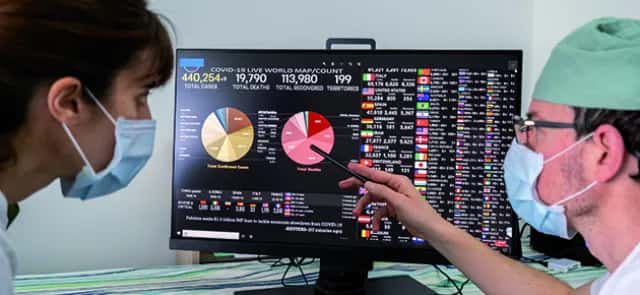
Bruno Falissard, biostatistician: interview | Tangente
Bruno Falissard is a psychiatrist, professor of biostatistics at Université Paris-Sud and director of the Centre for Research in Epidemiology and Population Health. He explains how statistics can help evaluate new therapies.

Individual-level data protection | Tangente
How can millions of individual records be processed and made available to researchers while protecting privacy and commercial confidentiality? This is a challenge the official statistical service faces every day—and one it meets rather convincingly.
Statistics: what is it for?
You like mathematics, but it seems too far removed from "real life." Why not take a look at statistics? This discipline has countless direct applications, with many more undoubtedly still to be imagined or discovered!
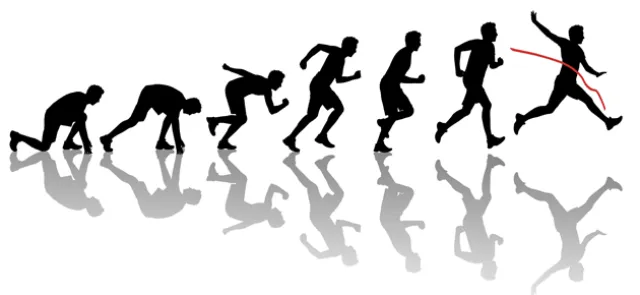
Modeling sports training with mathematics | Tangente
Modeling the relationship between performance and training is a delicate statistical problem. Seeking a mathematical model that links these two sets of data means thinking about sport and the potential effects of an athlete's efforts on their results.

Editorial
Statistics is one of the branches of mathematics with the widest range of applications. It emerged in the 19th century and developed in the early 20th; today, it is more relevant than ever, providing general methods for working with data.

Optimal control and Zermelo problems | Tangente
A particularly important class of optimal control problems consists of Zermelo-type problems: their applications have proved rich and fruitful in mathematics… and beyond. They are studied using a combination of geometric and numerical methods.
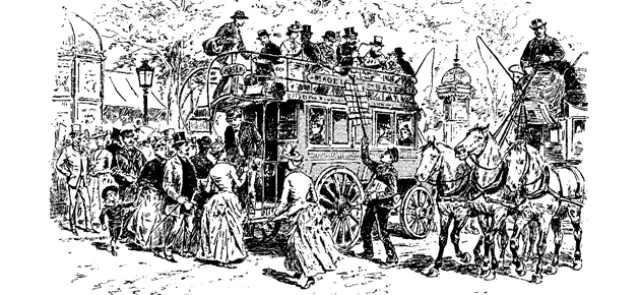
Did Pascal invent public transport? | Tangente
A great many websites hail Pascal as the brilliant inventor of public transport. Is there any basis for this claim? Was Pascal one of the architects of this revolutionary, modern system of travel?
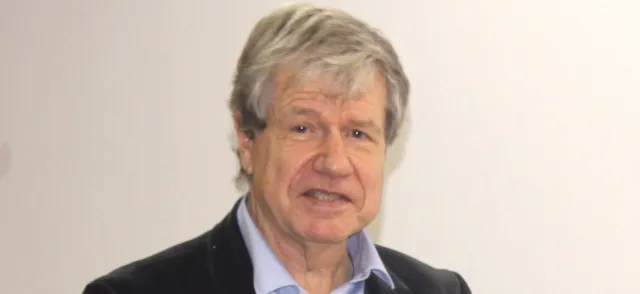
Hervé Lehning, a popularizer of mathematics | Tangente
It is impossible to sum up the scientific and educational work of a man such as our colleague and friend Hervé Lehning. More than a thousand articles bear his name! One way to gain a sense of the man is through his vast body of writing.
Blaise Pascal prize — Researcher award | Tangente
The Blaise Pascal Prize recognizes work carried out in France on the application of mathematics to engineering and industry.

Constructing tangents
If we know how to carry out the classic straightedge-and-compass constructions, we are perhaps less at ease drawing the common tangents to two circles. Now is the time to put our whole range of knowledge of Euclidean geometry into practice!
Different types of tangency in microeconomics | Tangente
In microeconomics, certain arguments rely on a graphical representation and call upon different types of tangency. This is the case with basic consumer theory, the Edgeworth box, and a firm's long-run average cost.

Jobs, the economy and why mathematics matters | Tangente
In mid-September, the Institut national des sciences mathématiques et de leurs interactions (INSMI) at the CNRS published a study on the impact of mathematics on the economy and employment.
A concept with a long history
The power of a point with respect to a circle appears implicitly as early as Book III of Euclid's Elements. This notion, elementary as it may be, would be redefined in the 19th century and become the basis for numerous applications in geometry.
In the classroom in the 1960s
In the 1960s curriculum, geometric transformations were studied in some depth. These included, of course, translations (covered in the French seconde, equivalent to tenth grade) and the group they formed.
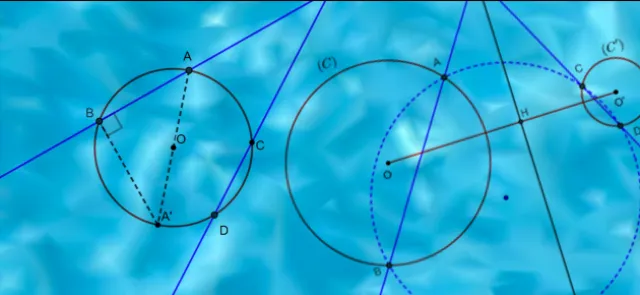
A useful power
Talking about the "power of a point with respect to a circle" may seem old-fashioned nowadays. Yet this elegant geometric notion had its heyday and its uses. Its applications to various mathematical questions are highly fruitful.

New careers in mathematics and computer science | Tangente
The exhibition "Mathematics, Computer Science… With Women!" is available. Created by the association Femmes et Mathématiques in partnership with the CCSTI of the Centre-Val de Loire region, it comprises twenty-one roll-up panels presenting the career paths of twenty young women. Each panel features a portrait by photographer Marie-Pierre Dieterlé.
History and theory of origami and paper folding | Tangente
Historically, the art of paper folding is thought to have emerged in China as early as the 2nd century BCE. Wherever it developed, the practice seems to have been closely linked to the advent of paper.

Mathematics points the way
We encounter broken symmetries every day, allowing us to distinguish up from down and right from left. Likewise, when objects in our mathematical spaces can be oriented, their orientation inevitably rests on an arbitrary definition.
Wittgenstein and Russell at Cambridge | Tangente
Born in Vienna in 1889, Ludwig Wittgenstein began studying mechanical engineering in 1906. Drawn to mathematics, he initially explored its applications before becoming fascinated by Russell's writings.