



Everyday Math
Applied mathematics to everyday life: elections, sport, music, road traffic, weather, computer science, finance

Elegant problem-solving methods
The appeal of recreational mathematics is that it requires little formal knowledge. Yet there are ingenious techniques that are hardly ever taught.

Timeless mathematical puzzles | Tangente
Puzzles have been part of human culture since earliest antiquity. At first, inventing puzzles was bound up with mythology or religion; gradually, it became a purely intellectual game, independent of any purpose or practical application.
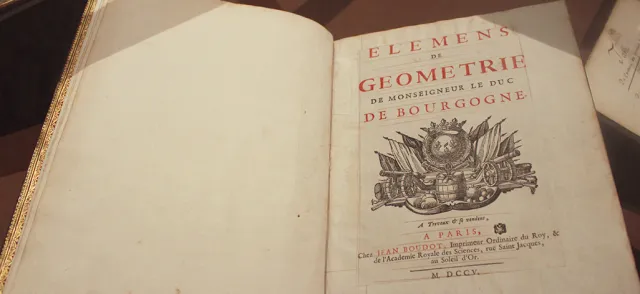
Straightedge and compass in education
How long have schoolchildren been drawing geometric figures with a straightedge and compass? More importantly, why? Even elementary geometric constructions must be introduced progressively, and this requires knowledge to be organized systematically.

Roman numerals and modern passions | Tangente
Controversy in Lutetia, in March MMXXI. The Carnavalet Museum, devoted to the history of Paris, has allegedly "abolished Roman numerals" from its new visitor experience on the pretext that they represent "an obstacle to understanding", claims the Italian daily Corriere della Serra.
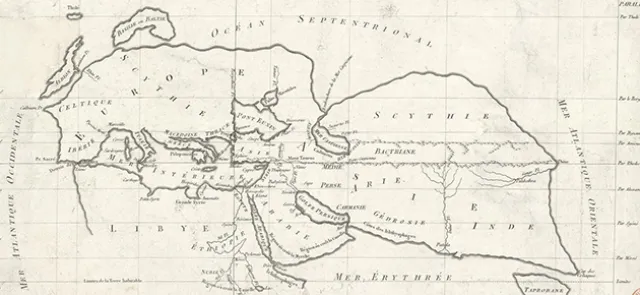
How not to lose your bearings
Since antiquity, navigators have sought to find their position at sea, first developing instruments and then maps before the practice was standardized in the 19th century. This practical and strategic use of mathematics endured for centuries before other tools superseded it.
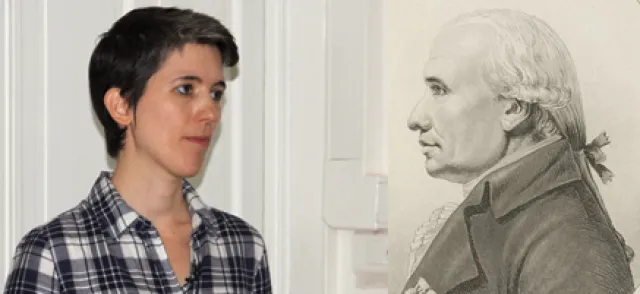
Two and a half centuries of optimal transport
Moving a pile of sand, transferring colors from one image to another, minimizing a group’s travel time—all these problems can be tackled using optimal transport. Gaspard Monge pioneered a theory that computing has made remarkably effective.

Graphics processors: high-performance computing for everyone?
Numerical simulation is everywhere: from re-entry into the Martian atmosphere and weather forecasting to climate projections, aeronautics, molecular-dynamics calculations, and processing vast volumes of data. High-performance computing has become a matter of public concern.
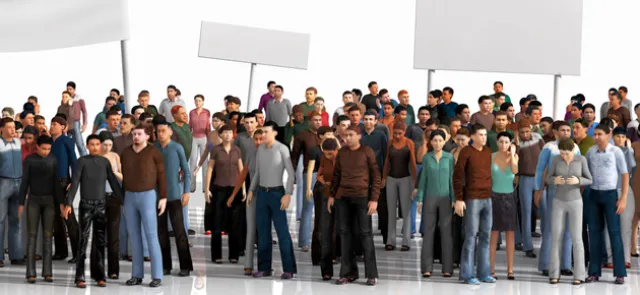
Counting protesters | Tangente
One hundred thousand protesters, according to the organizers; twenty thousand, according to the police! The discrepancy between estimates of the number of people in a march is a perennial source of puzzlement—and mockery—for outside observers. Is there really no way to provide a reliable figure for the number of protesters?
Political rationality and calculation | Tangente
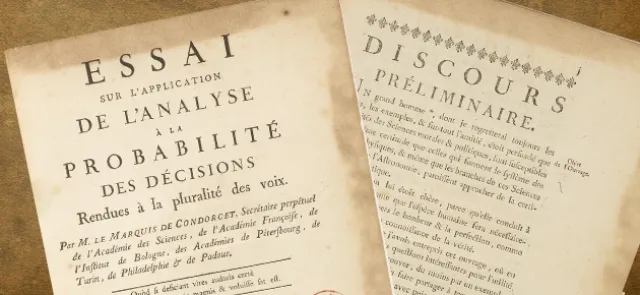
Public policies are often supported by rational, even mathematical arguments. Philosophers such as Leibniz, Condorcet and Bentham sought, through a variety of approaches, to put both economic and social behavior on a mathematical footing. Yet they all came up against the fact that combining individual rationalities does not necessarily serve the common good.
Dazzling Penrose tilings
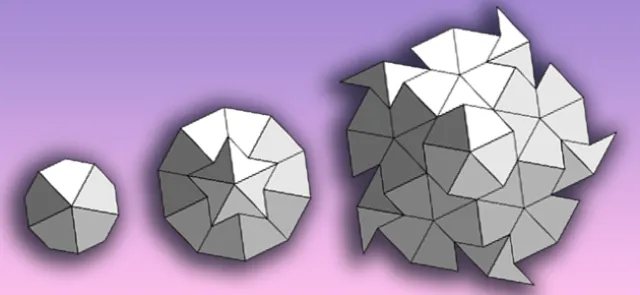
Sir Roger Penrose is renowned for his remarkable and foundational work in geometry and cosmology, and for the applications of that work to black holes. It is puzzling, however, that he is famous to the general public for the tiling that bears his name, with its many remarkable properties.
Three unsolved problems in geometry | Tangente
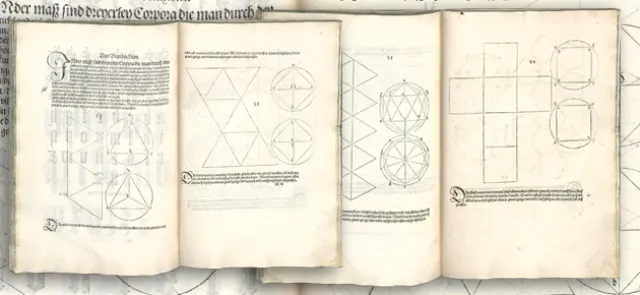
Geometry abounds in problems that remain unsolved. Some date back to the Renaissance! In tribute to Richard Kenneth Guy (1916–2020), here are three, gleaned from his book Unsolved Problems in Geometry (with Hallard Croft and Kenneth John Falconer, Springer, 1991).

Toward new practices | Tangente
Mathematical research and teaching increasingly rely on software that supports collaboration. As this software grows more complex, its development requires large-scale collaboration.
Toward open science | Tangente
Mathematical practice is undergoing profound change. Researchers are organizing, established ways of working are being questioned, and bringing knowledge to the general public has become a key concern. A new model—"open science"—is emerging.
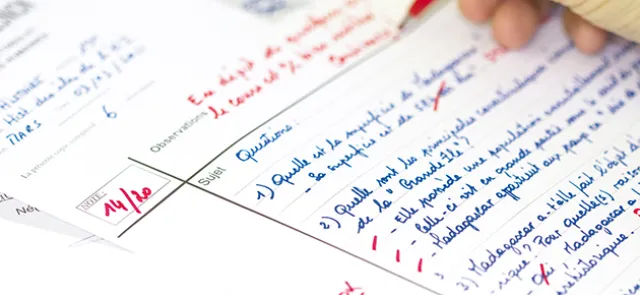
Measuring without a standard: the challenge | Tangente
It is easy to measure the distance between two points in the plane using a ruler, or to weigh something using scales. Measuring areas or volumes requires a command of integral calculus. But what about concepts for which comparison with a standard is difficult, such as happiness?

Units of measurement: the history of the SI | Tangente
Metrology is the science of measurement. Measuring means comparing a quantity with a standard. This requires a system of units. Several such systems have emerged over the course of history, evolving as scientific knowledge advanced.
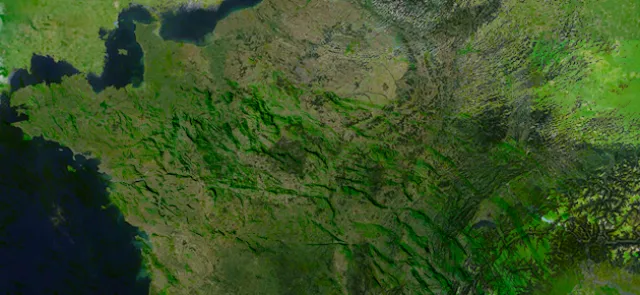
The 100 km rule explained | Tangente
To prevent the virus from surging again as lockdown restrictions were lifted, people could travel only within a hundred-kilometre radius of their home or within their own department. This was far from fair to everyone! Who were the lucky ones?
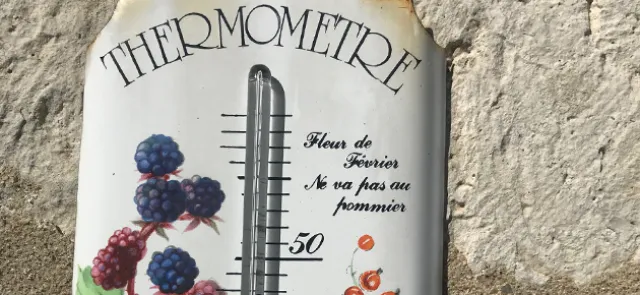
Numbers and measurement
Numbers and measurement have followed parallel paths throughout history. While it is easy to assign a number to a length or volume, this becomes more difficult for properties that are not linear, such as temperature or the acidity of a solution.
Deflecting an asteroid with mathematics | Tangente
An international team is tasked with studying the possibility of deflecting the trajectories of asteroids if there is a risk of collision with Earth.
Improving the 200 m record with maths | Tangente
What if speed records could be improved by changing the shape of athletics tracks?

In logic and combinatorics
In mathematical and logical puzzles, often inspired by observations of everyday life, polynomials can crop up in surprising ways. Geometry, binary logic and algorithms, peg games, combinatorics… no field is immune!