



Knowledge
In-depth articles on mathematical knowledge and theories
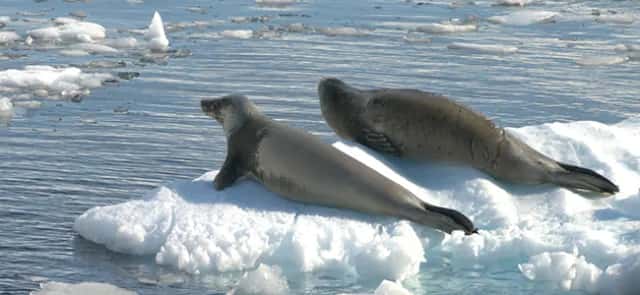
Predator–prey system | Tangente
Without predators, an animal population grows exponentially, ultimately sealing its fate. Predation can establish a balance… but may also lead to the species' extinction or to chaotic situations!

Greenhouse gases: the paradoxes of transport
Greenhouse gas emissions continue to rise. Quantifying the share attributable to road transport is no simple matter—and reducing it is harder still!

The challenges of the energy transition
Modelling the key factors in the energy transition is essential in today's world, but it is no simple matter, especially because the modelling varies from one country to another. Electricity receives a great deal of attention, while other, sometimes far more important, areas are often overlooked. Here is a brief look at the key quantities that need to go into the equations.

Air pollution: the toll in figures | Tangente
How can we measure the effects of pollution? Is it true, as some claim, that air pollution causes 48,000 deaths a year in France and that fine particles, especially emitted by diesel engines, account for 9% of these deaths? Mathematical tools can help provide answers.
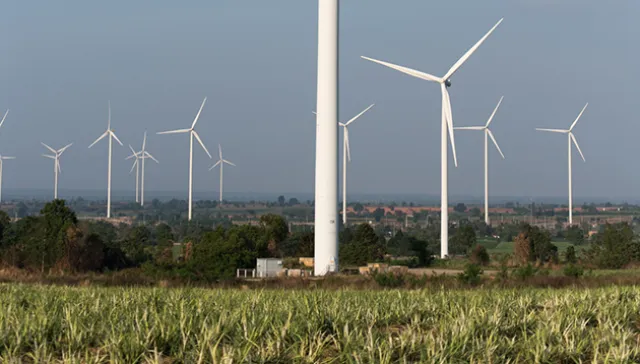
The science of wind turbines
Enthusiasm for generating electricity with wind turbines often overshadows scientific analysis. Where do we stand on the generation and distribution of this energy? What impact does it have on greenhouse gas emissions? Let's see what the figures tell us.

Measuring temperature – Mathematical brief | Tangente
The Earth's average temperature is rising. But how is it measured?
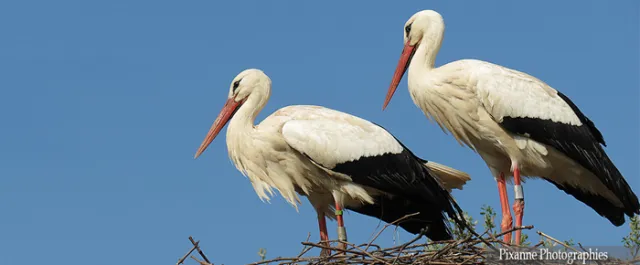
Biodiversity in equations
Biodiversity is life. Quantifying it at a given point in time is useful, but predicting how it will change is better—and mathematical modeling allows us to do just that.

Electric vehicles: virtues... and vices
Electric vehicles have a reputation for being clean. True—but much depends on where the electricity that powers them is generated...

A tricky equation – Mathematics article | Tangente
How much have human activities contributed to the observed and measured changes in Earth's temperature over recent decades? More importantly, what role can humanity hope to play through energy policies in altering this trend over the course of the 21st century?
Linear equations and linear recurrences are one and the same!
One of a mathematician's skills is recognizing the same structures in different guises. A similarity in the calculations used in two ostensibly separate areas is often an early sign of this… Let's look at certain differential equations and sequences.
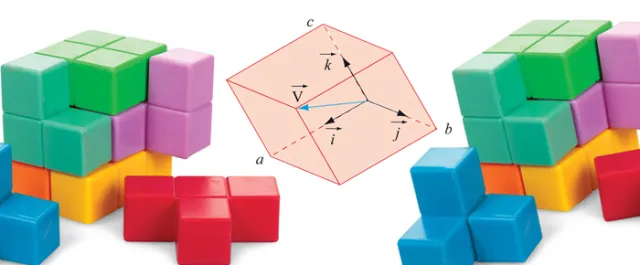
Polynomials... viewed as vectors
What could a quadratic polynomial possibly have in common with a vector in three-dimensional space? At first glance, nothing: they are different kinds of objects. Yet both have the same form—each is described by a triple of numbers. Better still, calculations with one correspond to calculations with the other!
Drawing a spider's web
Have you ever found yourself doodling spiderwebs in the margin of a calculation that was going nowhere? Not like an entomologist (since spiders are not insects), but however you please, subject to a few simple geometric rules...
Words are vectors!
Comparing two vectors is rather like comparing two texts. This analogy proves highly relevant to the study of a literary corpus: combined with computing power, the tools of linear algebra can be used to compare two texts or measure their similarity.

Composing geometric transformations
Some geometric problems, however complicated they may look, quickly become clear once geometric transformations are brought in, and are often solved by composing them. To do this, it helps to recast them in vector terms.

Collinearity, coplanarity, concurrency... it's all the same story!
Points and lines in the plane are dual notions: theorems about collinear points correspond to theorems about concurrent lines. This duality can be defined geometrically. It even extends to space, through coplanarity.
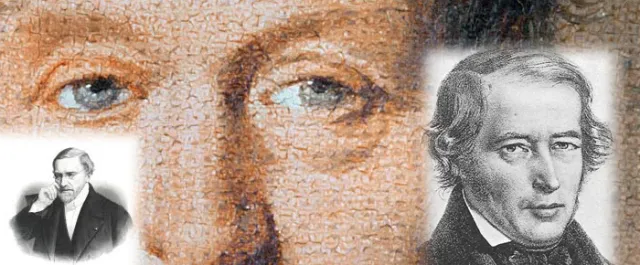
Geometry without figures
Michel Chasles dreamed of it; the theory of vector spaces now makes it possible: we can do geometry without drawing a single figure. Geometric and algebraic viewpoints thus coexist, and everyone can choose whichever feels most comfortable!
“The” dimension: not such an obvious idea!
The notion of dimension can be glimpsed in Euclid, then takes clearer shape with Descartes before branching out according to the subject at hand: analytic geometry, vector spaces or topology. There is a whole host of “dimensions”! Here, the focus is on the dimension of vector spaces, due to Georg Hamel.

Matrix algebra in our images – Maths brief | Tangente
Matrices and vectors have become indispensable mathematical and computational tools for digital image processing.

Drawing a line: not so simple! – Maths brief | Tangente
How can straight lines be drawn on a screen made up of pixels? Several algorithms can solve this thorny problem.

Gram–Schmidt method – Math brief | Tangente
Discover the celebrated Gram–Schmidt method for constructing orthonormal bases of vector spaces