



Knowledge
In-depth articles on mathematical knowledge and theories
Proportionality: so crucial, so difficult
Proportionality arises in problems involving multiplication, division, and combinations of the two. Because it is difficult to learn, it poses challenges for teaching and has prompted extensive research in mathematics education.
Multiplying with rods | Tangente
Before the advent of modern technology, techniques or tools had to be devised to perform the basic calculations required by craftspeople, engineers and everyone else! From John Napier to Édouard Lucas, mathematicians distinguished themselves in this pursuit.

Essential tools of analysis
Given a somewhat complicated function, who has not wished they could replace it with a much simpler one that "behaves in the same way," such as a polynomial? Taylor expansions make this possible in almost every case—at least locally!

Bridge: a bridge between games and statistics | Tangente
Bridge begins with an auction, in which players commit to taking a minimum number of tricks during play. Statistical methods make it possible to rationalize this decision-making process.

2024: a new year with many properties
What spectacular mathematical advances, major scientific discoveries and gains in knowledge does the new year have in store for us? It is hard to say! What is certain is that the natural number 2024 abounds in wonderful arithmetic and combinatorial properties…
Mathematicians make progress on coloring
Coloring problems are often very simple to state and may appeal to many amateur mathematicians. Unfortunately—or perhaps fortunately?—they conceal deep difficulties that continue to tax the mathematical community. A new breakthrough was made recently.

An inventory of arithmetic puzzles | Tangente
Figurate numbers, which provide a visual representation of integers, form a wonderful bridge between geometry and arithmetic. Some properties in either field can be reformulated in the other, and vice versa! New questions naturally arise…
A pedagogical interest in transmitting knowledge
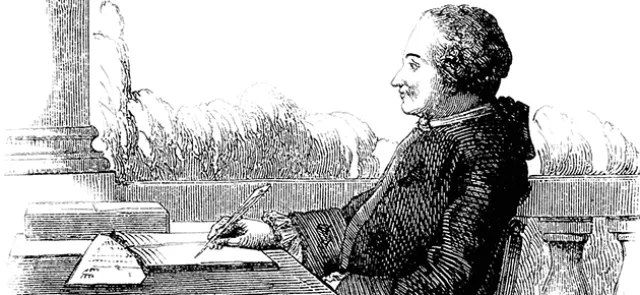
An exceptional scientist, Laplace was also a driving force behind the development of education at the highest level, helping to devise curricula and concerned that mathematics teaching should not be detached from philosophical reflection.
The empire of resonances
Kepler's laws and the law of gravitation made it possible to predict the positions of the planets over time. Yet Jupiter and Saturn insisted on straying from those predictions—and every attempt to explain why had failed! It was Laplace who would uncover the underlying phenomenon of resonance.
From Laplace's equation to the Laplacian
The Laplacian operator is used to describe most diffusion phenomena in physics. It is central to analysis, geometry and probability theory, among other fields. Its origins lie in an equation discovered by Laplace that governs the gravitational interaction between bodies separated by empty space.
The ebb and flow of the sea: a dynamic theory | Tangente
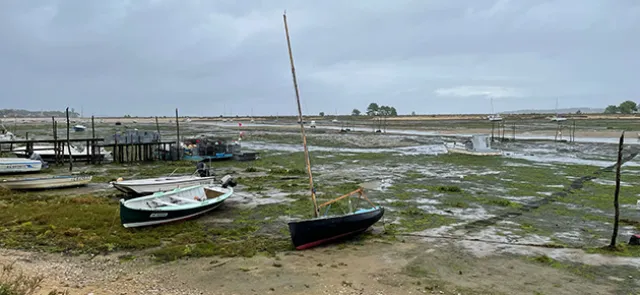
Laplace took an interest in "the ebb and flow of the sea," as he put it. After examining the approaches taken by his predecessors, he grasped the impact of the Earth's rotation and studied the tides, paving the way for their times to be calculated accurately.

The first law of large numbers
Repeating a random experiment with two possible outcomes a large number of times leads to probabilities that are difficult to predict directly, let alone calculate explicitly. Yet the de Moivre–Laplace theorem provides an excellent approximation.

The first law of large numbers
Repeating a random experiment with two possible outcomes a large number of times leads to probabilities that are difficult to predict directly, let alone calculate explicitly. Yet the de Moivre–Laplace theorem provides an excellent approximation.
Three laws of error
Observations of celestial bodies are invariably subject to error. How can we choose the "most relevant" value from several measurements? Laplace, along with Legendre and Gauss, developed theories that ultimately led to the celebrated normal distribution.
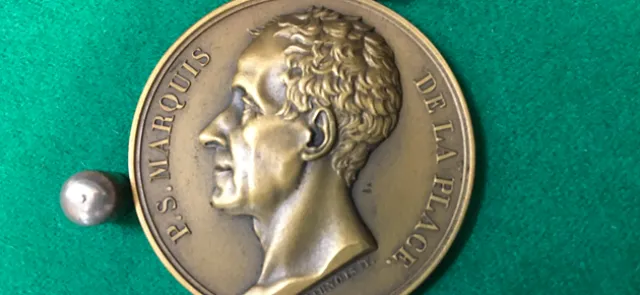
Laplace's many mathematical functions | Tangente
In his scientific work, Laplace introduced and used numerous mathematical functions. Alongside the Laplacian and the Laplace transform, we find generating functions and the potential function.
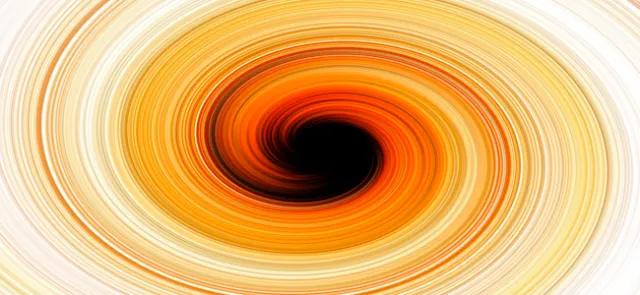
Laplace's brilliant insight into black holes | Tangente
The finite speed of light and its particle nature led Laplace, through a bold line of reasoning, to contemplate the existence of black holes—before changing his mind. Although he could not have conceived of light's dual nature at the time, he was right!
A fresh perspective on differential equations
The method developed by Laplace and his successors replaces differentiation with multiplication, turning a given differential equation into a "simple" algebraic equation. Today, no one working with differential equations can do without this technique.
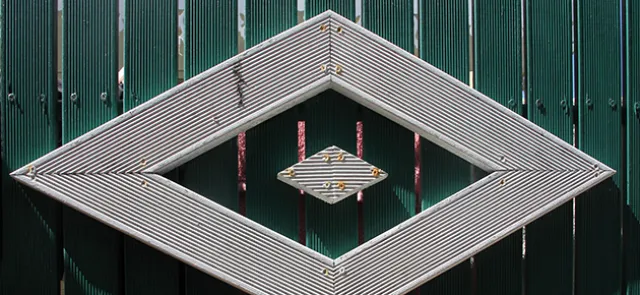
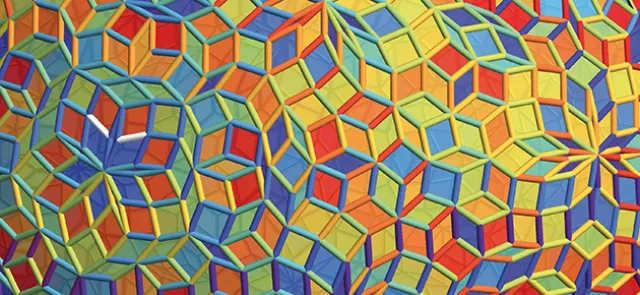
From rhomb to rhombus
For many people, the rhombus—originally called a "rhomb" (see In Brief, "The origin of the rhombus"; the associated adjective is still "rhombic")—is characterized by its acute angles pointing upward and downward. Yet, as Euclid already observed, this quadrilateral is defined by the equal lengths of its sides. Its ability to form tilings accounts for its use in architecture and decoration.
Rhombi filling space – Article | Tangente
Are there polyhedra whose faces are all rhombi? Various mathematicians have studied this problem in solid geometry since the 17th century, each contributing to what is now a complete classification of the convex polyhedra.
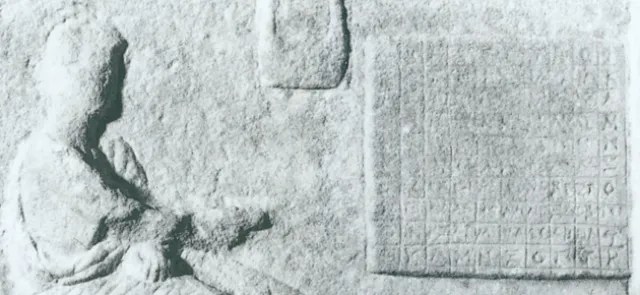
The hidden riches of the multiplication table
Think you know your multiplication tables? Think again! A surprising property emerges when a regular polygon is drawn on the multiplication table: the mean of the values at its vertices is the value at the polygon's center!