



Knowledge
In-depth articles on mathematical knowledge and theories

Hungarian tables: mathematics article | Tangente
Combined events in athletics, such as the decathlon, require a way of comparing results across different disciplines. Scoring tables were therefore developed from statistical data and are regularly updated to reflect changes in human physical development.

My thesis in Tangente
Geometric shapes can be associated with different pieces of music to shed light on their structure. This can be done by defining a distance between musical events using the discrete Fourier transform applied to the bars of a score.

Billiards and water-pouring problems
One facet of mathematical creativity is finding an original representation of a problem that makes it easy to solve. Thus, an elementary Diophantine equation can be solved by studying trajectories on a billiard table, turning billiards into an effective tool.

A historical example involving Fermat: article by m… | Tangente
Through his marginal notes in Bachet's edition of Diophantus's books on arithmetic and through his correspondence, the mathematician Pierre de Fermat spurred the study of integers with new results and methods. He both transmitted ideas and drove the subject forward.
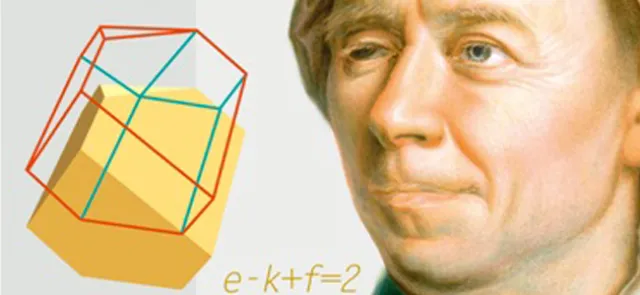
Geometric delights with Euler’s formula
Euler’s formula, a fundamental relation in mathematics, offers an opportunity to explore the properties of objects in three dimensions—and in higher dimensions as well. Along the way, we will encounter a classic of operations research: the simplex algorithm.

In the service of curves
Through the magic of analytic geometry, the properties of an algebraic formula find visual expression in the corresponding curves. Taylor expansions play an absolutely crucial role in this constant interplay.

The origins of function expansions
The first power-series expansions of functions emerged alongside the development of differential and integral calculus in the late 17th century. Truncating them produces Taylor polynomials!

Equivalent functions: a tool for calculating limits
Why go to the trouble of finding equivalents for seemingly well-behaved functions? To gain detailed insight into local or asymptotic behavior—and for applications, too! Without these techniques, even spreadsheets would be unable to perform seemingly innocuous calculations.

The people of the rational numbers
A brief imaginary, non-chronological history that attempts to answer a question less straightforward than it seems: are fractions numbers?

Let's grapple with division | Tangente
The four arithmetic operations that we all learn to set out so conscientiously in our school notebooks are “elementary,” aren’t they? Yet the methods of addition, subtraction, multiplication and division have not always been presented as they are today in Western countries!
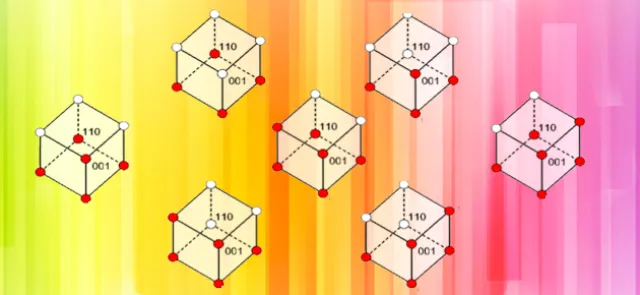
The ninth Dedekind number
Some well-known number sequences have thousands of terms, or even more, that can be calculated without the slightest difficulty. Others put up more resistance. Here is one whose ninth term mathematicians have only just managed to calculate!

A genealogy of fractions
A beautiful construction due to Calkin and Wilf, foreshadowed a century earlier, provides an elegant and deep way to list all fractions. Beginning with 1 / 1, each fraction in this construction gives birth to two new ones.
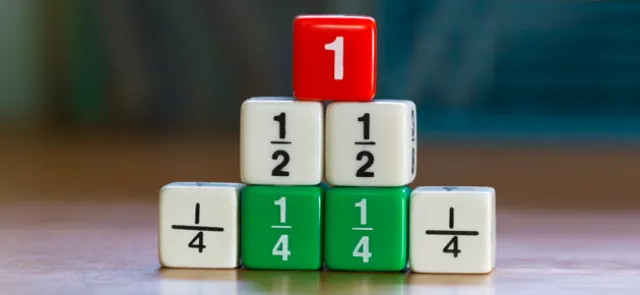
Fractions of fractions, full speed ahead
A very simple way of constructing a sequence of fractions can lead to surprisingly deep mathematical tools. Here is an example that leads to the famous Prouhet–Thue–Morse sequence and its many applications.

Endless sums
Adding several fractions always produces another fraction. But when the sum continues indefinitely, things are very different. If chosen carefully, such sums can approximate numbers like π and yield a wealth of fascinating, unexpected results.

An unhurried journey to infinity
The harmonic numbers form a sequence that tends to infinity, but very slowly. That does not stop them from playing a role in several important problems.
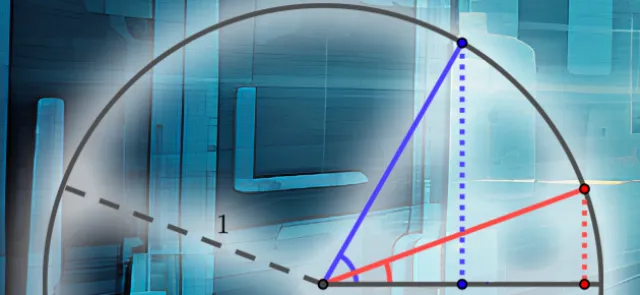
When fractions fail
Fractions cannot do everything! The existence of irrational numbers forces us to accept that the concept of number extends beyond quotients of two integers. The reward is a new world to explore, full of surprises.
Coming to grips with decimal expansions
Like any real number—for example, pi—a fraction can be written as a finite or infinite decimal expansion. Remarkably, the resulting decimal expansion is always eventually periodic.

Gears
How can a ratio be approximated by a simpler one? Crucial to clockmakers and engineers, this problem can be solved with a healthy dose of arithmetic and algorithms dating back to antiquity.
The case of the camels
Seventeen camels: an inheritance that seems impossible to divide? This slightly paradoxical Eastern puzzle has a mathematical answer.

Fractions and music: when 3/4 is not equivalent to 6/8
Octaves, fifths, triplets… The rhythms and pitches of Western music were built on fractions.