


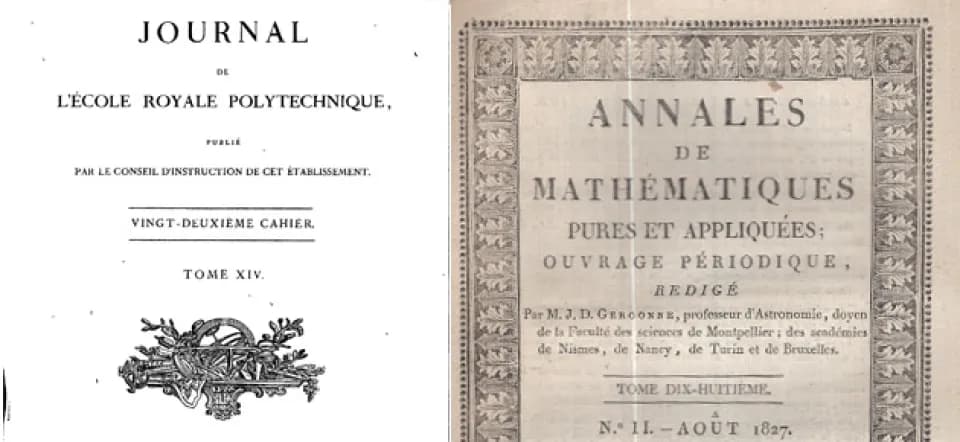
Paris, capitale des mathématiques au temps de Cauchy, est aussi le lieu où les journaux deviennent un élément essentiel du débat public. Qui de mieux pour en rendre compte qu’un voyageur venu d’ailleurs et découvrant les nouvelles mœurs de la société parisienne ? Ainsi en est-il de Rifâ’at-Tahtâwî, jeune égyptien, membre de la délégation envoyée en France par le pacha d’Égypte. Il réside à Paris pendant cinq ans et en tire un ouvrage, L’or de Paris, une relation de voyage (1826-1831), où il relate les cinq années qu’il a passé à observer, écouter, lire, traduire et s’initier à la pensée des Lumières.
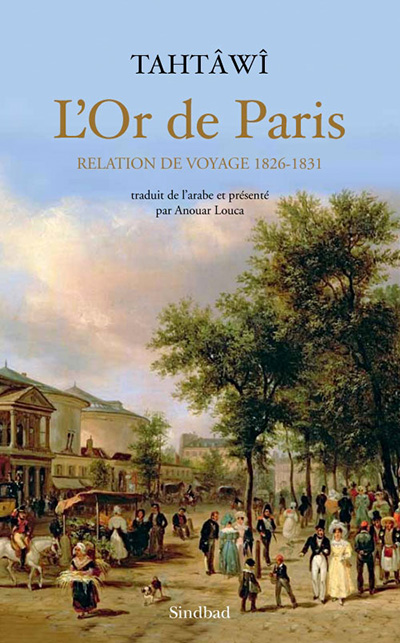
L’or de Paris ou comment visiter la France des années 1826-1831
selon Rifâ’at-Tahtâwî.
C’est un guide du voyageur, un traité sur Paris et une sorte de « rapport d’étonnements » selon les mots d’aujourd’hui. Le musulman y décrit la vie quotidienne, la constitution et la démocratie, le soulèvement de 1830, l’activité scientifique et culturelle. Il découvre les fourchettes, les cafés, les miroirs… Quant à sa description de l’émergence des journaux, elle est tout à fait saisissante :